Laravel brings an elegant solution to API resource transformations with the introduction of fluent resource methods. These intuitive additions create a more natural coding experience when converting Eloquent models into API resources.
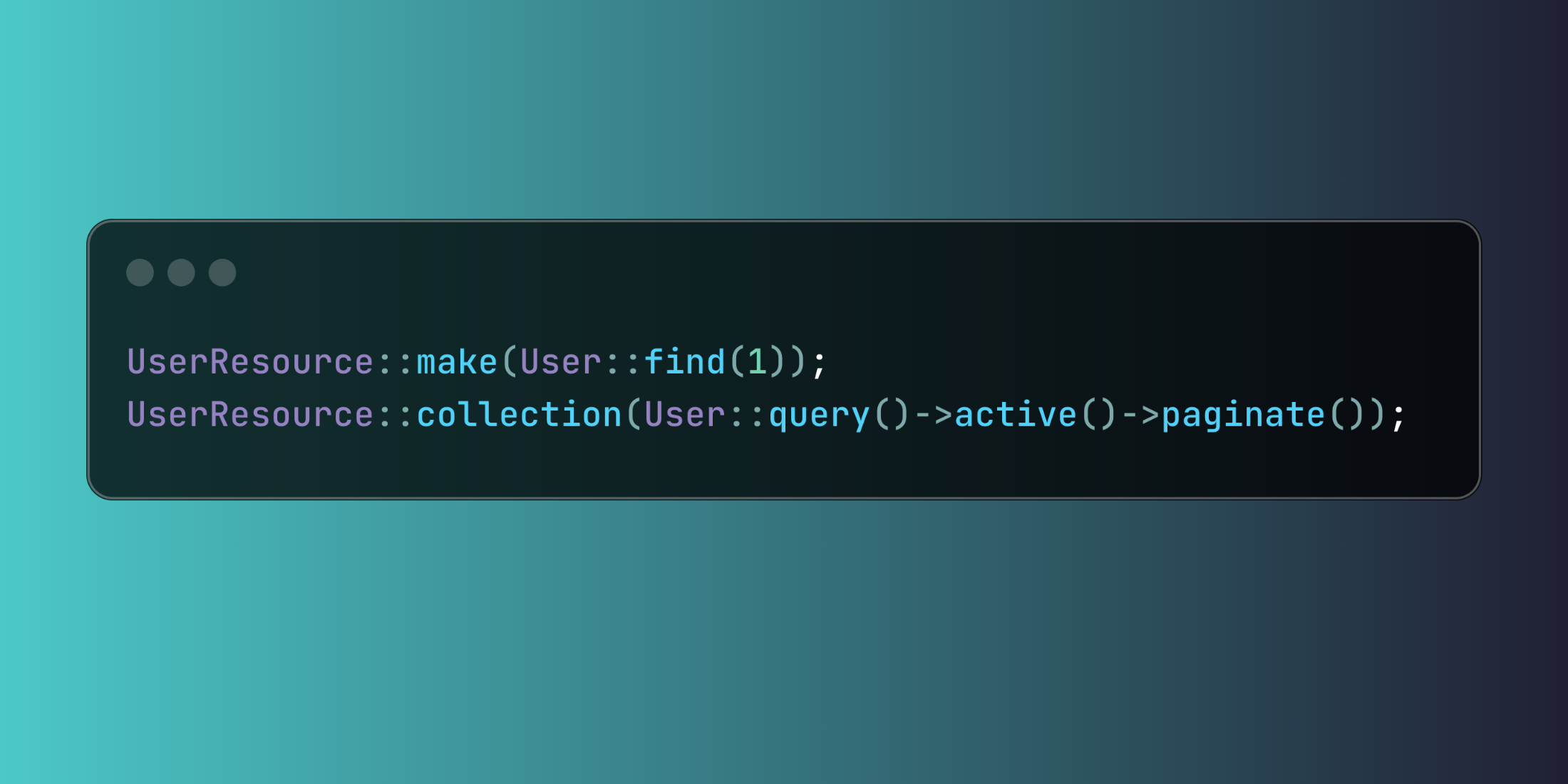
When developing APIs with Laravel, transforming Eloquent models into standardized resource responses is a common requirement. The traditional approach involves wrapping models with resource classes:
UserResource::make(User::find(1));UserResource::collection(User::query()->active()->paginate());While functional, this pattern creates a disconnect between model retrieval and transformation. The two-step process requires a mental shift as you move from obtaining data to formatting it, making code less intuitive.
Laravel's new fluent methods eliminate this friction by attaching transformation capabilities directly to Eloquent models and collections:
User::find(1)->toResource(UserResource::class); User::query()->active()->paginate()->toResourceCollection(UserResource::class);This approach creates a natural flow from model retrieval to transformation, allowing your code to read from left to right in a single logical sequence.
The framework goes further by introducing convention-based automatic resource resolution:
User::find(1)->toResource();When calling toResource() without arguments, Laravel automatically searches for a resource class following your model's naming pattern. If your model is Product, Laravel will look for ProductResource. This convention-over-configuration approach reduces code verbosity while maintaining clarity.
In a practical API controller, the improvements become immediately apparent:
class ProductController extends Controller{ public function show($id) { // Before: // return ProductResource::make(Product::findOrFail($id)); // After: return Product::findOrFail($id)->toResource(); } public function index(Request $request) { $products = Product::query() ->when($request->has('featured'), fn($query) => $query->featured()) ->when($request->has('category'), fn($query) => $query->where('category_id', $request->category)) ->latest() ->paginate(); // Before: // return ProductResource::collection($products); // After: return $products->toResourceCollection(); }}The fluent approach creates code that aligns with natural thought processes: "Get this product and transform it into a resource." This alignment makes your code more readable and maintainable for both you and your team.