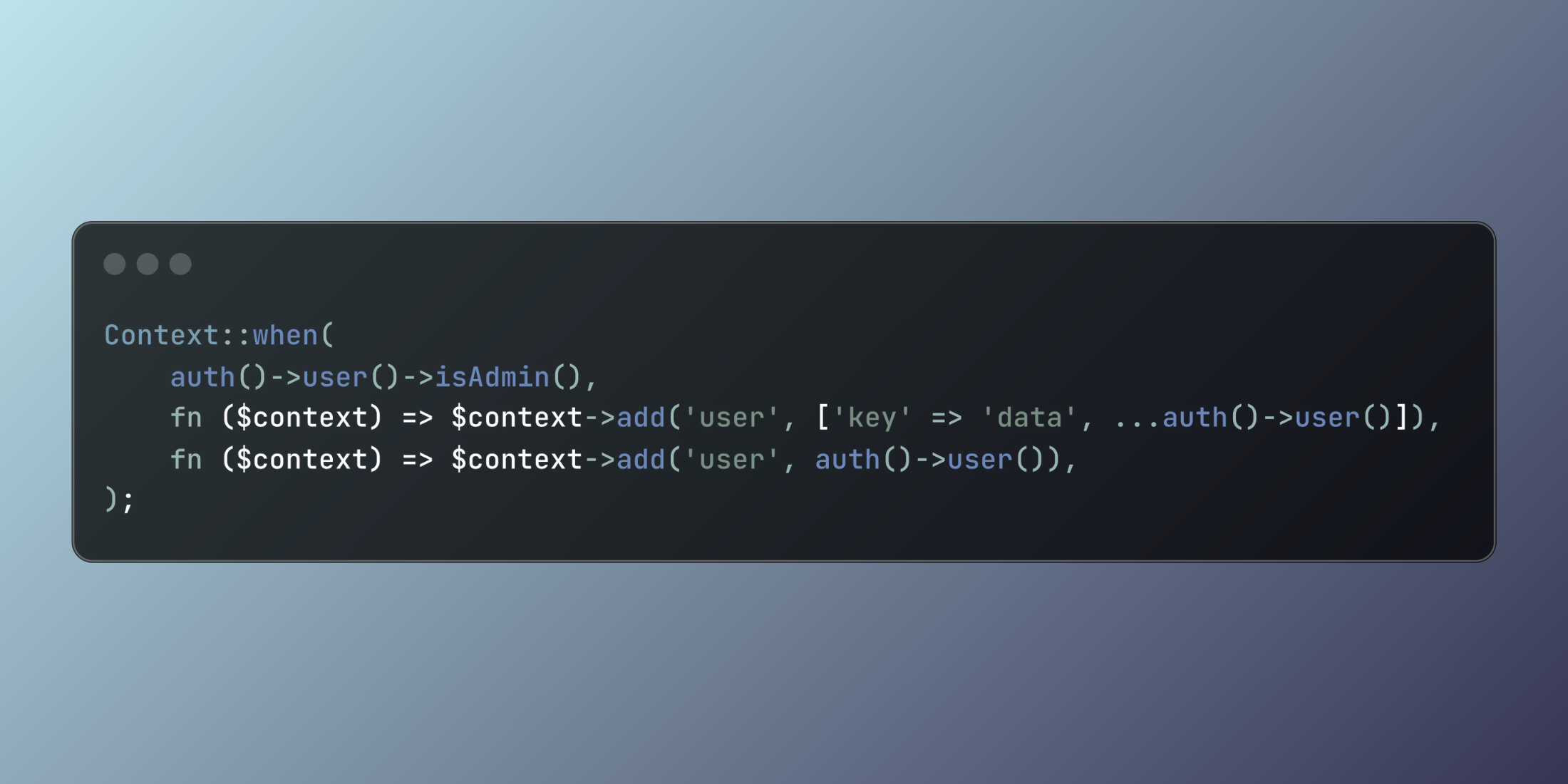
Manage contextual data more elegantly with Laravel's Context Facade now equipped with the Conditionable trait. This powerful combination allows for expressive conditional logic when sharing data across your application.
Context::when( auth()->user()->isAdmin(), fn ($context) => $context->add('user', ['key' => 'other data', ...auth()->user()]), fn ($context) => $context->add('user', auth()->user()),);The code above demonstrates how to conditionally add different user data to your context based on admin status, creating a more streamlined approach to context-specific behavior.
// Add different feature flags based on environmentContext::when( app()->environment('production'), fn ($context) => $context->add('features', ['beta' => false]), fn ($context) => $context->add('features', ['beta' => true])); // Add user permissions based on roleContext::when( auth()->user()->isAdmin(), fn ($context) => $context->add('permissions', 'all'), fn ($context) => $context->add('permissions', 'limited'));With methods like when and unless, your context management becomes more readable and maintainable. This approach is especially valuable when setting up role-based configurations, environment-specific settings, or feature flags throughout your application. By consolidating conditional logic directly into your context management, you reduce scattered if/else statements and create more coherent, self-documenting code.