Laravel's database population mechanism provides developers with sophisticated tools for establishing reliable, reproducible data environments across development, testing, and demonstration scenarios. This systematic approach ensures consistent application states while facilitating comprehensive testing strategies and streamlined onboarding processes.
Seeder generation utilizes Laravel's Artisan command system for rapid scaffolding:
php artisan make:seeder ProductSeederThe generated seeder structure accommodates various data insertion approaches:
use Illuminate\Database\Seeder;use Illuminate\Support\Facades\DB; class ProductSeeder extends Seeder{ public function run(): void { DB::table('products')->insert([ 'name' => 'Premium Widget', 'price' => 29.99, 'category_id' => 1, ]); }}Factory integration enables sophisticated data generation patterns with realistic relationship structures:
use App\Models\Category;use App\Models\Product; public function run(): void{ Category::factory() ->count(5) ->hasProducts(8) ->create();}Building a comprehensive e-commerce data foundation demonstrates advanced seeding capabilities across multiple related entities:
class DatabaseSeeder extends Seeder{ public function run(): void { $this->call([ CategorySeeder::class, ProductSeeder::class, CustomerSeeder::class, OrderSeeder::class, ]); }} class CategorySeeder extends Seeder{ public function run(): void { if (app()->environment('production')) { Category::factory()->count(5)->create(); } else { Category::factory()->count(20)->create(); } }} class ProductSeeder extends Seeder{ public function run(): void { Category::all()->each(function ($category) { Product::factory() ->count(rand(3, 12)) ->for($category) ->create(); }); }}Environment-specific seeding patterns adapt data generation to different deployment contexts. Development environments benefit from extensive datasets that facilitate comprehensive testing, while production environments utilize minimal, essential data structures.
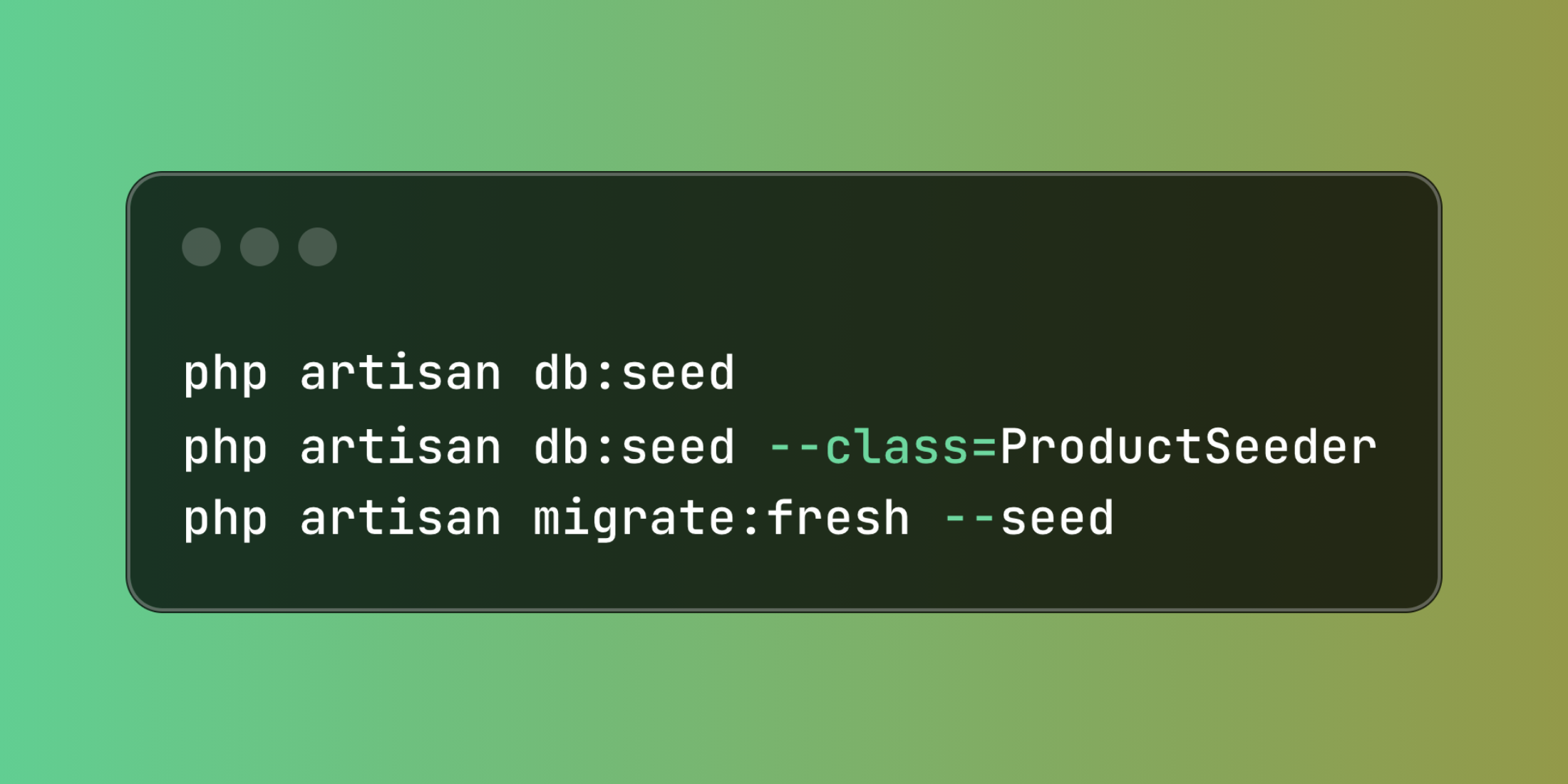
Execution commands provide flexible seeding control:
php artisan db:seedphp artisan db:seed --class=ProductSeederphp artisan migrate:fresh --seedThe seeding ecosystem integrates seamlessly with Laravel's factory system, enabling realistic data generation that maintains referential integrity while supporting complex application workflows across diverse operational scenarios.