Laravel MPP is middleware that implements the Machine Payments Protocol (MPP), letting you charge AI agents for access to protected routes. It returns an HTTP 402 Payment Required response with a signed challenge; an agent that can pay fulfills the challenge over a supported payment rail and retries the request.
Main features:
- Two payment rails — Stripe Shared Payment Tokens (SPTs) and Tempo pathUSD
- Per-route or metered pricing — charge per request, or take one payment that grants multiple accesses
- HMAC-signed challenges — agents receive a signed
402challenge to pay and retry - Metered sessions — atomic, scope-checked credit balances backed by cache or database
- Preconditions — named checks that run before the payment gate to reject ineligible requests early
Gating a Route
Attach the mpp middleware to a route with a price and currency. A request without payment gets a 402 challenge back:
Route::get('/resource', MyPaidResource::class) ->middleware('mpp:0.50,USD');You can also declare pricing with the RequiresPayment attribute on a controller method and let the middleware read it, or enable automatic enforcement with MPP_ATTRIBUTES_ENABLED=true:
#[RequiresPayment(amount: '5.00', currency: 'USD', grants: 10)]public function report(){ // ...} Route::get('/report', ReportController::class)->middleware('mpp');Metered Sessions
When a payment specifies grants greater than one, a single payment covers multiple accesses. The successful response includes a Payment-Session header with the remaining balance and scope:
Payment-Session: id="sess_...", remaining="9", scope="report.basic", expiresAt="..."The agent replays the session identifier on later requests instead of paying again:
curl -si https://your-host/report \ -H 'Authorization: Payment method="stripe", session="sess_..."'Sessions are stored in the cache by default, or in the database for persistence:
MPP_SESSION_DRIVER=cache # DefaultMPP_SESSION_DRIVER=database # Persisted; run the published migrationsMPP_SESSION_CACHE_STORE=redis # Optional custom cache storePreconditions
Preconditions are named checks that run before the payment gate, so you can reject an ineligible request before asking an agent to pay. Register them in config/mpp.php and attach them per route, or run some globally:
// config/mpp.php'preconditions' => [ 'checks' => [ 'postexists' => [\App\Mpp\Checks\PostExists::class, 'check'], ], 'global' => ['usernotblocked'],],A check returns null to pass, or a Response to short-circuit the request:
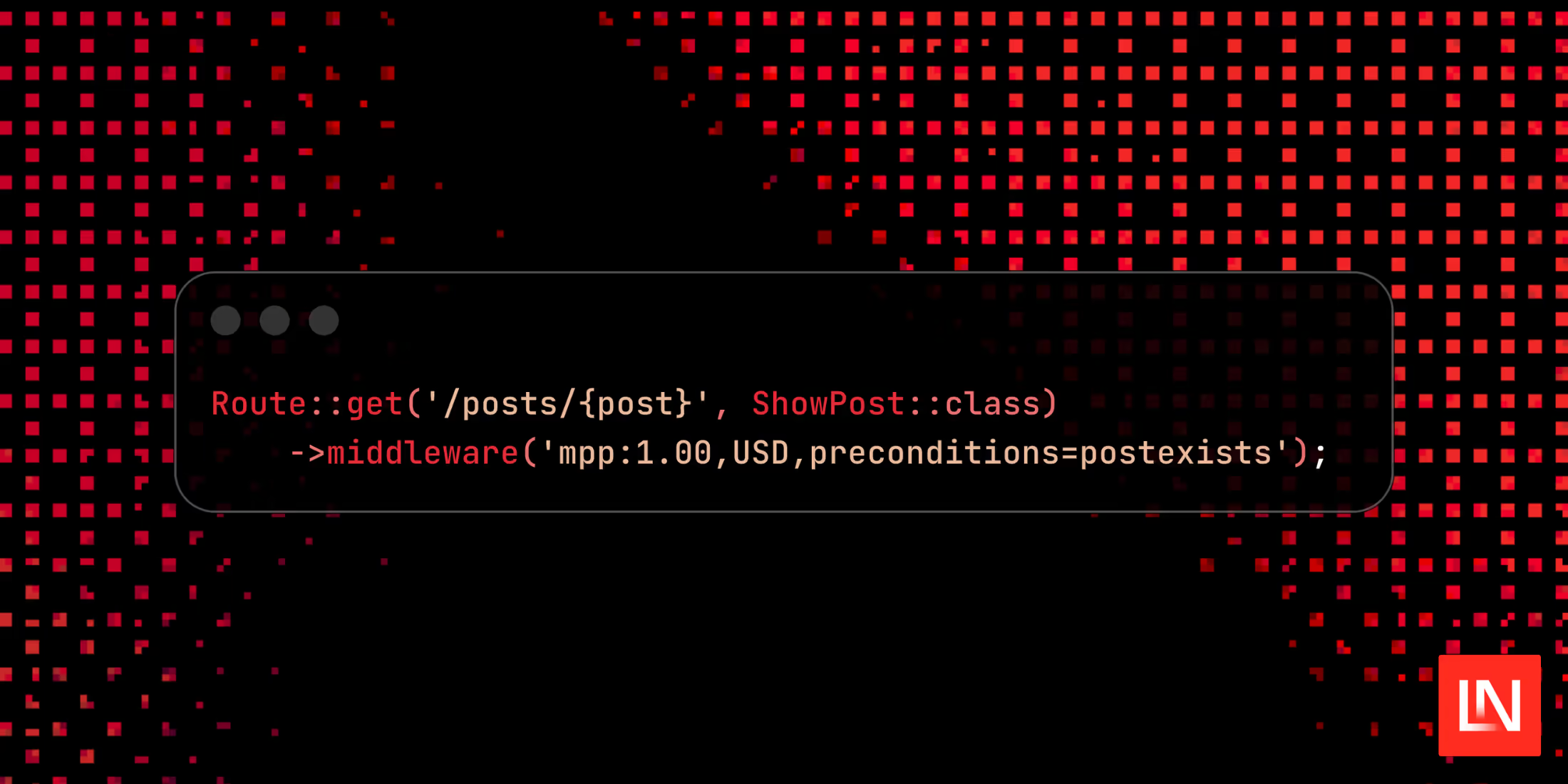
class PostExists{ public function check(Request $request, PaymentSpec $spec): ?Response { return Post::find($request->route('post')) ? null : response()->json(['error' => 'No such post.'], 404); }}Route::get('/posts/{post}', ShowPost::class) ->middleware('mpp:1.00,USD,preconditions=postexists');Payment Rails
The package ships with two rails. Stripe uses Shared Payment Tokens (SPTs), configured with your Stripe keys and the preview API version:
STRIPE_SECRET_KEY=sk_test_...STRIPE_NETWORK_ID=profile_...STRIPE_API_VERSION=2026-05-27.previewTempo settles in pathUSD on-chain. Select it per route with method=tempo:
Route::get('/paid', fn () => response()->json(['data' => 'paid'])) ->middleware('mpp:0.01,USD,method=tempo,scope=paid');You can accept multiple rails on one route with methods=stripe|acme, and register a custom rail by implementing the Verifier interface. On a paid request, the response carries a Payment-Receipt header identifying the method, amount, and reference.
Installation
Install via Composer and publish the config:
composer require square1/laravel-mppphp artisan vendor:publish --tag=mpp-configFor metered sessions on the database driver, publish and run the migrations:
php artisan vendor:publish --tag=mpp-migrationsphp artisan migrateNote that MPP and the Stripe SPT APIs are still in preview and may change. The latest release is v1.1.0 is MIT licensed; you can find it on GitHub.