Laravel's shallow resource routing eliminates unnecessary URL complexity while maintaining logical relationships between parent and child resources. This architectural approach streamlines API endpoints by removing redundant parent identifiers where they provide no additional value.
Traditional nested resource structures generate verbose URL patterns that can become unwieldy:
use App\Http\Controllers\OrderItemController; Route::resource('orders.items', OrderItemController::class);Standard nesting creates routes requiring both parent and child identifiers throughout all operations, even when the child resource can be uniquely identified independently.
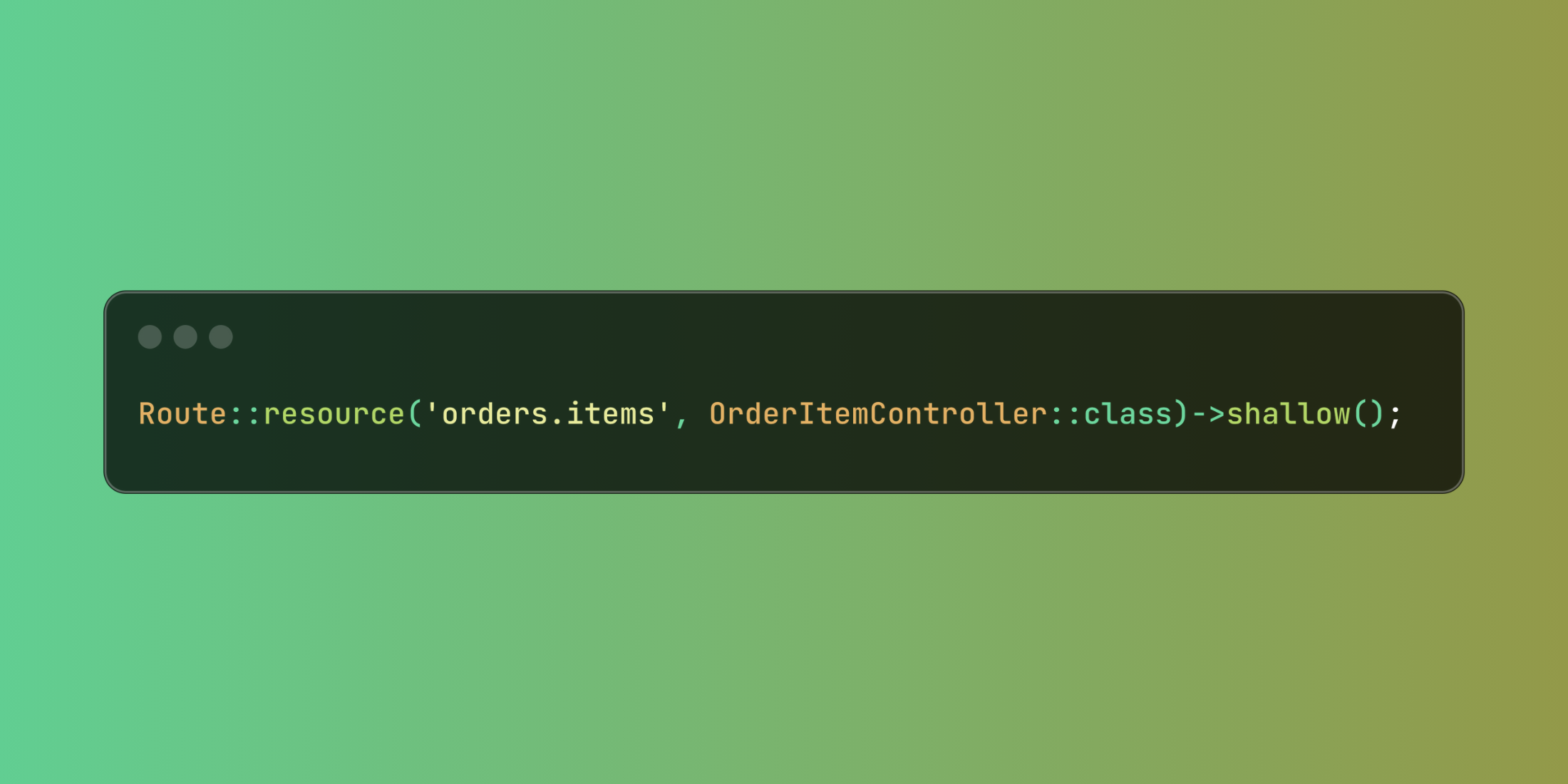
Shallow routing simplifies this pattern by maintaining parent context only where necessary:
use App\Http\Controllers\OrderItemController; Route::resource('orders.items', OrderItemController::class)->shallow();This generates optimized route structures where individual resource operations bypass unnecessary parent references while preserving the parent relationship for collection-level actions.
Building an inventory management system demonstrates practical shallow routing benefits across different operational contexts:
Route::resource('warehouses.products', ProductController::class)->shallow(); class ProductController extends Controller{ public function index($warehouseId) { $warehouse = Warehouse::findOrFail($warehouseId); return ProductResource::collection($warehouse->products); } public function store(Request $request, $warehouseId) { $warehouse = Warehouse::findOrFail($warehouseId); $product = $warehouse->products()->create($request->validated()); return new ProductResource($product); } public function update(Request $request, $id) { $product = Product::findOrFail($id); $product->update($request->validated()); return new ProductResource($product->fresh()); } public function destroy($id) { $product = Product::findOrFail($id); $product->delete(); return response()->noContent(); }}The shallow approach enables cleaner controller methods while maintaining data integrity. Individual product operations work directly with product identifiers, reducing URL complexity and improving API usability without sacrificing the logical parent-child relationship structure.