Over the last few months I have taken laravelshift.com from 6% cached to 98% cached. When I first started this journey, I remember searching for caching a Laravel app with Cloudflare. The top two results were a post by Andy Hinkle and a package.
Both used middleware to set cache headers for Cloudflare. Unfortunately, both had drawbacks. While they do set the appropriate header, Cloudflare would bypass Andy's solution. This is because the response also included Set-Cookie headers (default Laravel behavior). The package would completely remove the Set-Cookie header. Which is very dangerous. As you could cache a version of the page with user specific data.
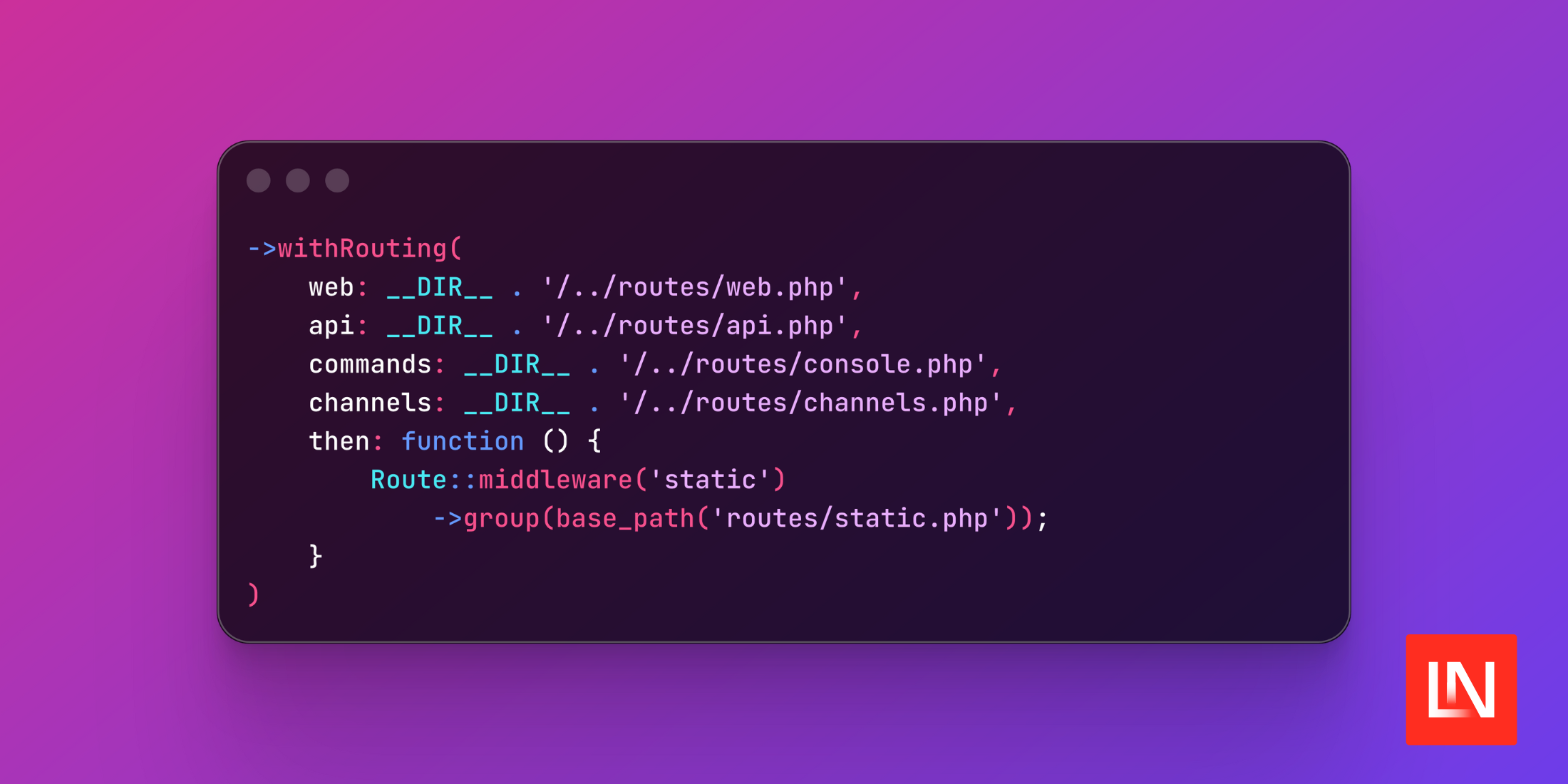
I wanted something more intentional. More explicit. That way I could avoid any gotchas while caching pages. Instead, I decided to register a new static middleware group.
// bootstrap/app.php->withRouting( web: __DIR__ . '/../routes/web.php', api: __DIR__ . '/../routes/api.php', commands: __DIR__ . '/../routes/console.php', channels: __DIR__ . '/../routes/channels.php', then: function () { Route::middleware('static') ->group(base_path('routes/static.php')); })This group is effectively a copy of the api middleware group. It removes all the stateful web middleware, such as starting the session or encrypting cookies. All it does is set the cache headers and allow for route parameter bindings.
$middleware->group('static', [ \App\Http\Middleware\SetCacheControlHeader::class \Illuminate\Routing\Middleware\SubstituteBindings::class,]);By removing all the stateful middleware, I prevent inadvertently using stateful data on a cacheable page. Either from the session or a cookie. The middleware group also allows me to explicitly define cacheable pages in a separate route file. Now I register any static pages in a routes/static.php, This makes it really easy to list pages that are cached.
For example, using:
php artisan route:list --middleware=staticUsing a separate middleware group is a straightforward way to cache pages with Cloudflare (or any cache). It avoids common side-effects and explicitly separates your cacheable pages. If you're interested in making your Laravel apps respond crazy fast, check out my Fast Laravel video course.