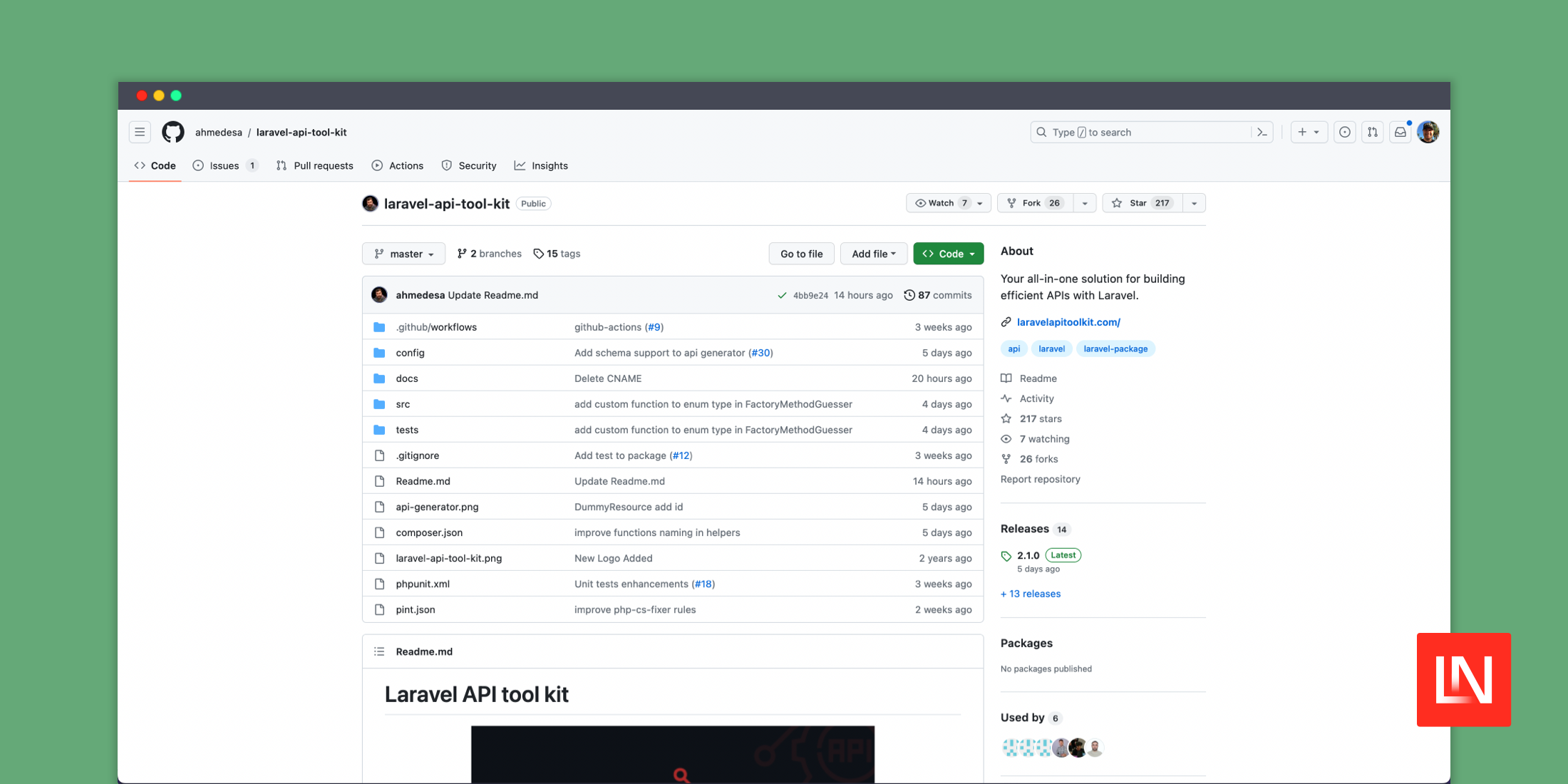
Laravel API Toolkit supercharges your API development with standardized responses, dynamic pagination, and more. At the time of writing, it supports the following features:
- Schema support
- Pagination helpers
- API Generator Command
- API filtering
- Actions
- Media helpers
- And more...
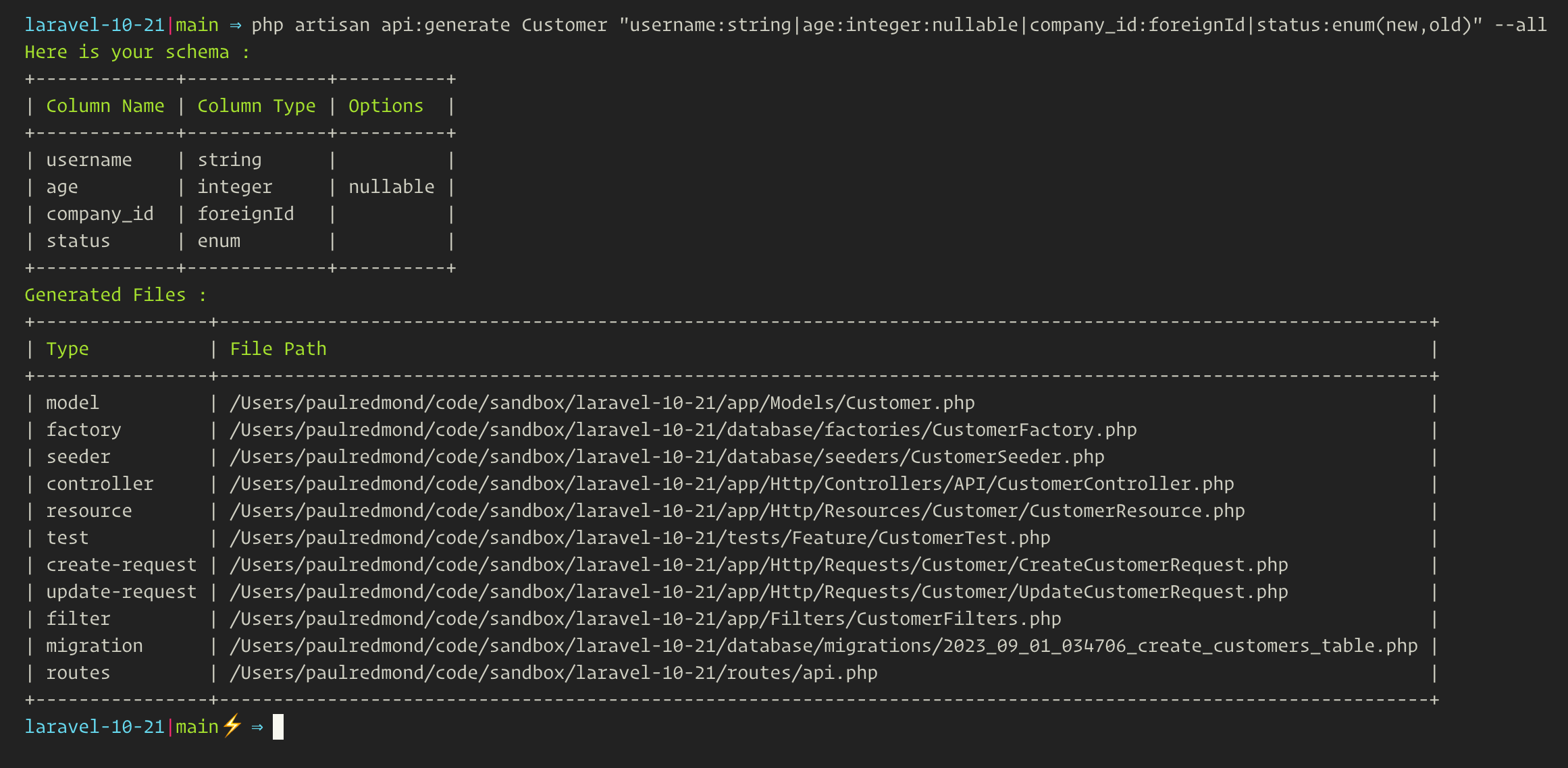
Using the provided api:generate Artisan command, you can easily generate all the key files needed, including controller, requests, resources, models, migrations, etc:
php artisan api:generate Customer \
  "username:string|age:integer:nullable|company_id:foreignId|status:enum(new,old)" \
  --all
After running the above command, the following files are created, giving you everything you need to start building the Customer API:
Filtering is another useful feature in this package, giving you the ability to define which fields you can filter on. Given the example of a Car model, here's what your filter configuration might look like:
namespace App\Models;

use Essa\APIToolKit\Filters\Filterable;

class Car extends Model
{
    use Filterable;

    protected string $default_filters = CarFilters::class;

    // Other model code...
}
And the CarFilters class might look like:
namespace App\Filters;

use Essa\APIToolKit\Filters\QueryFilters;

class CarFilters extends QueryFilters
{
    protected array $allowedFilters = ['color', 'model_id'];

    protected array $columnSearch = [];
}

// GET /cars?color=red
Actions is another feature that you can use in this package to encapsulate business logic within distinct classes that you can use to compose
namespace App\Actions;

class CreateCar
{
    public function execute($data)
    {
      // ...
    }
}

// usage example in a controller
public function store(Request $request)
{
    $this->createCar->execute($request->all());
}
To get started with this package, check out the documentation at laravelapitoolkit.com. You can learn more about this package, get full installation instructions, and view the source code on GitHub.