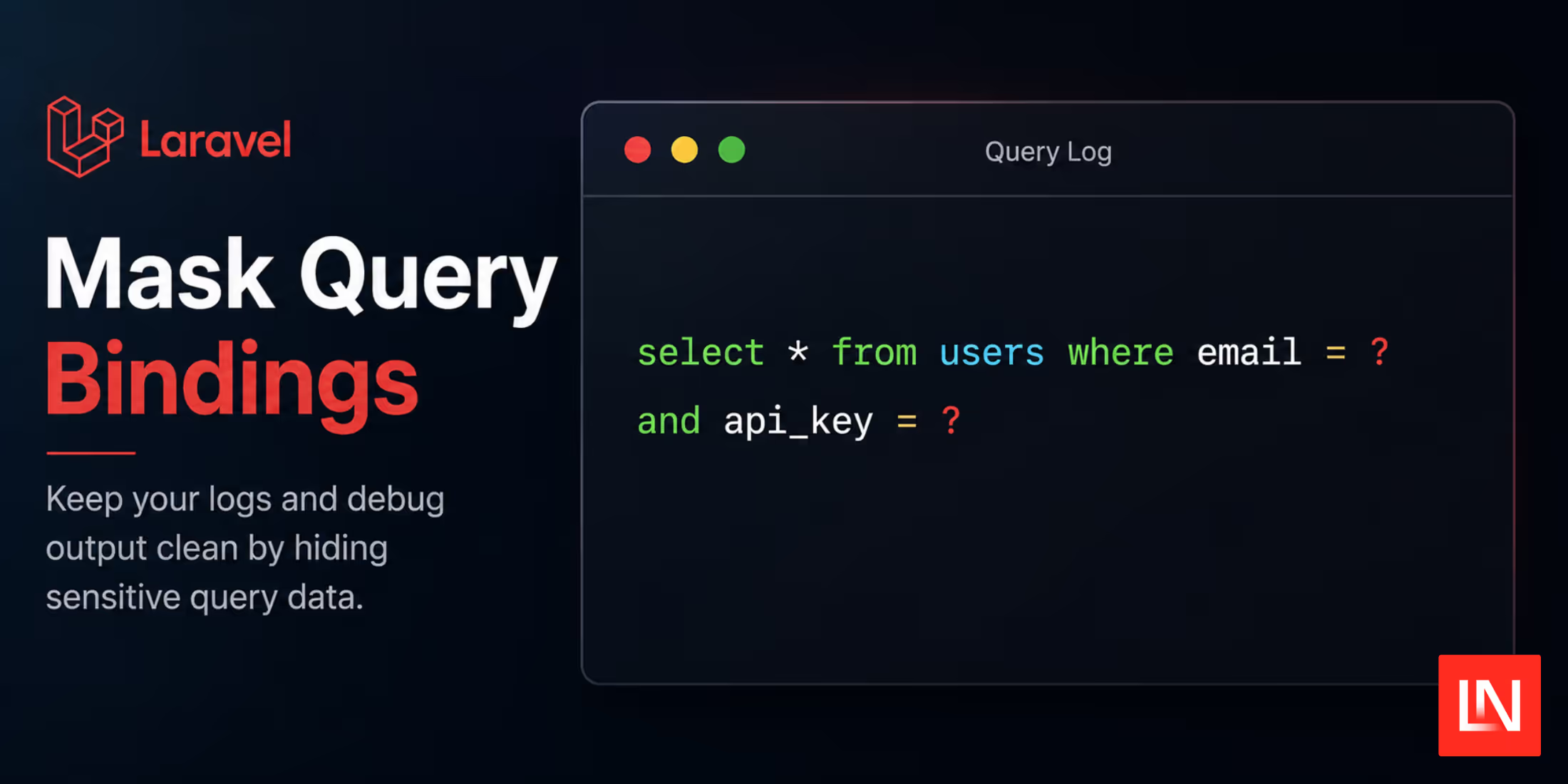
When a query fails, Laravel builds a QueryException whose message contains the SQL with every bound value interpolated into it. That is deliberate. A message reading SQL: insert into "users" ("email") values (?) tells you almost nothing about which row broke, while the version with the value tells you immediately.
The problem is that the message does not stay where you can see it. It is a string on an exception, and exceptions get written down.
SQLSTATE[23000]: Integrity constraint violation: 1062 Duplicate entry 'ada@example.com' for key 'users_email_unique' (Connection: mysql, Host: 10.0.4.17, Port: 3306, Database: platform, SQL: insert into `users` (`email`, `name`, `national_id`) values (ada@example.com, Ada Lovelace, 640312-4185))Every value bound to that insert is now in a log line. If the query ran inside a queued job, the same string is in the exception column of your failed_jobs table, because DatabaseFailedJobProvider::log() casts the exception to a string and inserts it. If you run an APM or OpenTelemetry agent, it recorded the exception on the span. Anywhere your exception reporting sends data is now holding a copy of whatever those bindings were: email addresses, names, government identifiers, an API token being written into an integrations table.
Laravel 13.27 adds a per-connection option to stop the interpolation.
Turning It On
Set mask_bindings_in_exception_messages on the connection:
'connections' => [ 'mysql' => [ 'driver' => 'mysql', // ... 'mask_bindings_in_exception_messages' => env('DB_MASK_BINDINGS', false), ],],The key ships in the framework's own config/database.php on all five default connections, so an application that has never published that file can turn masking on with an environment variable alone:
DB_MASK_BINDINGS=trueThe message then keeps its ? placeholders:
SQLSTATE[23000]: Integrity constraint violation: 1062 Duplicate entry 'ada@example.com' for key 'users_email_unique' (Connection: mysql, Host: 10.0.4.17, Port: 3306, Database: platform, SQL: insert into `users` (`email`, `name`, `national_id`) values (?, ?, ?))