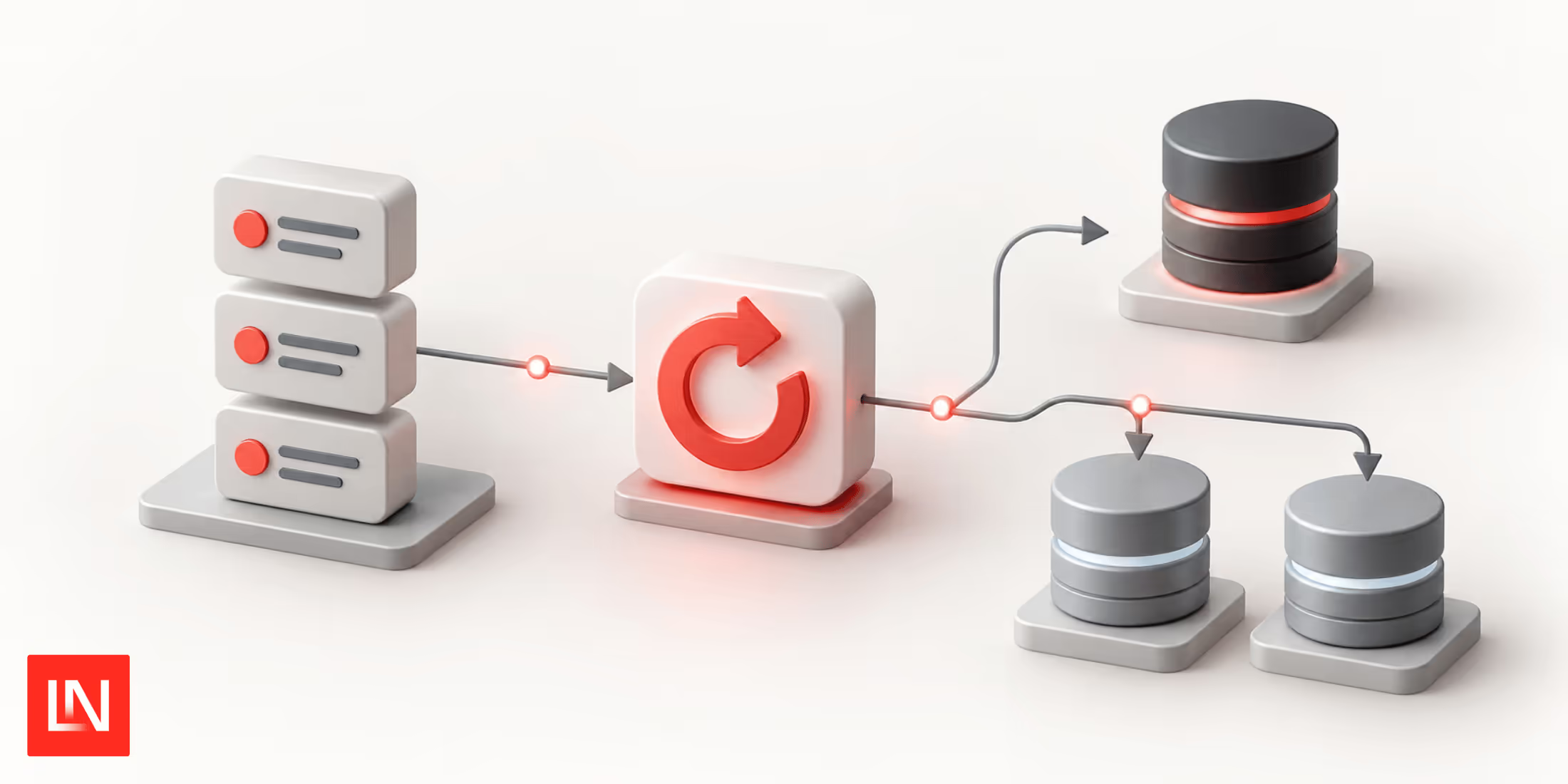
The Laragear Populate package by @DarkGhostHunter is a supercharged, continuable seeder for Laravel applications. This package provides useful features on top of Laravel's database seeding system, including continuing failed seeding attempts:
By hijacking the default Seeder with a better one, we can supercharge the seed system to allow per-step seeding, skipping and continuable seeding, without sacrificing on its normal features, and keeping compatibility with classic seeding classes.
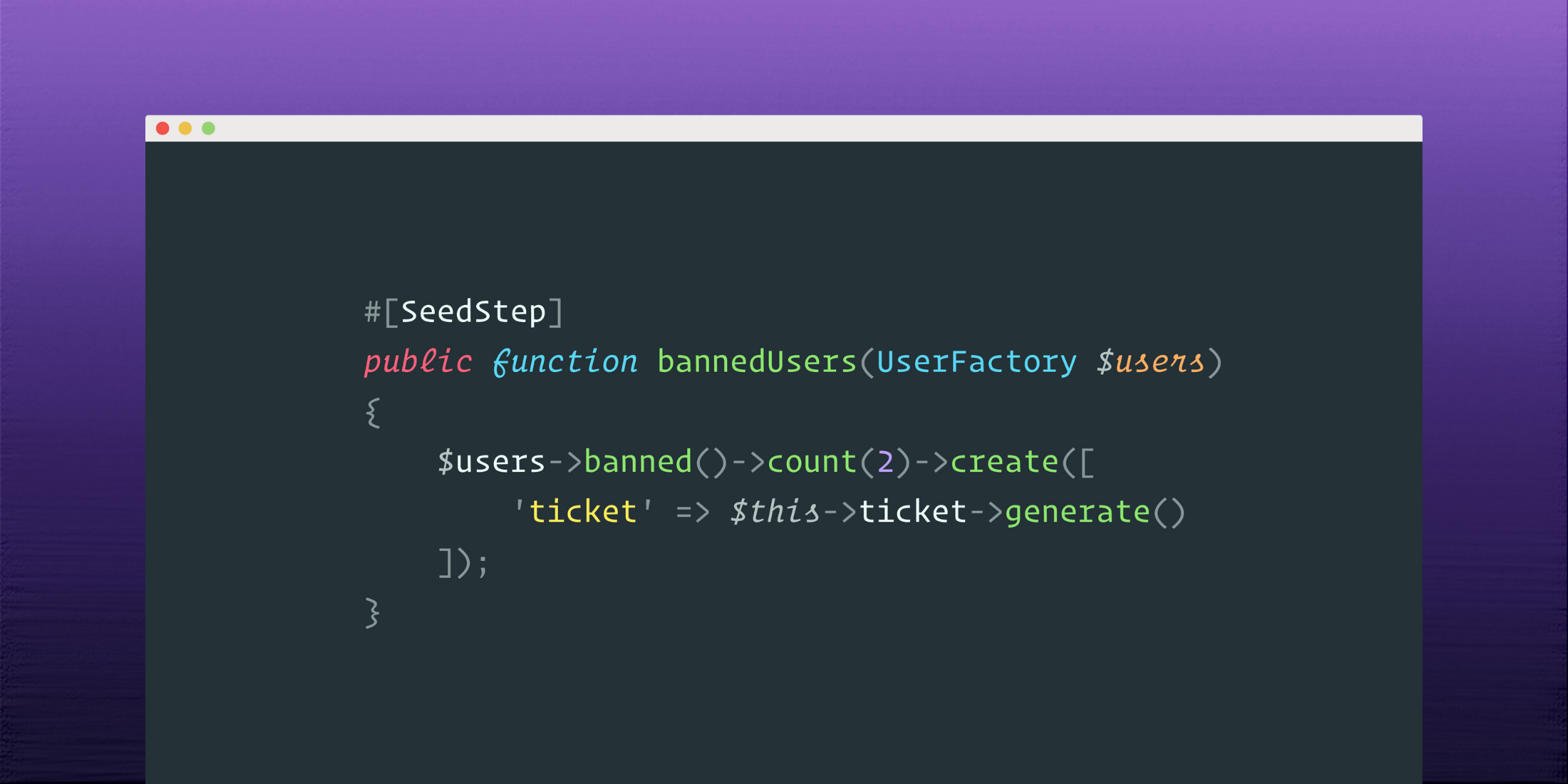
Populate seeders work using seed steps, which is a public method that starts with seed or a method using the SeedStep attribute. That means your seeder can be more organized based on the type of data you want to seed. The following example from the package's readme demonstrates multiple methods that will be called, and the ability to use dependency injection as well:
namespace Database\Seeders; use Database\Factories\UserFactory;use Laragear\Populate\Attributes\SeedStep;use Laragear\Populate\Seeder;use App\TicketGenerator; class UserSeeder extends Seeder{ public function __construct(protected TicketGenerator $ticket) { // ... } public function seedNormalUsers(UserFactory $users) { $users->count(5)->create(['ticket' => $this->ticket->generate()]); } public function seedVipUsers(UserFactory $users) { $users->vip()->count(3)->create(); } #[SeedStep] public function bannedUsers(UserFactory $users) { $users->banned()->count(2)->create(['ticket' => $this->ticket->generate()]); }}In addition to running seed steps, seeders using Populate can define a before(), after(), onError() method, and use a skip() method during the before() call to skip a seeded step based on custom conditions:
if (User::query()->banned()->exists()) { $this->skip();}Main Features
- Modular Seeding Structure: Organize your seeders into distinct methods within a single class, allowing for clear separation of different data sets (e.g., seedNormalUsers(), seedBannedUsers()).
- Continuable Seeding: Facilitates the continuation of seeding processes, making it easier to manage and resume complex seeding operations without redundancy.
- Enhanced Readability and Maintenance: By structuring seeders into specific methods, the code becomes more readable and easier to maintain, especially in large projects.
- Integration with Laravel's Seeder: Extends Laravel's native seeding functionality, ensuring compatibility and leveraging existing features.
- Support for PHP 8 and Laravel 10+: Built to work seamlessly with modern PHP and Laravel versions, ensuring up-to-date practices and compatibility.
The package's README has extensive documentation on all the features in the Laragear Populate seeder. You can learn more about this package, get full installation instructions, and view the source code on GitHub.