Laravel provides robust tools for examining client content type preferences through the Accept header. These methods enable sophisticated content negotiation strategies in your applications.
Laravel offers two key methods for content type inspection:
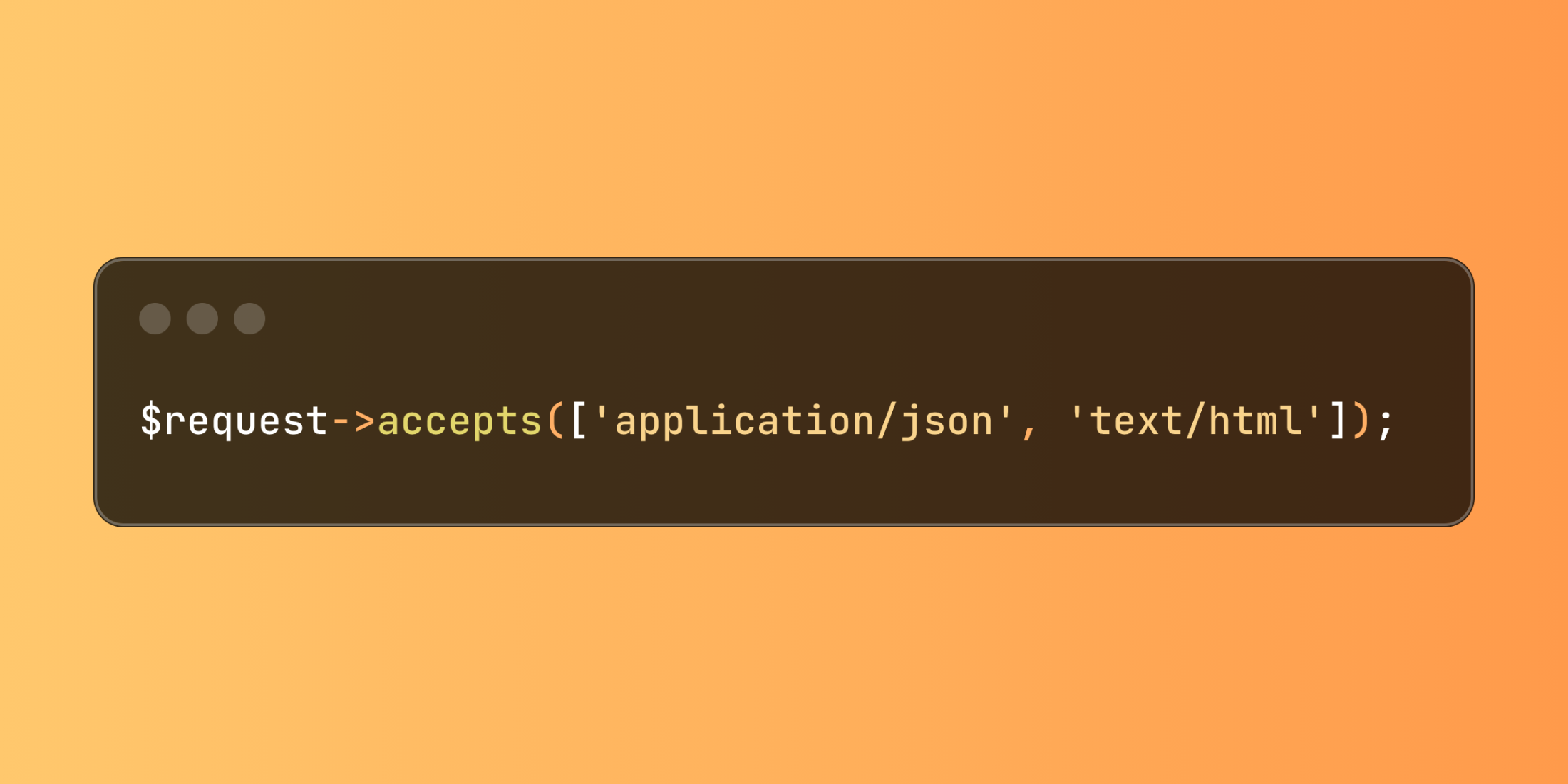
$allTypes = $request->getAcceptableContentTypes(); $canHandle = $request->accepts(['application/json', 'text/html']);The first method returns all accepted content types, while the second checks if the request accepts any from your specified list.
class ProductController extends Controller{ public function catalog(Request $request) { $products = Product::with('category')->paginate(20); $acceptedTypes = $request->getAcceptableContentTypes(); if ($request->accepts(['application/json'])) { return response()->json([ 'products' => $products->items(), 'pagination' => [ 'current_page' => $products->currentPage(), 'total_pages' => $products->lastPage(), 'per_page' => $products->perPage() ] ]); } if ($request->accepts(['application/xml'])) { return response() ->view('products.xml', compact('products')) ->header('Content-Type', 'application/xml'); } if ($request->accepts(['text/csv'])) { $csvData = $this->generateProductCsv($products); return response($csvData) ->header('Content-Type', 'text/csv') ->header('Content-Disposition', 'attachment; filename="products.csv"'); } return view('products.catalog', compact('products')); } public function details(Request $request, Product $product) { $supportedFormats = ['application/json', 'text/html', 'application/pdf']; if (!$request->accepts($supportedFormats)) { return response()->json([ 'error' => 'Unsupported content type', 'supported' => $supportedFormats ], 406); } if ($request->accepts(['application/json'])) { return response()->json([ 'product' => $product->load(['reviews', 'specifications']), 'related_products' => $product->getRelatedProducts(5), 'average_rating' => $product->reviews->avg('rating') ]); } if ($request->accepts(['application/pdf'])) { $pdf = $this->generateProductPdf($product); return response($pdf) ->header('Content-Type', 'application/pdf') ->header('Content-Disposition', 'inline; filename="product-' . $product->id . '.pdf"'); } return view('products.details', compact('product')); } private function generateProductCsv($products) { $output = "ID,Name,Price,Category,Stock\n"; foreach ($products as $product) { $output .= sprintf( "%d,%s,%.2f,%s,%d\n", $product->id, $product->name, $product->price, $product->category->name, $product->stock_quantity ); } return $output; } private function generateProductPdf(Product $product) { $pdf = new ProductPdfGenerator(); return $pdf->generate($product); }}These content inspection methods enable dynamic response formatting based on client capabilities, creating more versatile and user-friendly applications.