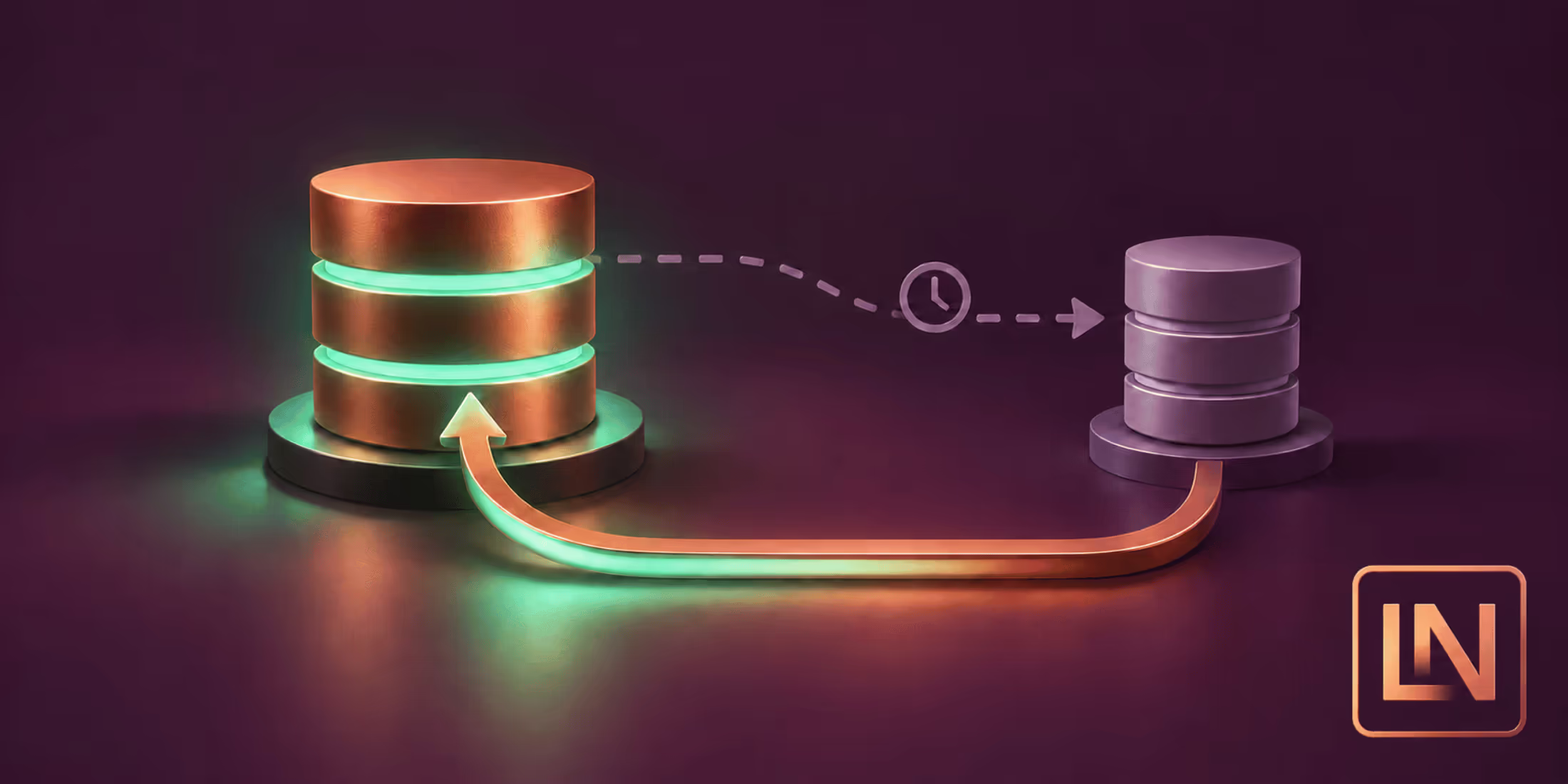
Laravel's Sleep helper delivers a sophisticated approach to introducing controlled delays in your application logic. This utility proves essential when managing execution timing, particularly for operations that require careful pacing due to external API constraints or resource limitations.
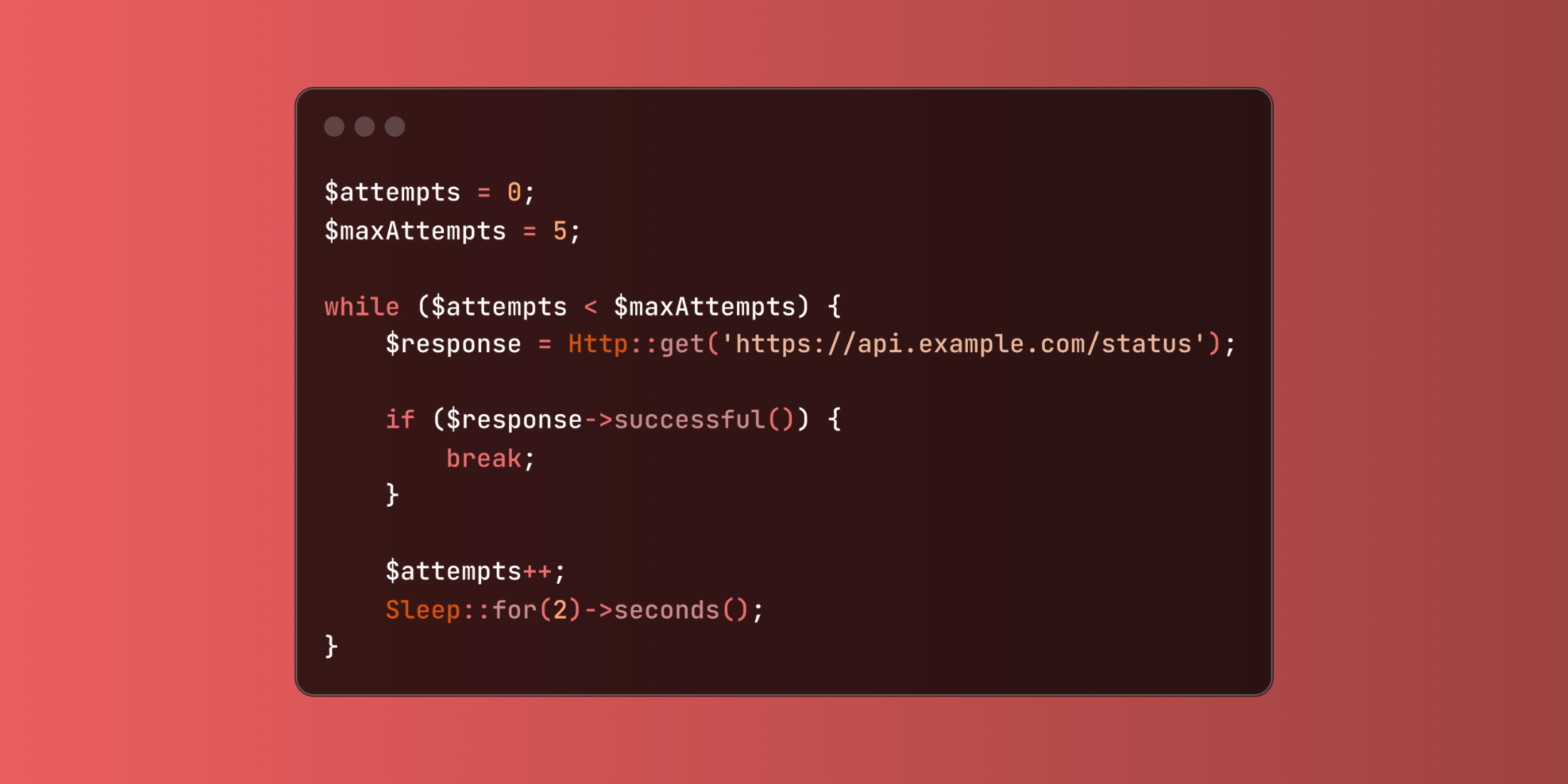
The Sleep helper provides an intuitive fluent interface for creating execution pauses with precise time control:
use Illuminate\Support\Sleep; $attempts = 0;$maxAttempts = 5; while ($attempts < $maxAttempts) { $response = Http::get('https://api.example.com/status'); if ($response->successful()) { break; } $attempts++; Sleep::for(2)->seconds();}The helper supports multiple time units including seconds, milliseconds, minutes, and microseconds, enabling precise timing control for various scenarios.
Consider a data import command that processes large CSV files while respecting system resources and external service limitations:
<?php namespace App\Console\Commands; use Illuminate\Console\Command;use Illuminate\Support\Sleep;use Illuminate\Support\Facades\Http;use Illuminate\Support\Facades\DB; class ImportCustomersCommand extends Command{ protected $signature = 'import:customers {file}'; protected $description = 'Import customers from CSV file'; public function handle() { $filePath = $this->argument('file'); $customers = $this->readCsvFile($filePath); $this->info("Starting import of " . count($customers) . " customers..."); foreach ($customers as $index => $customerData) { $this->processCustomer($customerData); if (($index + 1) % 10 === 0) { $this->info("Processed " . ($index + 1) . " customers"); Sleep::for(1)->second(); } else { Sleep::for(200)->milliseconds(); } } $this->info('Import completed successfully!'); } private function processCustomer(array $data): void { DB::transaction(function () use ($data) { $customer = Customer::create([ 'name' => $data['name'], 'email' => $data['email'], 'phone' => $data['phone'], ]); if (!empty($data['company'])) { $this->validateCompany($data['company']); $customer->update(['company' => $data['company']]); } }); } private function validateCompany(string $companyName): bool { $response = Http::timeout(10)->get('https://company-api.com/validate', [ 'name' => $companyName ]); if ($response->failed()) { Sleep::for(3)->seconds(); return false; } Sleep::for(500)->milliseconds(); return $response->json('valid', false); } private function readCsvFile(string $filePath): array { $customers = []; $handle = fopen($filePath, 'r'); $headers = fgetcsv($handle); while (($row = fgetcsv($handle)) !== false) { $customers[] = array_combine($headers, $row); if (count($customers) % 100 === 0) { Sleep::for(100)->milliseconds(); } } fclose($handle); return $customers; }} class ApiService{ public function fetchUserData(int $userId): ?array { $maxRetries = 3; $attempt = 0; while ($attempt < $maxRetries) { $response = Http::get("https://external-api.com/users/{$userId}"); if ($response->successful()) { return $response->json(); } if ($response->status() === 429) { $retryAfter = $response->header('Retry-After', 30); Sleep::for($retryAfter)->seconds(); } else { Sleep::for(pow(2, $attempt))->seconds(); } $attempt++; } return null; } public function batchSync(array $userIds): array { $results = []; foreach ($userIds as $index => $userId) { $userData = $this->fetchUserData($userId); if ($userData) { $results[] = $userData; } if ($index < count($userIds) - 1) { Sleep::for(1)->second()->and(500)->milliseconds(); } } return $results; }}The Sleep helper integrates seamlessly with Laravel's testing framework, allowing you to verify timing behavior without actual delays during test execution. Use Sleep::fake() to mock sleep calls and Sleep::assertSlept() to confirm expected timing behavior in your test suite.