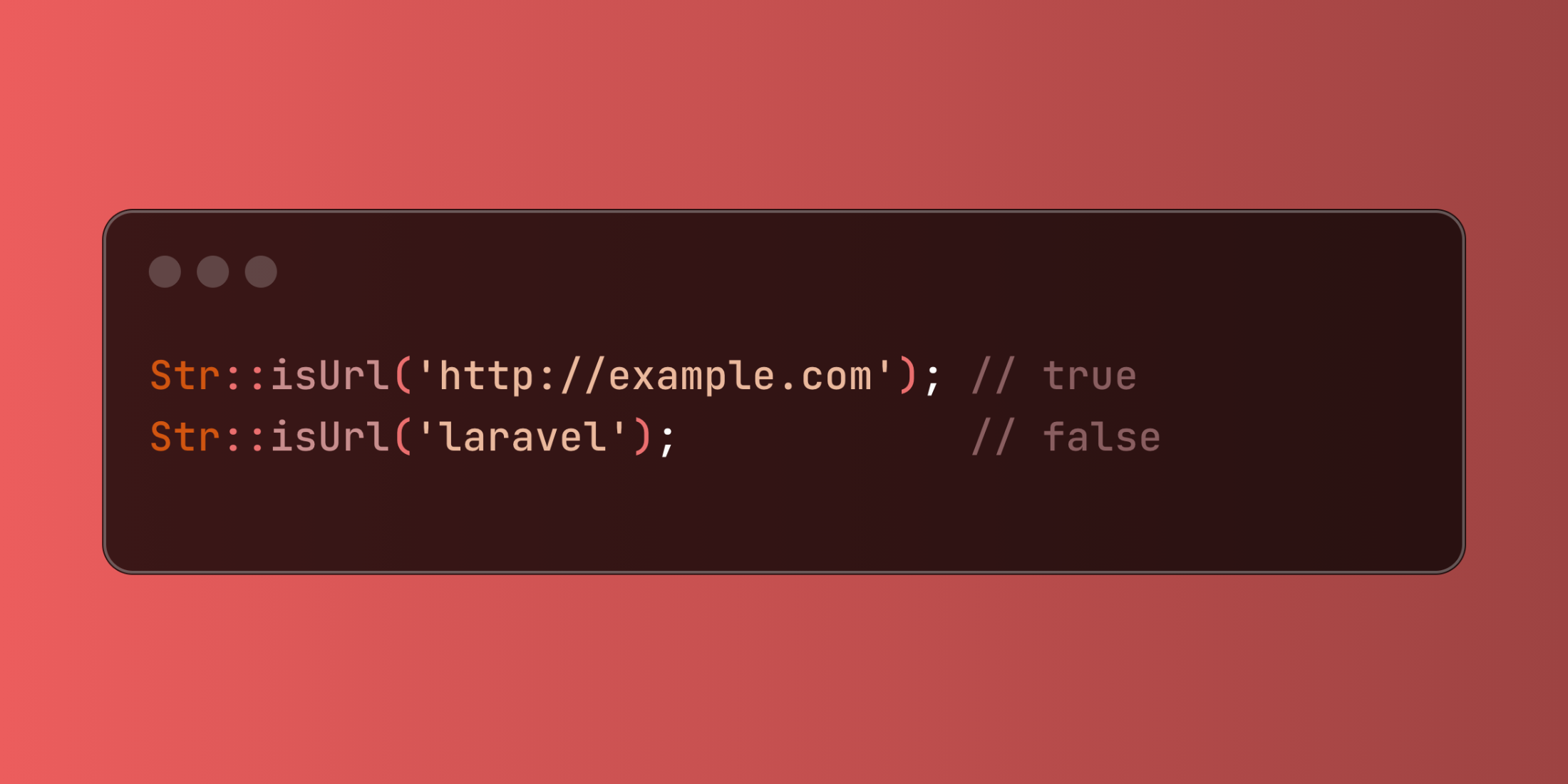
Laravel simplifies URL validation with the introduction of the Str::isUrl method, offering developers a straightforward approach to verify URL validity with optional protocol restrictions for enhanced security and flexibility.
The isUrl method provides basic URL validation with the ability to specify acceptable protocols:
use Illuminate\Support\Str;

// Basic URL validation
$isUrl = Str::isUrl('http://example.com');  // true
$isUrl = Str::isUrl('laravel');             // false

// With protocol restrictions
$isUrl = Str::isUrl('http://example.com', ['http', 'https']);
This method proves particularly valuable in content management systems requiring URL validation:
class ResourceValidator
{
    public function validateExternalLinks(array $links)
    {
        return collect($links)->filter(function ($url, $type) {
            return match ($type) {
                'documentation' => Str::isUrl($url, ['https']),
                'repository' => Str::isUrl($url, ['https']),
                'demo' => Str::isUrl($url, ['http', 'https']),
                default => Str::isUrl($url)
            };
        });
    }

    public function validateSecureResources(array $urls)
    {
        return collect($urls)
            ->filter(fn($url) => Str::isUrl($url, ['https']))
            ->values();
    }

    public function sanitizeBookmarks(array $bookmarks)
    {
        return array_filter($bookmarks, function ($bookmark) {
            // Only allow http/https URLs
            if (!Str::isUrl($bookmark, ['http', 'https'])) {
                return false;
            }
            // Additional validation logic here
            return true;
        });
    }
}

// Usage
$validator = new ResourceValidator();
$externalLinks = [
    'documentation' => 'https://docs.example.com',
    'demo' => 'http://demo.example.com',
    'invalid' => 'not-a-url'
];
$validLinks = $validator->validateExternalLinks($externalLinks);
The method excels in form validation scenarios where users submit various types of URLs:
class ProfileController extends Controller
{
    public function validateSocialMedia(Request $request)
    {
        $socialUrls = $request->input('social_urls', []);

        $validatedUrls = [];

        foreach ($socialUrls as $platform => $url) {
            if (empty($url)) continue;

            $isValid = match ($platform) {
                'linkedin' => Str::isUrl($url, ['https']) && str_contains($url, 'linkedin.com'),
                'twitter' => Str::isUrl($url, ['https']) && str_contains($url, 'twitter.com'),
                'github' => Str::isUrl($url, ['https']) && str_contains($url, 'github.com'),
                'portfolio' => Str::isUrl($url, ['http', 'https']),
                default => false
            };

            if ($isValid) {
                $validatedUrls[$platform] = $url;
            }
        }

        return $validatedUrls;
    }

    public function validateCompanyWebsites(array $websites)
    {
        return array_filter($websites, function ($website) {
            return Str::isUrl($website, ['https']) &&
                   !str_contains($website, 'localhost') &&
                   !str_contains($website, '127.0.0.1');
        });
    }
}
For API integrations requiring endpoint validation:
class WebhookService
{
    public function registerWebhook(string $url, array $events)
    {
        // Validate webhook URL is secure
        if (!Str::isUrl($url, ['https'])) {
            throw new InvalidWebhookException('Webhook URLs must use HTTPS protocol');
        }

        // Additional validation for webhook endpoints
        if (!$this->isReachableEndpoint($url)) {
            throw new InvalidWebhookException('Webhook endpoint is not reachable');
        }

        return $this->createWebhookSubscription($url, $events);
    }

    public function validateIntegrationUrls(array $integrations)
    {
        $validated = [];

        foreach ($integrations as $service => $config) {
            if (isset($config['callback_url']) &&
                Str::isUrl($config['callback_url'], ['https'])) {
                $validated[$service] = $config;
            }
        }

        return $validated;
    }
}
The isUrl method streamlines URL validation by providing a consistent, reliable approach to verify URL format while offering flexibility through protocol restrictions for enhanced security requirements.