When writing tests for API responses in Laravel, it can be useful to validate the structure of the response. Laravel has the fluent assertJson() method, which you can use to verify JSON values in a given test response:
it('Returns Arizona sports teams', function () { $this->get('api/teams/arizona') ->assertJson(function (AssertableJson $json) { $json->has('teams', 3); $json->has('teams.0', function (AssertableJson $json) { $json ->where('name', 'Phoenix Suns') ->etc(); }); });});Given the above test, here's a static example of the JSON data:
{ "teams": [ { "name": "Phoenix Suns", "sport": "Basketball" }, { "name": "Arizona Cardinals", "sport": "Football" }, { "name": "Arizona Diamondbacks", "sport": "Baseball" } ]}Our test validates that three teams are listed in Arizona and that the name property exists on the first record. That's excellent for validating the actual values to sample the response using the powerful JSON assertion APIs in Laravel. To complement those assertions, we can also validate the general structure of the whole response:
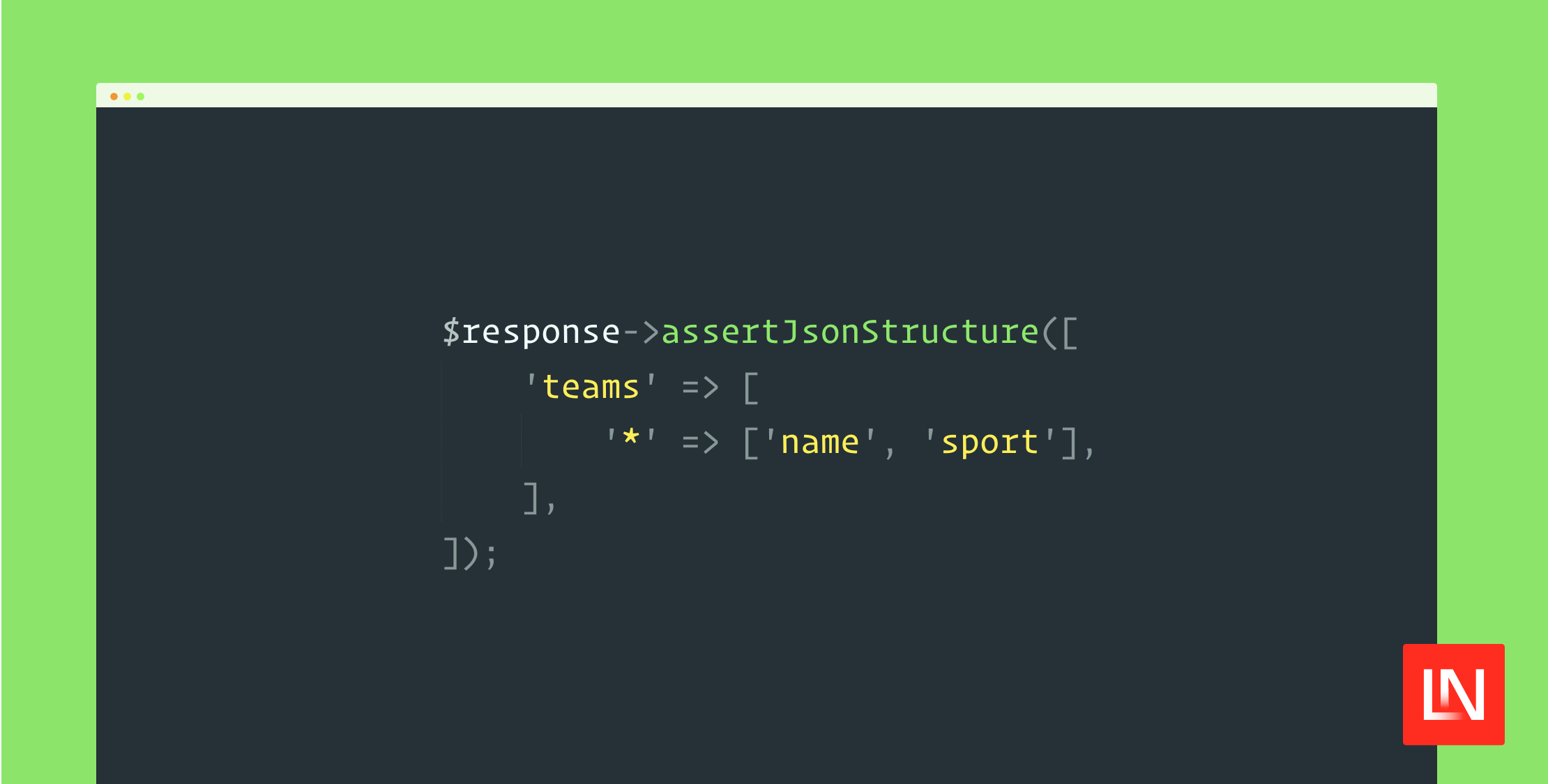
$response->assertJsonStructure([ 'teams' => [ '*' => ['name', 'sport'], ],]);One caveat to the assertJsonStucture() assertion: if we add a new key in the future, this test will continue to pass. If you require more exactness, you might need to reach for the assertExactJson(). For just generalizing a JSON structure to ensure specific properties exist in the response, assertJsonStructure() can give you confidence that the entire structure contains properties you expect.
If you need more extensive assertions around the structure of the JSON, you might also want to reach for whereType() and whereAllType() assertions. Given our earlier example, you could validate the types in your JSON responses using the following:
$response->assertJson(function (AssertableJson $json) { $json->has('teams', 3); $json->has('teams.0', function (AssertableJson $json) { $json->whereAllType([ 'name' => 'string', 'sport' => 'string', ]); });});Using whereAllType requires us to define types for each and every key in the teams item, unless you use the above with ->etc():
$json->whereAllType([ 'name' => 'string', // 'sport' => 'string',])->etc();As mentioned, the above code doesn't assert the whole response and assumes the other teams have the same structure. You could assert each team in the array, and even use Eloquent factory data to validate the response values match. Typically, combining the above assertions will ensure you have the expected JSON response shape, and you can mix in more complicated assertions where needed. See the Laravel Documentation for more examples and useful JSON assertions.