Laravel's measurement utilities provide developers with precise timing capabilities for code evaluation and optimization. These tools eliminate guesswork when comparing different implementation approaches and identifying performance bottlenecks.
The foundation measurement method displays execution time directly to the console:
use App\Models\Product;use Illuminate\Support\Benchmark; Benchmark::dd(fn () => Product::find(1));Multiple implementation approaches can be evaluated simultaneously to determine optimal performance characteristics:
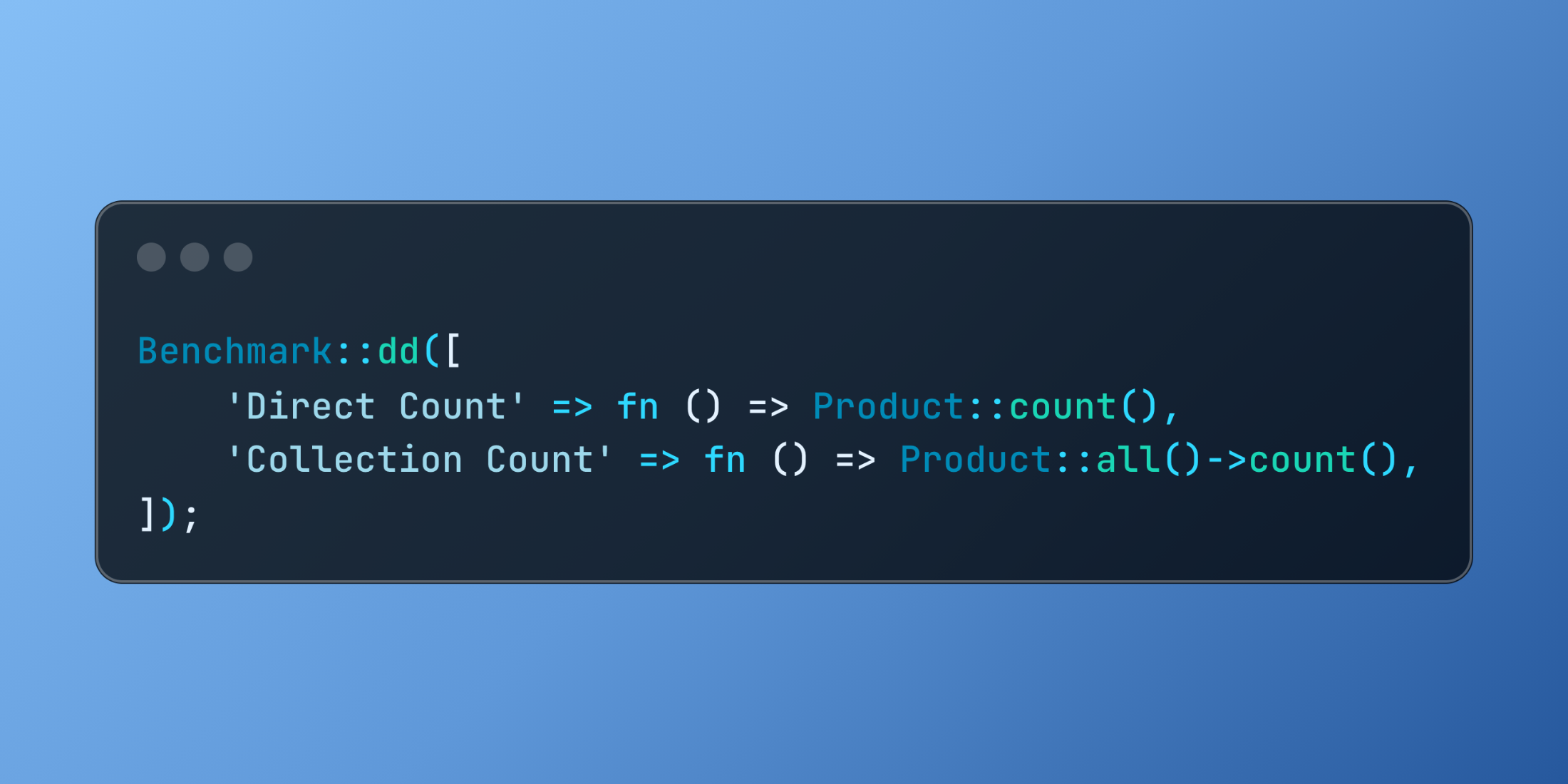
Benchmark::dd([ 'Direct Count' => fn () => Product::count(), 'Collection Count' => fn () => Product::all()->count(),]);These measurement tools integrate seamlessly with Laravel's existing infrastructure, utilizing the same encryption and configuration systems throughout your application.
Building a product recommendation system demonstrates practical measurement applications:
class RecommendationEngine{ public function analyzePerformance(): array { return Benchmark::dd([ 'Algorithm A' => fn () => $this->collaborativeFiltering(), 'Algorithm B' => fn () => $this->contentBasedFiltering(), 'Algorithm C' => fn () => $this->hybridApproach(), ]); } public function measureWithResults(): array { [$recommendations, $duration] = Benchmark::value( fn () => $this->hybridApproach() ); $this->logPerformanceMetrics($duration); return $recommendations; } private function collaborativeFiltering(): array { return Product::whereHas('purchases', function ($query) { $query->whereIn('user_id', $this->getSimilarUsers()); })->limit(10)->get()->toArray(); } private function contentBasedFiltering(): array { return Product::where('category_id', $this->user->preferred_category) ->orderBy('rating', 'desc') ->limit(10) ->get() ->toArray(); } private function hybridApproach(): array { $collaborative = collect($this->collaborativeFiltering()); $contentBased = collect($this->contentBasedFiltering()); return $collaborative->merge($contentBased) ->unique('id') ->take(10) ->values() ->toArray(); }}The measurement framework supports iteration control for enhanced accuracy when testing rapid operations. Running operations multiple times and averaging results provides more reliable performance data, especially when comparing subtle differences between implementation strategies.