▶️ Watch the video tutorial (15 minutes)
Building a Flexible Reporting System with Laravel Collections and Scopes
You've built custom collections and query scopes, but your reporting logic is still scattered across controllers, API endpoints, and commands. The same business insights get calculated differently in each place, making maintenance difficult and increasing the chance of inconsistencies.
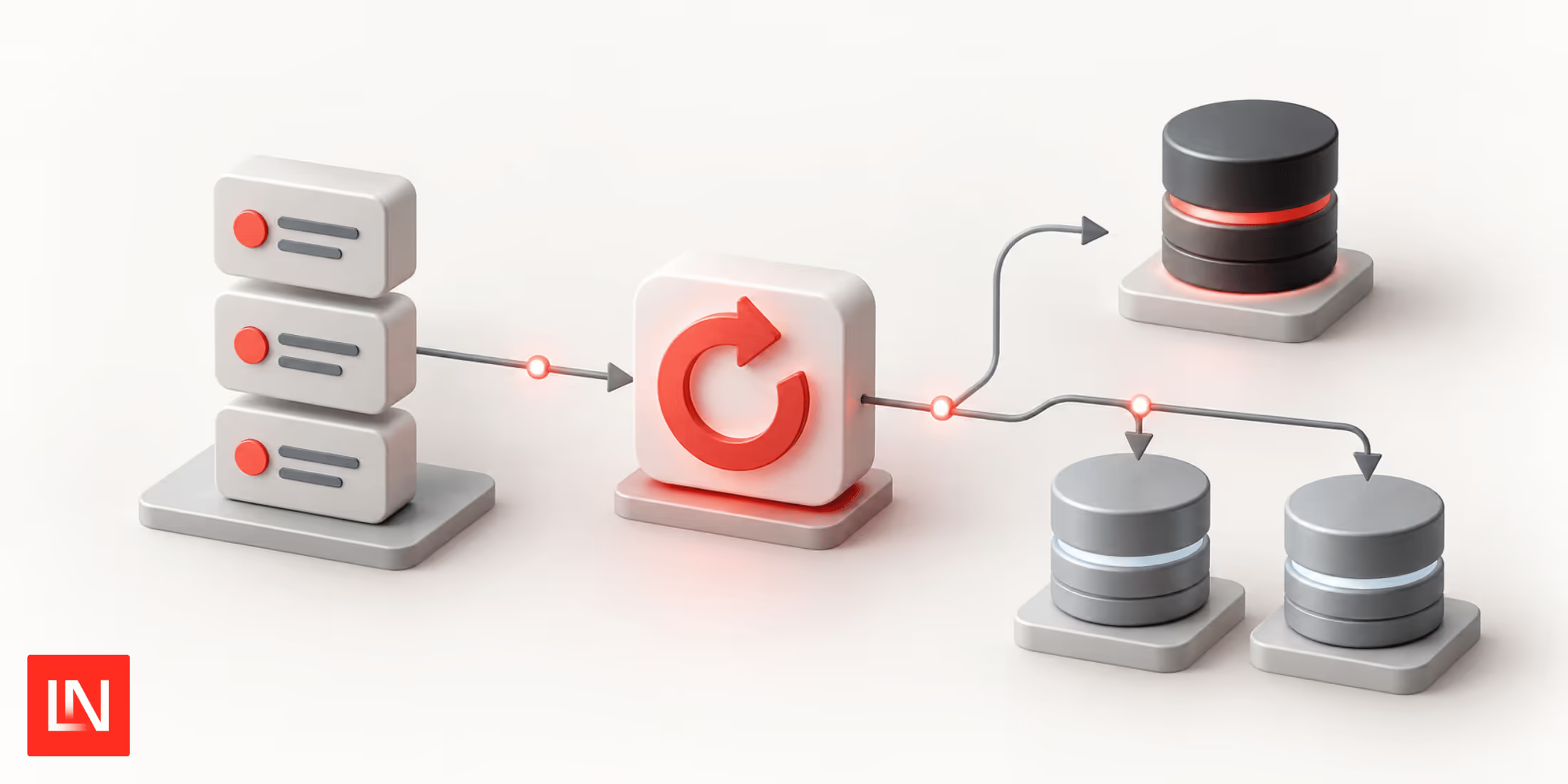
In my latest video, I show you how to combine the custom collections and query scopes from previous episodes into a unified reporting system. You'll learn to create a service layer that orchestrates your scopes for filtering and collections for analysis, providing consistent reports across your entire application.
The result? A single source of truth for your business reports that works seamlessly in web dashboards, API responses, and CLI commands. Your reporting logic becomes centralized and testable, while your controllers become simple coordinators that just pass data to views or format JSON responses.
This builds directly on Episodes 1 and 2, where we created custom collection methods and query scopes. Now you'll see the real power when these patterns work together. The scopes filter your data elegantly, the collections analyze it intelligently, and the service layer orchestrates everything cleanly.
Whether you're building dashboards, generating scheduled reports, or providing API analytics, this approach will transform how you handle reporting in Laravel. This is Episode 3 of Laravel In Practice, where we're building a complete production system with clean, maintainable architecture.
The reporting system we create here becomes the foundation for the comprehensive testing strategies in Episode 4, and later connects to our real-time dashboards and performance optimization series. Each episode builds on the last, creating a robust, production-ready application.