When building applications that handle concurrent operations, ensuring that certain processes don't interfere with each other becomes crucial. Laravel's Cache lock system provides a robust solution for managing process synchronization, whether you're processing uploads, handling webhooks, or running background tasks.
The Cache lock system allows you to create distributed locks - meaning they work across different servers, processes, and queue workers - making them perfect for preventing race conditions in distributed systems.
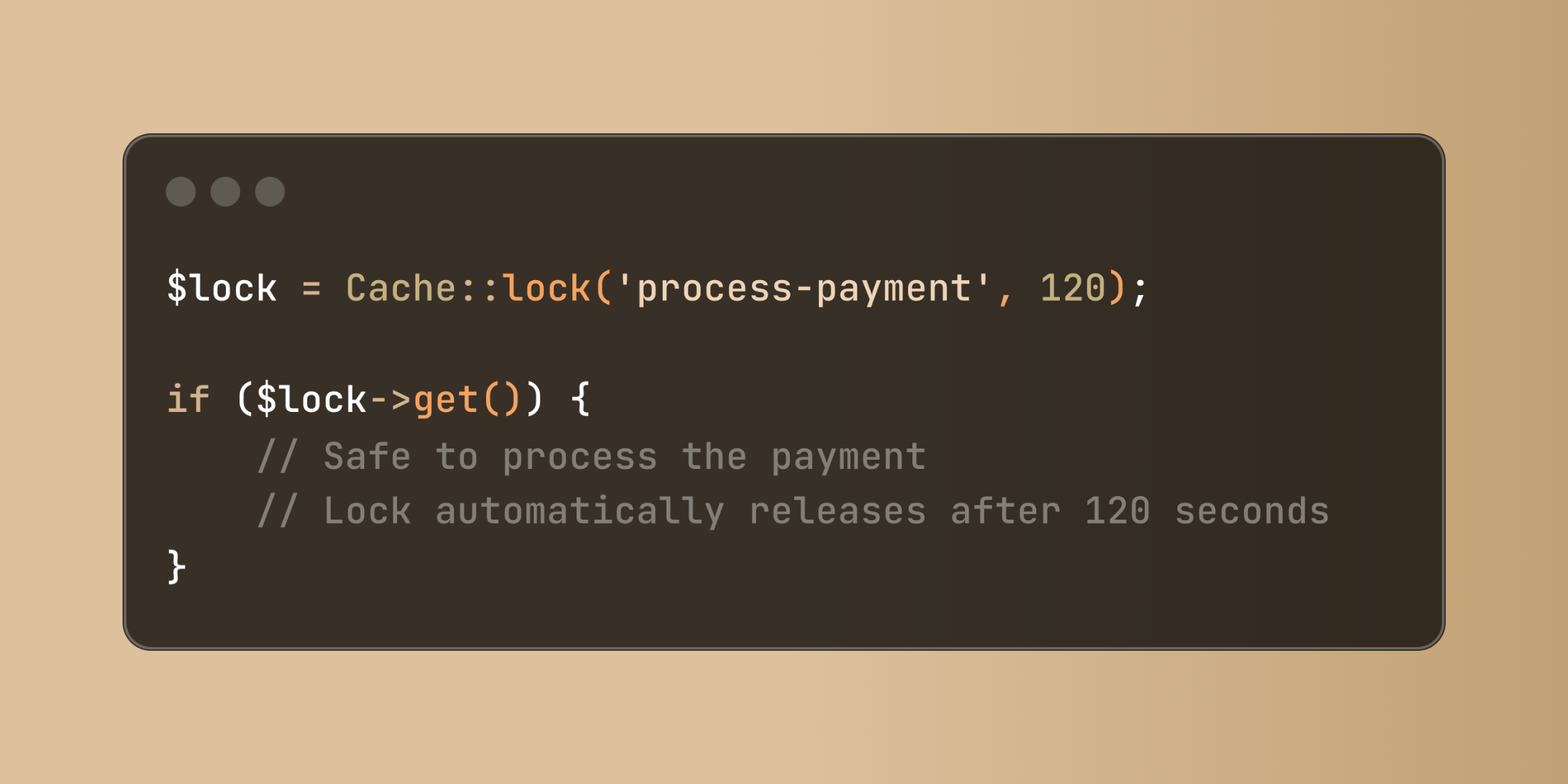
use Illuminate\Support\Facades\Cache; $lock = Cache::lock('process-payment', 120); if ($lock->get()) { // Safe to process the payment // Lock automatically releases after 120 seconds}A practical example of handling webhook processing with locks is the following:
<?php namespace App\Http\Controllers; use Illuminate\Support\Facades\Cache;use App\Jobs\ProcessWebhook; class WebhookController extends Controller{ public function handle(Request $request) { $webhookId = $request->input('webhook_id'); $lockName = "webhook-{$webhookId}"; $lock = Cache::lock($lockName, 60); try { if (!$lock->get()) { Log::info("Webhook {$webhookId} is already being processed"); return response()->json([ 'message' => 'Webhook is being processed' ], 409); } // Initial validation $this->validateWebhook($request); // Dispatch processing job with lock information ProcessWebhook::dispatch( $request->all(), $lock->owner() )->onQueue('webhooks'); return response()->json([ 'message' => 'Webhook accepted for processing', 'processing_id' => $lock->owner() ]); } catch (Exception $e) { $lock?->release(); throw $e; } }} class ProcessWebhook implements ShouldQueue{ public function __construct( private array $payload, private string $lockOwner ) {} public function handle() { $lock = Cache::restoreLock( "webhook-{$this->payload['webhook_id']}", $this->lockOwner ); try { // Process webhook safely, knowing we have the lock $this->processWebhookPayload(); } finally { // Always release the lock when done $lock->release(); } }}Laravel's Cache locks provide a reliable way to handle process synchronization, ensuring your application maintains data integrity even when dealing with concurrent operations.