Laravel's collection system provides the diffKeys method for identifying differences between collections based on their keys rather than values, enabling precise comparison and configuration management tasks.
The diffKeys method compares collections by examining their key structures:
$collection = collect([
    'one' => 10,
    'two' => 20,
    'three' => 30,
    'four' => 40,
    'five' => 50,
]);

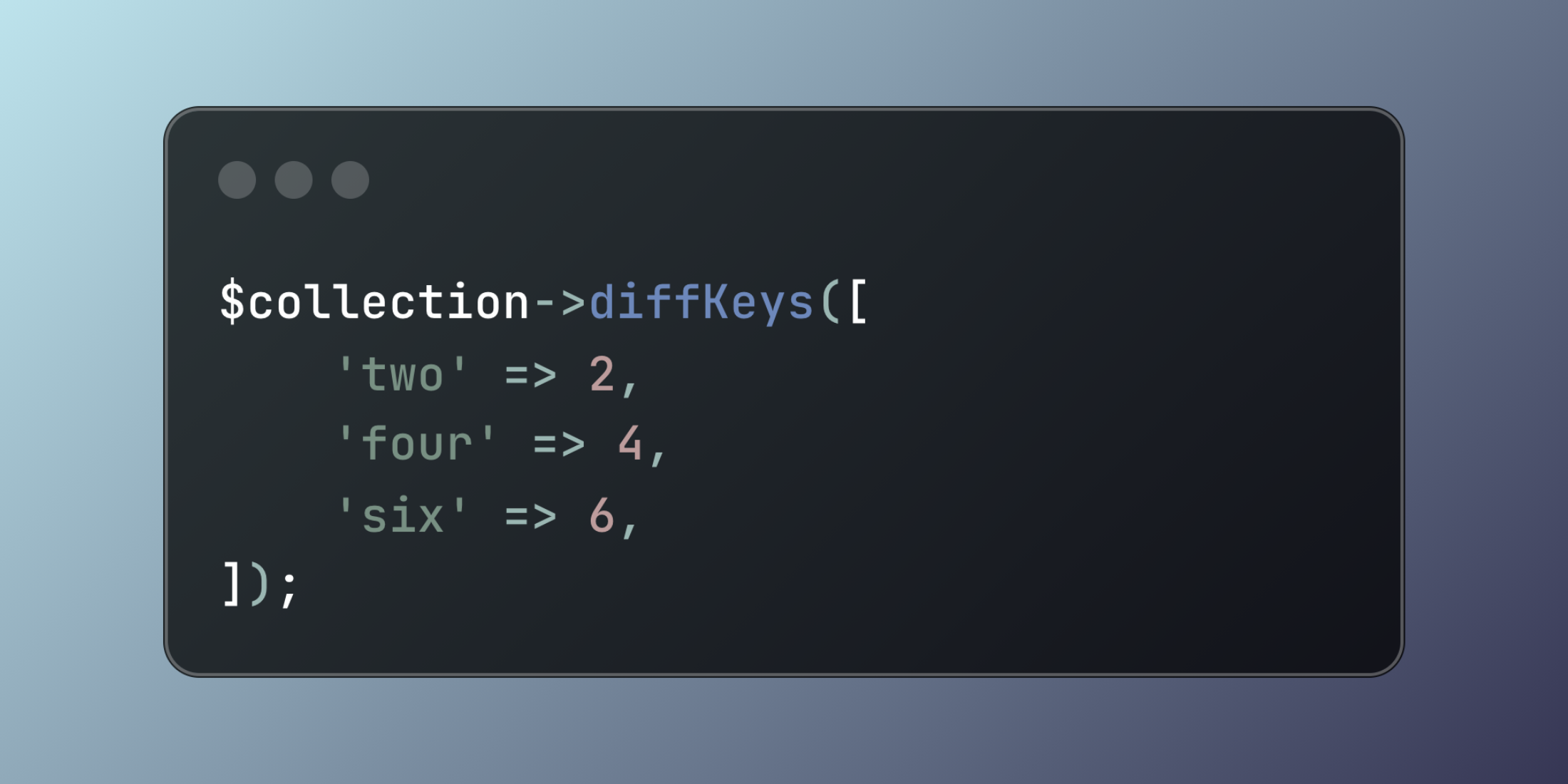
$diff = $collection->diffKeys([
    'two' => 2,
    'four' => 4,
    'six' => 6,
]);
// Result: ['one' => 10, 'three' => 30, 'five' => 50]
This method proves particularly valuable in settings management systems:
class SettingsManager
{
    public function findDeprecatedSettings(array $currentSettings, array $supportedSettings)
    {
        return collect($currentSettings)
            ->diffKeys($supportedSettings)
            ->map(function ($value, $key) {
                return [
                    'setting' => $key,
                    'current_value' => $value,
                    'deprecated_at' => now()
                ];
            });
    }

    public function validateEssentialKeys(array $settings)
    {
        $essential = [
            'app_name' => null,
            'environment' => null,
            'debug_mode' => null
        ];

        $missing = collect($essential)
            ->diffKeys($settings)
            ->keys();

        if ($missing->isNotEmpty()) {
            throw new MissingSettingsException(
                'Essential settings missing: ' .
                $missing->implode(', ')
            );
        }

        return true;
    }

    public function compareEnvironments(array $production, array $staging)
    {
        $prodOnly = collect($production)->diffKeys($staging);
        $stagingOnly = collect($staging)->diffKeys($production);

        return [
            'production_only' => $prodOnly->all(),
            'staging_only' => $stagingOnly->all(),
            'total_differences' => $prodOnly->count() + $stagingOnly->count()
        ];
    }
}
The method excels in permission and access control scenarios:
class PermissionManager
{
    public function findRevokedPermissions(array $previousPerms, array $currentPerms)
    {
        return collect($previousPerms)
            ->diffKeys($currentPerms)
            ->map(function ($granted, $permission) {
                return [
                    'permission' => $permission,
                    'was_granted' => $granted,
                    'revoked_at' => now()
                ];
            });
    }

    public function validateUserAccess(array $userPermissions, array $requiredAccess)
    {
        $missingAccess = collect($requiredAccess)
            ->diffKeys($userPermissions)
            ->keys();

        return [
            'has_access' => $missingAccess->isEmpty(),
            'missing_permissions' => $missingAccess->all()
        ];
    }

    public function auditPermissionChanges(array $before, array $after)
    {
        $added = collect($after)->diffKeys($before);
        $removed = collect($before)->diffKeys($after);

        return [
            'permissions_added' => $added->keys()->all(),
            'permissions_removed' => $removed->keys()->all(),
            'change_summary' => [
                'additions' => $added->count(),
                'removals' => $removed->count()
            ]
        ];
    }
}
For feature flag management:
class FeatureFlagService
{
    public function syncFeatureFlags(array $serverFlags, array $clientFlags)
    {
        $serverOnly = collect($serverFlags)->diffKeys($clientFlags);
        $clientOnly = collect($clientFlags)->diffKeys($serverFlags);

        return [
            'flags_to_add' => $serverOnly->all(),
            'flags_to_remove' => $clientOnly->keys()->all(),
            'sync_required' => $serverOnly->isNotEmpty() || $clientOnly->isNotEmpty()
        ];
    }

    public function validateFeatureAccess(array $userFlags, array $requiredFeatures)
    {
        $unavailable = collect($requiredFeatures)
            ->diffKeys($userFlags)
            ->keys();

        if ($unavailable->isNotEmpty()) {
            throw new FeatureAccessException(
                'Access denied to features: ' . $unavailable->implode(', ')
            );
        }

        return true;
    }
}
The diffKeys method streamlines key-based comparison tasks by focusing on structural differences rather than value comparisons, making it ideal for configuration validation, permission auditing, and synchronization scenarios.