Laravel factories automatically create related models when relationships are defined, but this behavior can produce unnecessary database records during testing. The dontExpandRelationshipsByDefault() method controls whether factories instantiate parent relationships automatically.
Factories often create a cascade of related models when you only need the primary model for your test. This results in extra database writes that slow test execution and complicate test isolation.
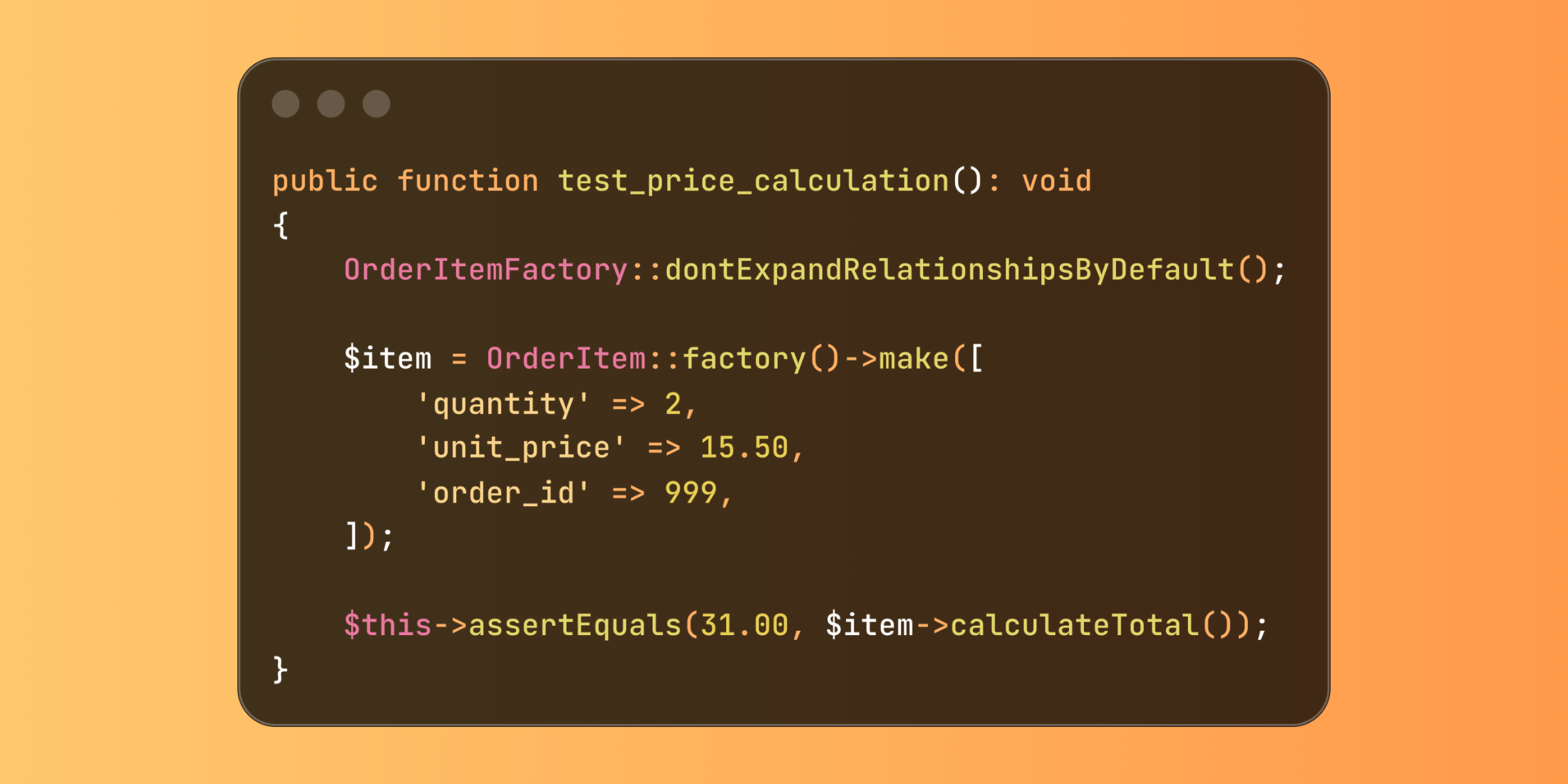
use App\Models\OrderItem;use Database\Factories\OrderItemFactory; public function test_price_calculation(): void{ OrderItemFactory::dontExpandRelationshipsByDefault(); $item = OrderItem::factory()->make([ 'quantity' => 2, 'unit_price' => 15.50, 'order_id' => 999, ]); $this->assertEquals(31.00, $item->calculateTotal());}This test validates price calculation logic without creating Order, Product, or Customer records. The factory generates only the OrderItem instance needed for the assertion.
Testing collections with relationship expansion disabled keeps tests focused on the logic being verified:
use App\Models\Subscription;use Database\Factories\SubscriptionFactory; public function test_active_subscriptions_filter(): void{ SubscriptionFactory::dontExpandRelationshipsByDefault(); $subscriptions = collect([ Subscription::factory()->make(['status' => 'active', 'plan_id' => 1]), Subscription::factory()->make(['status' => 'cancelled', 'plan_id' => 2]), Subscription::factory()->make(['status' => 'active', 'plan_id' => 1]), ]); $active = $subscriptions->filter(fn($sub) => $sub->isActive()); $this->assertCount(2, $active);}The complementary method restores default behavior:
SubscriptionFactory::expandRelationshipsByDefault();Toggle this setting throughout your test suite as needed. When expansion is disabled, you can still create specific relationships using factory relationship methods where required.
For permission testing where you need specific attribute combinations without the overhead of user and company records:
use App\Models\Permission;use Database\Factories\PermissionFactory; public function test_permission_scope(): void{ PermissionFactory::dontExpandRelationshipsByDefault(); $permissions = collect([ Permission::factory()->make([ 'type' => 'read', 'resource_id' => 100, 'user_id' => 5, ]), Permission::factory()->make([ 'type' => 'write', 'resource_id' => 100, 'user_id' => 5, ]), Permission::factory()->make([ 'type' => 'read', 'resource_id' => 200, 'user_id' => 5, ]), ]); $writePermissions = $permissions->where('type', 'write'); $this->assertCount(1, $writePermissions);}This approach creates test data that matches your exact needs without generating related records that aren't part of the test scenario. Tests run faster and database state remains predictable across test runs.