Global scopes provide a streamlined way to apply consistent constraints across all queries for specific Eloquent models. Laravel's soft delete feature demonstrates this concept by automatically filtering out deleted records from query results.
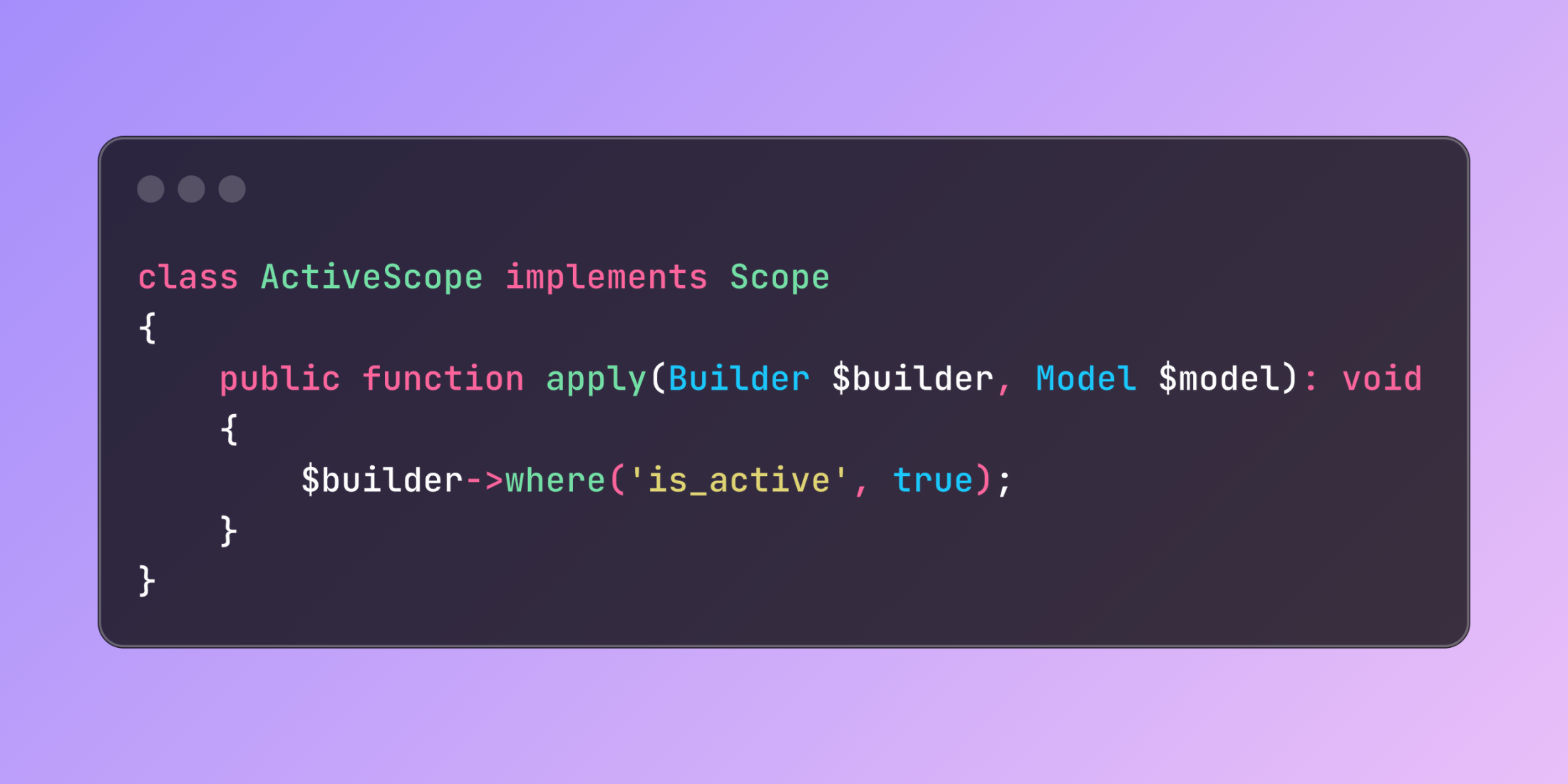
Define global scopes by creating classes that implement the Illuminate\Database\Eloquent\Scope interface:
<?php namespace App\Models\Scopes; use Illuminate\Database\Eloquent\Builder;use Illuminate\Database\Eloquent\Model;use Illuminate\Database\Eloquent\Scope; class ActiveScope implements Scope{ public function apply(Builder $builder, Model $model): void { $builder->where('is_active', true); }}Apply the scope to your model using the ScopedBy attribute to ensure all queries automatically include the constraint:
<?php namespace App\Models; use App\Models\Scopes\ActiveScope;use Illuminate\Database\Eloquent\Attributes\ScopedBy;use Illuminate\Database\Eloquent\Model; #[ScopedBy([ActiveScope::class])]class Product extends Model{ protected $fillable = ['name', 'price', 'is_active'];}This approach proves invaluable in multi-tenant applications where data isolation is critical. Consider a SaaS platform serving multiple organizations, where each tenant's data must remain completely separated:
<?php namespace App\Models\Scopes; use Illuminate\Database\Eloquent\Builder;use Illuminate\Database\Eloquent\Model;use Illuminate\Database\Eloquent\Scope; class TenantScope implements Scope{ public function apply(Builder $builder, Model $model): void { if (auth()->check() && auth()->user()->tenant_id) { $builder->where('tenant_id', auth()->user()->tenant_id); } }} class PublishedScope implements Scope{ public function apply(Builder $builder, Model $model): void { $builder->where('status', 'published') ->where('published_at', '<=', now()); }} #[ScopedBy([TenantScope::class, PublishedScope::class])]class Document extends Model{ protected $fillable = ['title', 'content', 'status', 'tenant_id', 'published_at']; protected $casts = [ 'published_at' => 'datetime', ];} class DocumentController extends Controller{ public function index() { $documents = Document::orderBy('published_at', 'desc')->get(); return view('documents.index', compact('documents')); } public function adminIndex() { $allDocuments = Document::withoutGlobalScopes([PublishedScope::class]) ->orderBy('created_at', 'desc') ->get(); return view('admin.documents.index', compact('allDocuments')); } public function systemReport() { $systemWideDocuments = Document::withoutGlobalScopes() ->selectRaw('tenant_id, count(*) as document_count') ->groupBy('tenant_id') ->get(); return view('reports.system', compact('systemWideDocuments')); }}Global scopes automatically enforce business rules at the model level, ensuring data consistency without requiring manual constraint application in every query. When necessary, you can bypass these constraints using withoutGlobalScope() for specific scopes or withoutGlobalScopes() to remove all applied global filters.