A new version of Laravel Lambo is available, written from scratch in PHP:
ICYDK, I built a tool called Lambo that gives "laravel new" superpowers–wrapping up many common tasks you take every time you start a new Laravel app.
— Matt Stauffer (@stauffermatt) March 29, 2021
After months (years?) of work, @ragus1975 & I have re-written in from scratch in PHP, & it's live now!https://t.co/TIKeuntus6
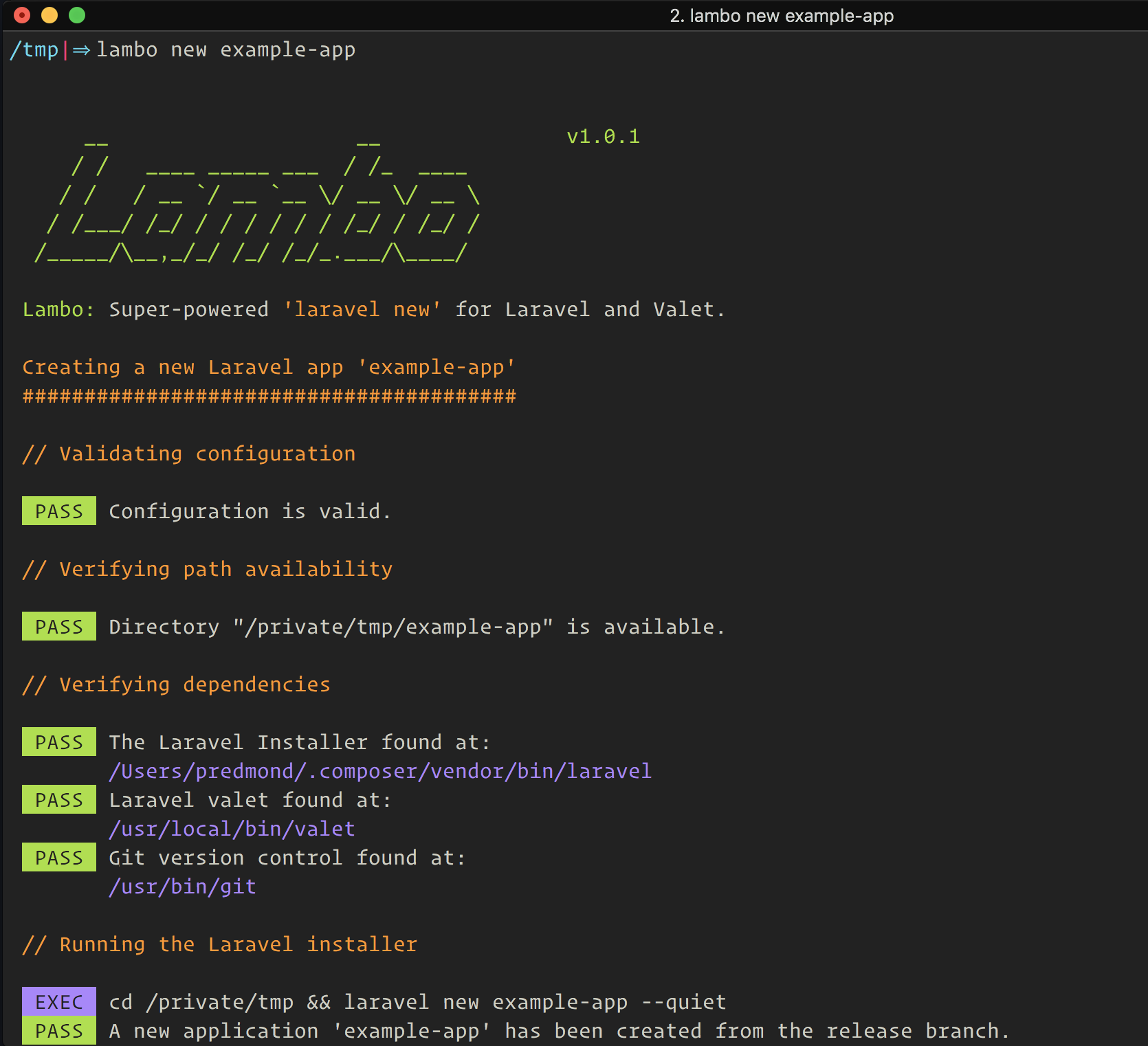
Lambo is a command-line tool that replaces the Laravel installer and takes care of everyday tasks when creating a Laravel app:
- Runs
laravel new - Initializes a git repo
- Replaces the
.envdatabase credentials with the default macOS MySQL credentials - Replaces the
APP_URLwith the conventional Valet URL based on folder and Valet TLD - Generates an app key
- Opens the project in your favorite editor
- Opens the project in the browser
You can also customize behavior by creating a config file and an "after" file to run additional commands after creating the project.
You install this project globally with composer, similar to other tools like the Laravel Installer:
composer global require tightenco/lambo:^1.0The source code provides an excellent example of how to craft CLI applications using PHP and tools like Laravel, Symfony, and Laravel Zero.