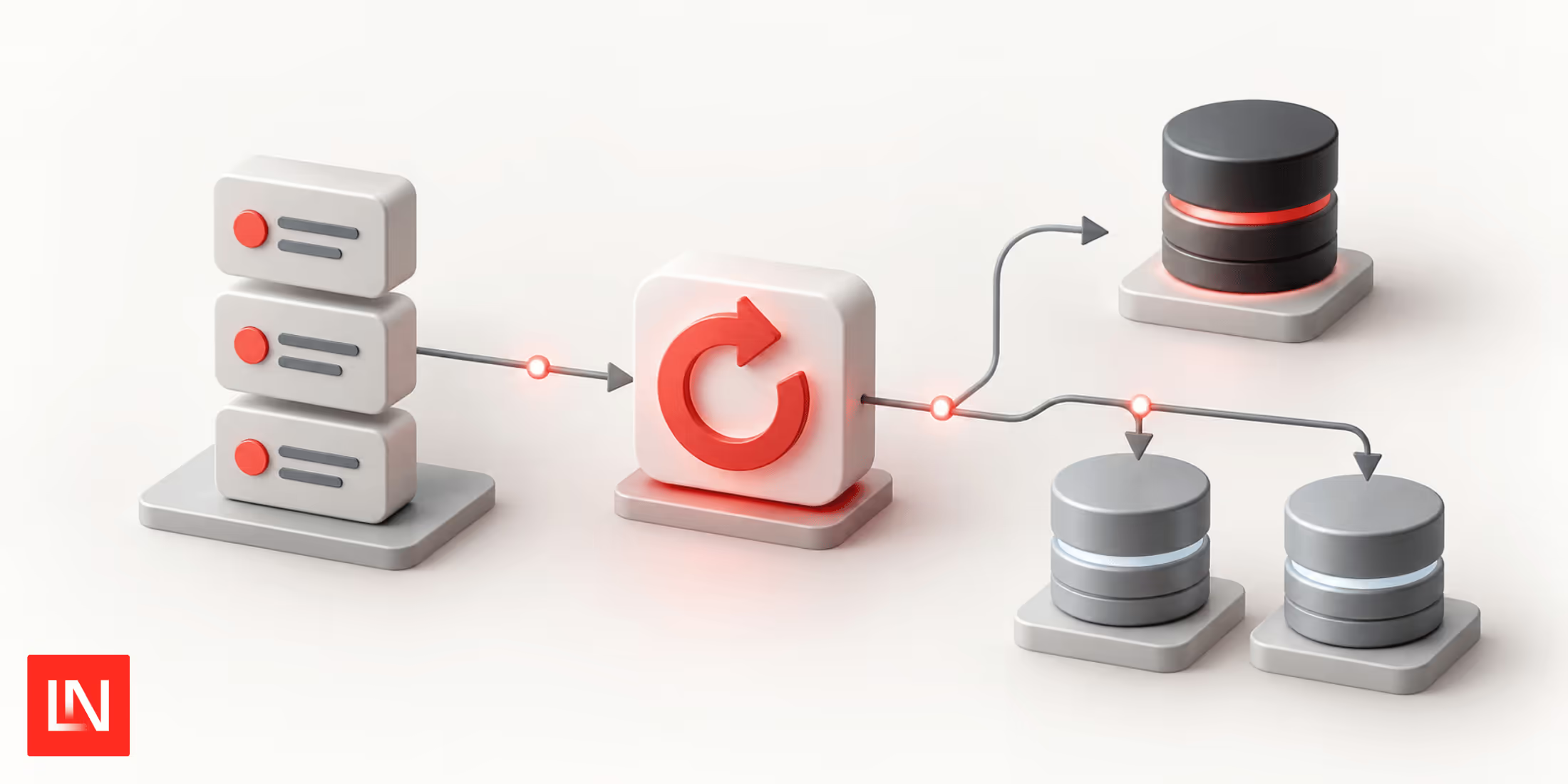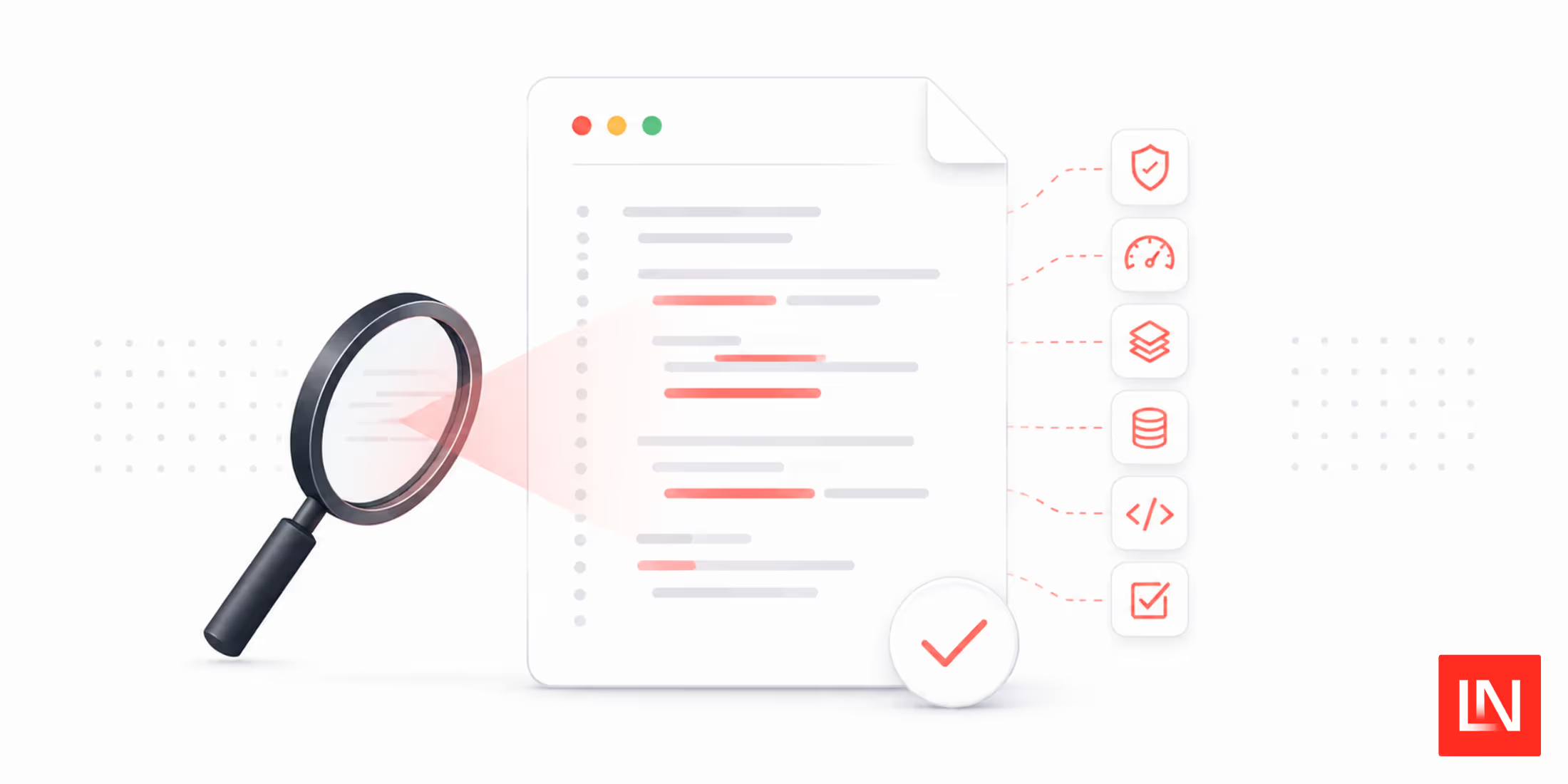
Ask an AI agent to audit your Laravel application and you tend to get a mix of real bugs, style opinions dressed up as high-severity issues, and vulnerabilities that don't exist. Laravel Auditor, by Punyapal Shah, is a development dependency that hands the agent you already use a written audit methodology, a catalog of 75 rules, and read-only tools that report facts about your project instead of leaving the model to guess at them.
The package executes none of the checks itself — it installs skills and guidelines for Claude Code, Codex, Cursor, Copilot, Gemini CLI, Junie, Zed, or opencode, then gets out of the way while that agent runs a Discover → Scope → Verify → Report pass over your code.
Here's what the package gives you:
- Agent-agnostic install —
auditor:install --agents=claude_codepublishes skills, guidelines, and adapter files, orboost:installexposes the same resources through Laravel Boost when it's present - 75 rules with stable IDs — every finding cites one, from
AUD-SEC-001(missing authorization boundary) toAUD-PER-011(query executed inside a loop) - Conditional rule packs — Livewire, Filament, Inertia, Sanctum, and Pest rules that only apply when those packages are installed
- Eleven read-only context collectors — routes, models, schema, policies, jobs, and tests, available over MCP or straight from Artisan
- A finding schema — findings are structured JSON with evidence, severity, confidence, and a recommendation, validated against a published schema
- Report and CI commands —
auditor:reportrenders findings as Markdown, JSON, CLI text, or SARIF, andauditor:ci --fail-on=highturns them into an exit code - A DSA pass — a separate
laravel-audit-dsaskill inventories subsystems, sends bounded workers over each, then dedupes and ranks findings P0–P3
What the Rules Cover
The 0.1.x catalog spans six domains: security, performance, architecture, database, testing, and Laravel conventions. Listing them is an Artisan command:
php artisan auditor:rulesphp artisan auditor:rules --domain=securityphp artisan auditor:rules --applicable--applicable is the useful one on a real project, since it filters out the conditional packs for packages you don't have installed.
Read-Only Project Facts
Before the agent reads any source, it collects deterministic facts about the application. Those collectors are exposed as MCP tools — project_info, routes, models, migrations, database_schema, dependencies, configuration, policies_authorization, jobs_events_schedules, tests, and subsystems — and registering the stdio server takes one command:
claude mcp add -s local -t stdio laravel-auditor php artisan auditor:mcp -qWith Laravel Boost installed, the same collectors are registered inside Boost's own MCP server, so there's nothing extra to wire up.
They're all reachable without MCP, too:
php artisan auditor:context --listphp artisan auditor:context project_infophp artisan auditor:context routes --output=storage/auditor-routes.jsonOr from PHP, if you want the array:
use LaravelAuditor\Facades\LaravelAuditor; LaravelAuditor::collect('models');The tools return structured facts rather than source dumps, and routes, models, database_schema, and dependencies accept filters — routes {uri: "api"} — so an agent verifying a single suspicion can pull the relevant slice instead of the whole inventory.
Findings and Reports
The agent writes findings and the package renders them. Each finding carries a rule ID, a severity from critical down to info, a separate confidence value, file-and-line evidence, and a fix:
{ "id": "F-2026-0001", "rule_id": "AUD-SEC-001", "title": "Missing authorization boundary", "domain": "security", "severity": "high", "confidence": "confirmed", "summary": "Any authenticated user can delete another user's post.", "why_it_matters": "The destroy action never authorizes the Post policy.", "evidence": [ { "type": "file", "reference": "app/Http/Controllers/PostController.php", "line": 42, "end_line": 48 } ], "symbol": "App\\Http\\Controllers\\PostController@destroy", "recommendation": "Authorize the deletion with a PostPolicy or route middleware."}Reports can be formatted using SARIF, so a findings file produced locally can be uploaded and shown inline on a pull request:
php artisan auditor:report --findings=storage/auditor-findings.json --output=storage/auditor-report.mdphp artisan auditor:report --findings=storage/auditor-findings.json --format=sarifphp artisan auditor:ci --findings=storage/auditor-findings.json --fail-on=highInstallation
Laravel Auditor needs PHP 8.3+ and Laravel 12 or 13, and installs as a dev dependency:
composer require --dev mrpunyapal/laravel-auditorphp artisan auditor:install --agents=claude_codeCheck out the readme and documentation for full details on setup. Once installation is done, ask your agent to run the audit:
Use the laravel-audit skill to audit this application. Discover the project first, scope the relevant domains, and report only evidenced findings.
Note: this package is in early development at the time of writing.
The source is on GitHub, with documentation at mrpunyapal.github.io/laravel-auditor.