Laravel QuickBooks MCP Server by Raju Rayhan is a Laravel package that exposes QuickBooks Online (QBO) as an MCP server over HTTP transport. It provides 50 MCP tools across 11 QBO entities — customers, vendors, invoices, bills, estimates, etc. — letting AI agents perform full CRUD operations on your books.
The package requires PHP 8.2+, Laravel 11+, and uses laravel/mcp for the protocol layer and spinen/laravel-quickbooks-client for QuickBooks API access.
Automatic Name-to-ID Resolution
When AI agents reference entities, they can use human-readable names instead of QuickBooks internal IDs. The package resolves names automatically:
# Both of these work when creating a bill:vendor: "Office Depot"vendor: "42"If a name can't be resolved, the tool returns a descriptive error suggesting the relevant search tool to find the correct entity.
Multi-Tenant Isolation
Each authenticated user maintains one active QuickBooks connection tracked in a quickbooks_connections table. The ResolveQuickBooksRealm middleware scopes every tool call to the correct company automatically — AI agents never need to specify realm or company IDs:
Route::middleware([ 'api', 'auth:api', // or 'sanctum' ResolveQuickBooksRealm::class, RefreshQuickBooksToken::class,])->group(function () { Mcp::server(QuickBooksServer::class) ->at(config('quickbooks-mcp.path'));});A RefreshQuickBooksToken middleware proactively refreshes OAuth tokens before they expire, with a configurable buffer (default: 5 minutes).
Built-in OAuth Flow
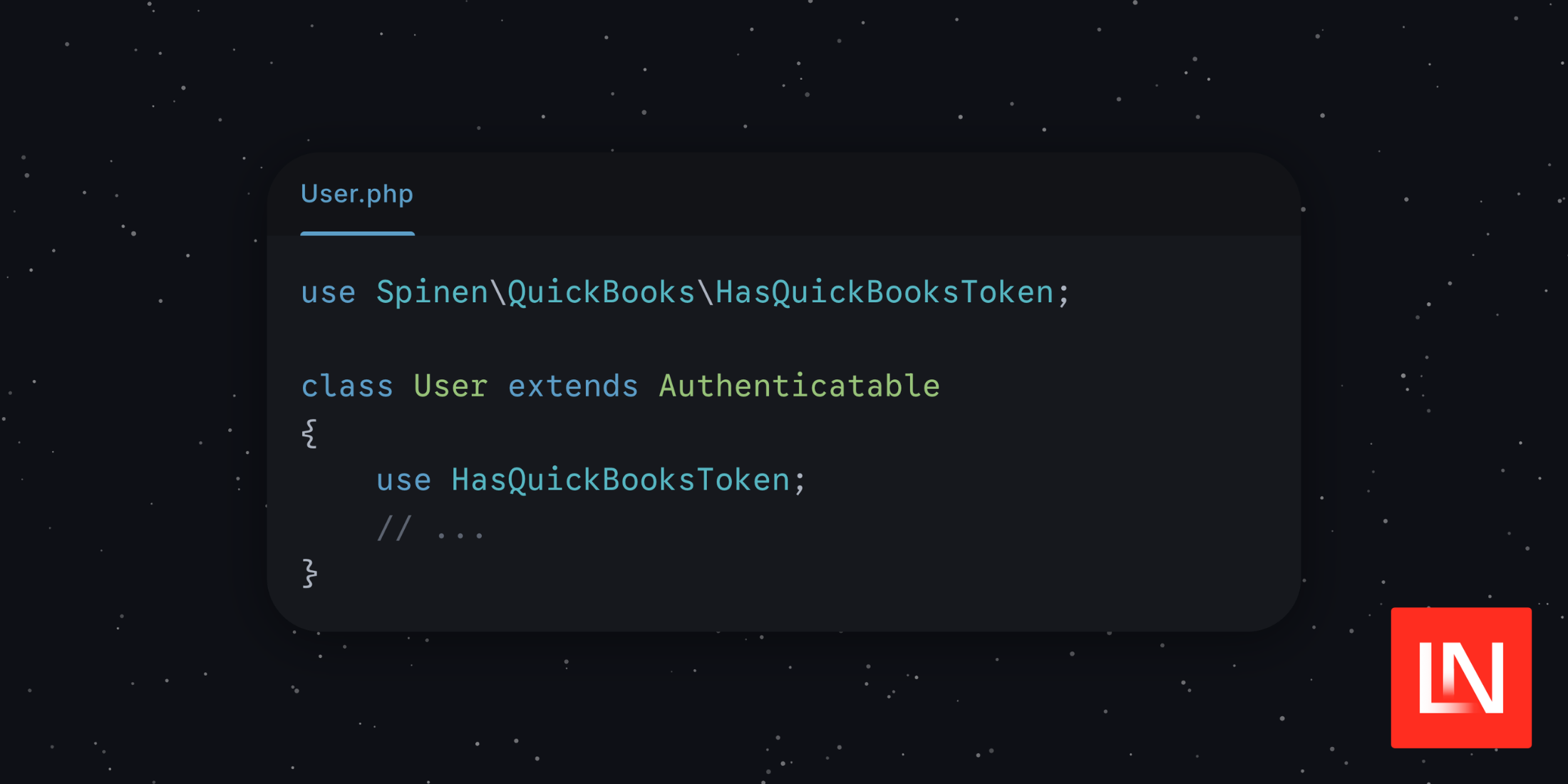
The package ships with a complete OAuth 2.0 flow for connecting QuickBooks companies. After adding the HasQuickBooksToken trait to your User model and setting your Intuit credentials in .env, four routes handle the connection lifecycle:
| Route | Purpose |
|---|---|
GET /quickbooks/connect |
Initiate OAuth flow |
GET /quickbooks/callback |
Handle OAuth callback |
DELETE /quickbooks/disconnect |
Revoke tokens and remove connection |
GET /quickbooks/connections |
List active connections |
Entity-Aware Delete Behavior
The package respects QuickBooks' deletion rules per entity type:
| Behavior | Entities |
|---|---|
| Soft-delete (deactivate) | Customer, Vendor, Employee, Item, Account |
| Permanent deletion | Bill, BillPayment, Estimate, JournalEntry, Purchase |
| Cannot delete | Invoice |
Getting Started
Install the package and publish its assets:
composer require rajurayhan/laravel-quickbooks-mcp-server php artisan vendor:publish \ --provider="Raju\QuickBooksMcp\QuickBooksMcpServiceProvider" php artisan migrateThen configure your Intuit OAuth credentials in .env:
QUICKBOOKS_CLIENT_ID=your_client_idQUICKBOOKS_CLIENT_SECRET=your_client_secretQUICKBOOKS_REDIRECT_URI=https://yourdomain.com/quickbooks/callbackQUICKBOOKS_DATA_SOURCE=productionYou can find the full documentation and source code on GitHub.