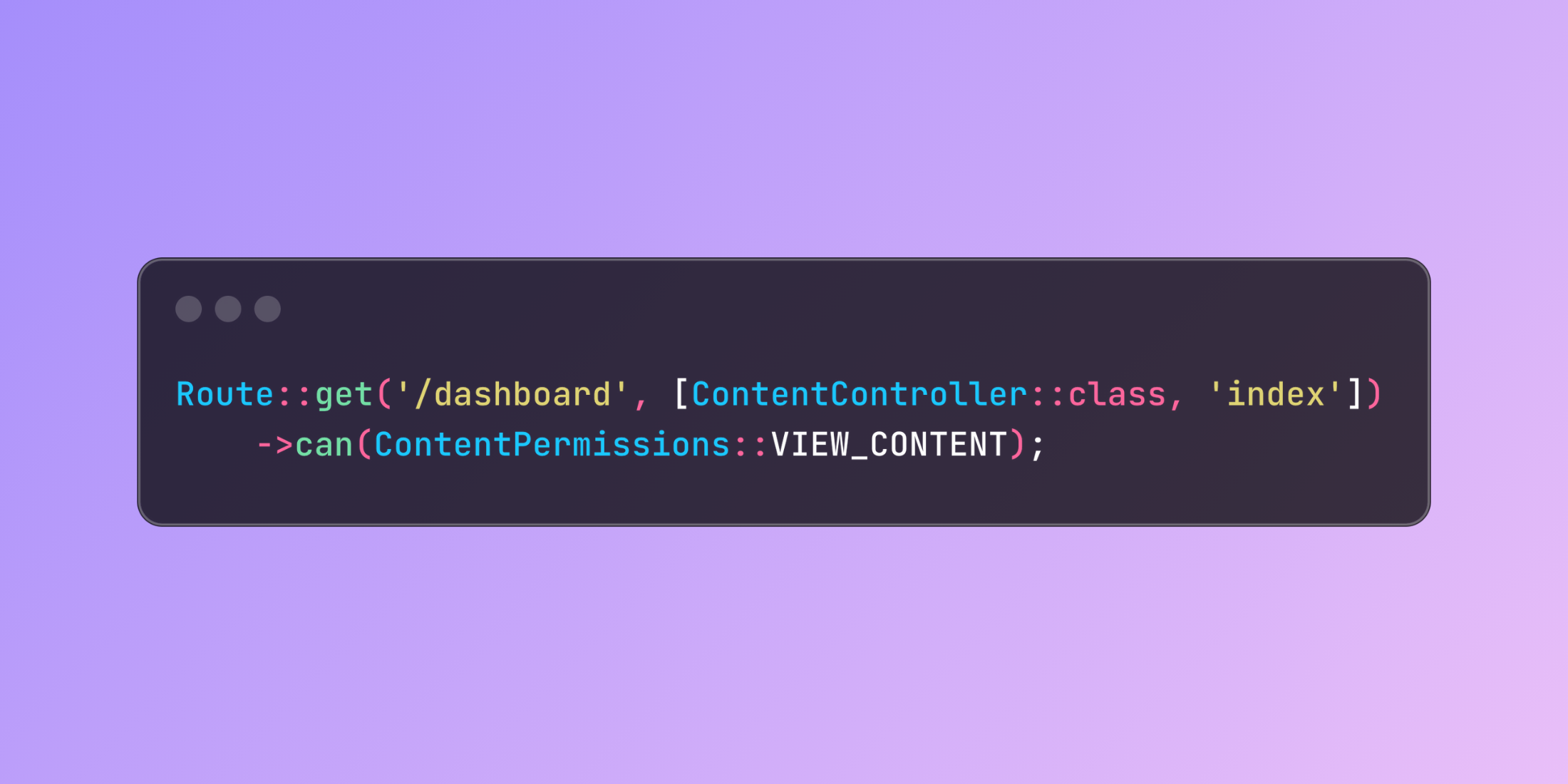
If you've been working with enums and Laravel's Route::can() method, you're probably familiar with appending ->value in your permission checks. Laravel has now streamlined this process with built-in enum support for route permissions. Let's explore this enhancement that makes your code cleaner and more elegant.
Before and After Comparison
Here's how the syntax has evolved:
// Previous approachRoute::get('/posts', function () {...})->can(PostPermissions::CREATE_POST->value);// Enhanced approachRoute::get('/posts', function () {...})->can(PostPermissions::CREATE_POST);No more ->value needed - it's that simple!
Real-World Implementation
Let's implement this in a content management system with various permission levels:
<?phpnamespace App\Enums; use App\Enums\BackedEnum; class ContentPermissions extends BackedEnum{ case VIEW_CONTENT = 'view_content'; case PUBLISH_POST = 'publish_post'; case MODERATE_COMMENTS = 'moderate_comments';} Route::prefix('content')->group(function () { Route::get('/dashboard', [ContentController::class, 'index']) ->can(ContentPermissions::VIEW_CONTENT); Route::post('/posts', [PostController::class, 'store']) ->can(ContentPermissions::PUBLISH_POST); Route::put('/comments/{comment}', [CommentController::class, 'update']) ->can(ContentPermissions::MODERATE_COMMENTS);});In this example, we:
- Define our permissions using a backed enum
- Group related routes under a common prefix
- Apply permission checks directly using enum cases
This way enhances code readability and maintains type safety through PHP's backed enums. The result is more maintainable and expressive route definitions that better represent your application's permission structure.