Package
Cknow Laravel Money
Laravel Money
Laravel Money


Note: This project abstracts MoneyPHP
Installation
Run the following command from you terminal:
composer require cknow/laravel-moneyor add this to require section in your composer.json file:
"cknow/laravel-money": "^7.0"then run composer update
Usage
use Cknow\Money\Money; echo Money::USD(500); // $5.00echo Money::USD(500, true); // $500.00 force decimalsConfiguration
The defaults are set in config/money.php. Copy this file to your own config directory to modify the values. You can publish the config using this command:
php artisan vendor:publish --provider="Cknow\Money\MoneyServiceProvider"This is the contents of the published file:
return [ /* |-------------------------------------------------------------------------- | Laravel money |-------------------------------------------------------------------------- */ 'locale' => config('app.locale', 'en_US'), 'defaultCurrency' => config('app.currency', 'USD'), 'defaultFormatter' => null, 'currencies' => [ 'iso' => ['RUB', 'USD', 'EUR'], // 'all' to choose all ISOCurrencies 'bitcoin' => ['XBT'], // 'all' to choose all BitcoinCurrencies 'custom' => [ 'MY1' => 2, 'MY2' => 3 ] ]];Advanced Usage
See MoneyPHP for more information
use Cknow\Money\Money; Money::USD(500)->add(Money::USD(500)); // $10.00Money::USD(500)->add(Money::USD(500), Money::USD(500)); // $15.00Money::USD(500)->subtract(Money::USD(400)); // $1.00Money::USD(500)->subtract(Money::USD(200), Money::USD(100)); // $2.00Money::USD(500)->multiply(2); // $10.00Money::USD(1000)->divide(2); // $5.00Money::USD(830)->mod(Money::USD(300)); // $2.30 -> Money::USD(230)Money::USD(-500)->absolute(); // $5.00Money::USD(500)->negative(); // $-5.00Money::USD(30)->ratioOf(Money::USD(2)); // 15Money::USD(500)->isSameCurrency(Money::USD(100)); // trueMoney::USD(500)->equals(Money::USD(500)); // trueMoney::USD(500)->greaterThan(Money::USD(100)); // trueMoney::USD(500)->greaterThanOrEqual(Money::USD(500)); // trueMoney::USD(500)->lessThan(Money::USD(1000)); // trueMoney::USD(500)->lessThanOrEqual(Money::USD(500)); // trueMoney::USD(500)->isZero(); // falseMoney::USD(500)->isPositive(); // trueMoney::USD(500)->isNegative(); // falseMoney::USD(500)->getMoney(); // Instance of \Money\MoneyMoney::isValidCurrency('USD'); // trueMoney::isValidCurrency('FAIL'); // falseMoney::getISOCurrencies(); // Load ISO currencies // AggregationMoney::min(Money::USD(100), Money::USD(200), Money::USD(300)); // Money::USD(100)Money::max(Money::USD(100), Money::USD(200), Money::USD(300)); // Money::USD(300)Money::avg(Money::USD(100), Money::USD(200), Money::USD(300)); // Money::USD(200)Money::sum(Money::USD(100), Money::USD(200), Money::USD(300)); // Money::USD(600) // FormattersMoney::USD(500)->format(); // $5.00Money::USD(199)->format(null, null, \NumberFormatter::DECIMAL); // 1,99Money::XBT(41000000)->formatByBitcoin(); // \xC9\x830.41Money::USD(500)->formatByCurrencySymbol(); // $5.00Money::USD(500)->formatByCurrencySymbol(true); // 5.00$Money::USD(500)->formatByDecimal(); // 5.00Money::USD(500)->formatByIntl(); // $5.00Money::USD(199)->formatByIntl(null, null, \NumberFormatter::DECIMAL); // 1,99Money::USD(500)->formatByIntlLocalizedDecimal(); // $5.00Money::USD(199)->formatByIntlLocalizedDecimal(null, null, \NumberFormatter::DECIMAL) // 1.99 // ParsersMoney::parse('$1.00'); // Money::USD(100)Money::parseByBitcoin("\xC9\x830.41"); // Money::XBT(41000000)Money::parseByDecimal('1.00', 'USD'); // Money::USD(100)Money::parseByIntl('$1.00'); // Money::USD(100)Money::parseByIntlLocalizedDecimal('1.00', 'USD'); // Money::USD(100)Create your formatter
class MyFormatter implements \Money\MoneyFormatter{ public function format(\Money\Money $money) { return 'My Formatter'; }} Money::USD(500)->formatByFormatter(new MyFormatter()); // My FormatterRules
Below is a list of all available validation rules and their function:
currency
The field under validation must be a valid currency.
Validator::make([ 'currency1' => 'USD', 'currency2' => 'EUR', 'currency3' => new \Money\Currency('BRL'),], [ 'currency1' => new \Cknow\Money\Rules\Currency(), 'currency2' => new \Cknow\Money\Rules\Currency(), 'currency3' => 'currency',]);money
The field under validation must be a valid money.
Validator::make([ 'money1' => '$10.00' 'money2' => '€10.00', 'money3' => 'R$10,00', 'money4' => '$10.00' 'money5' => '€10.00', 'money6' => 'R$10,00',], [ 'money1' => new \Cknow\Money\Rules\Money(), 'money2' => new \Cknow\Money\Rules\Money('EUR'), // forcing currency 'money3' => new \Cknow\Money\Rules\Money('BRL', 'pt_BR'), // forcing currency and locale 'money4' => 'money', 'money5' => 'money:EUR', // forcing currency 'money6' => 'money:BRL,pt_BR', // forcing currency and locale]);Casts
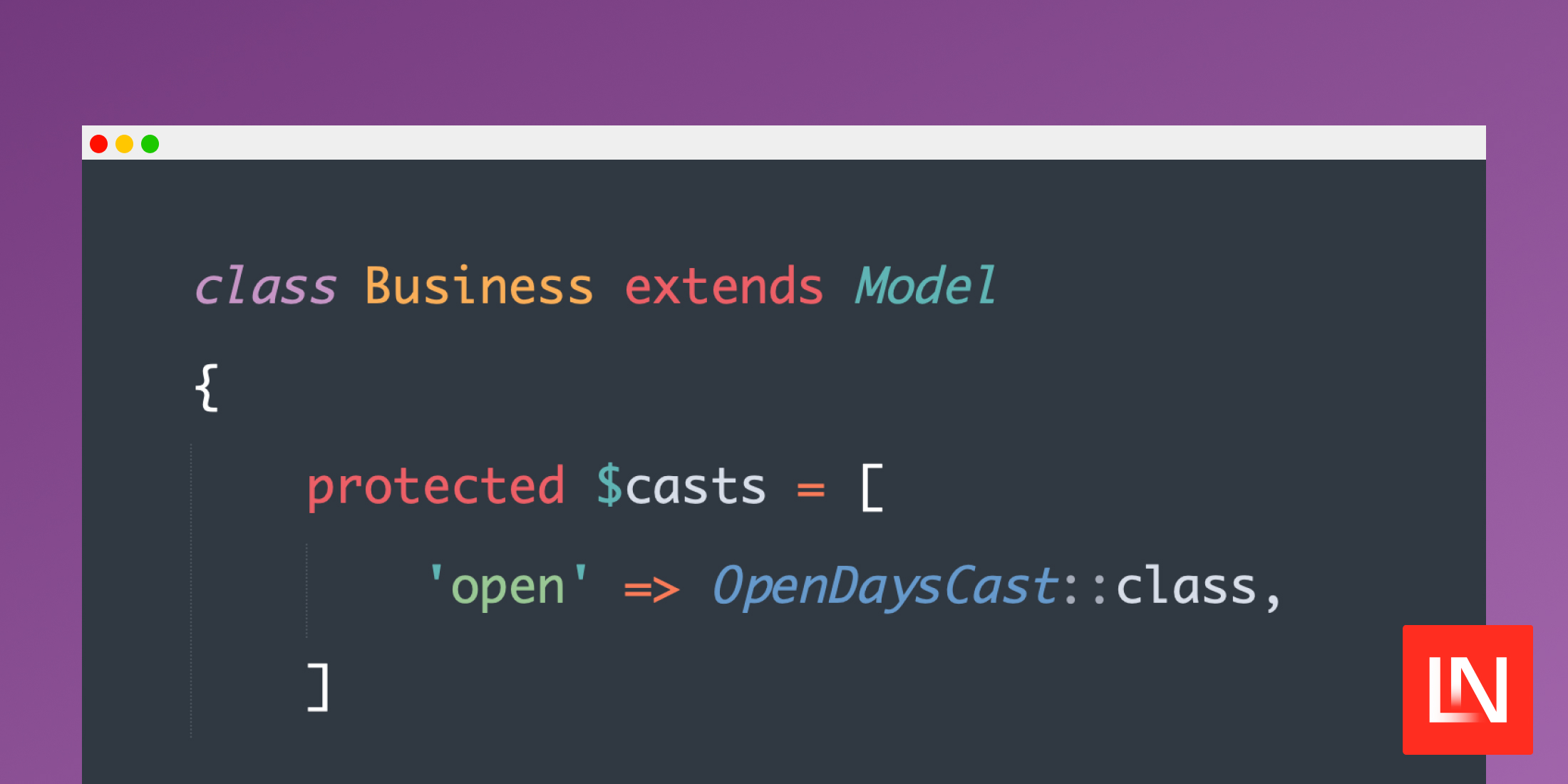
At this stage the cast can be defined in the following ways:
use Cknow\Money\Casts\MoneyDecimalCast;use Cknow\Money\Casts\MoneyIntegerCast;use Cknow\Money\Casts\MoneyStringCast; protected $casts = [ // cast money as decimal using the currency defined in the package config 'money' => MoneyDecimalCast::class, // cast money as integer using the defined currency 'money' => MoneyIntegerCast::class . ':AUD', // cast money as string using the currency defined in the model attribute 'currency' 'money' => MoneyStringCast::class . ':currency', // cast money as decimal using the defined currency and forcing decimals 'money' => MoneyDecimalCast::class . ':USD,true',];In the example above, if the model attribute currency is null,
the currency defined in the package configuration is used instead.
Setting money can be done in several ways:
$model->money = 10; // 0.10 USD or any other currency defined$model->money = 10.23; // 10.23 USD or any other currency defined$model->money = 'A$10'; // 10.00 AUD$model->money = '1,000.23'; // 1000.23 USD or any other currency defined$model->money = '10'; // 0.10 USD or any other currency defined$model->money = Money::EUR(10); // 0.10 EURWhen we pass the model attribute holding the currency, such attribute is updated as well when setting money:
$model->currency; // null$model->money = '€13';$model->currency; // 'EUR'$model->money->getAmount(); // '1300'Helpers
currency() // To use default currency present in `config/money.php`currency('USD');money(500); // To use default currency present in `config/money.php`money(500, 'USD'); // Aggregationmoney_min(money(100, 'USD'), money(200, 'USD'), money(300, 'USD')); // Money::USD(100)money_max(money(100, 'USD'), money(200, 'USD'), money(300, 'USD')); // Money::USD(300)money_avg(money(100, 'USD'), money(200, 'USD'), money(300, 'USD')); // Money::USD(200)money_sum(money(100, 'USD'), money(200, 'USD'), money(300, 'USD')); // Money::USD(600) // Parsersmoney_parse('$5.00'); // Money::USD(500)money_parse_by_bitcoin("\xC9\x830.41"); // Money::XBT(41000000)money_parse_by_decimal('1.00', 'USD'); // Money::USD(100)money_parse_by_intl('$1.00'); // Money::USD(100)money_parse_by_intl_localized_decimal('1.00', 'USD'); // Money::USD(100)Blade Extensions
@currency() // To use default currency present in `config/money.php`@currency('USD')@money(500) // To use default currency present in `config/money.php`@money(500, 'USD') // Aggregation@money_min(@money(100, 'USD'), @money(200, 'USD'), @money(300, 'USD')) // Money::USD(100)@money_max(@money(100, 'USD'), @money(200, 'USD'), @money(300, 'USD')) // Money::USD(300)@money_avg(@money(100, 'USD'), @money(200, 'USD'), @money(300, 'USD')) // Money::USD(200)@money_sum(@money(100, 'USD'), @money(200, 'USD'), @money(300, 'USD')) // Money::USD(600) // Parsers@money_parse('$5.00') // Money::USD(500)@money_parse_by_bitcoin("\xC9\x830.41") // Money::XBT(41000000)@money_parse_by_decimal('1.00', 'USD') // Money::USD(100)@money_parse_by_intl('$1.00') // Money::USD(100)@money_parse_by_intl_localized_decimal('1.00', 'USD') // Money::USD(100)