Laravel's pagination system includes a powerful fragment() method that enables you to append URL fragments to pagination links. This feature proves particularly useful when directing users to specific sections of your page during navigation.
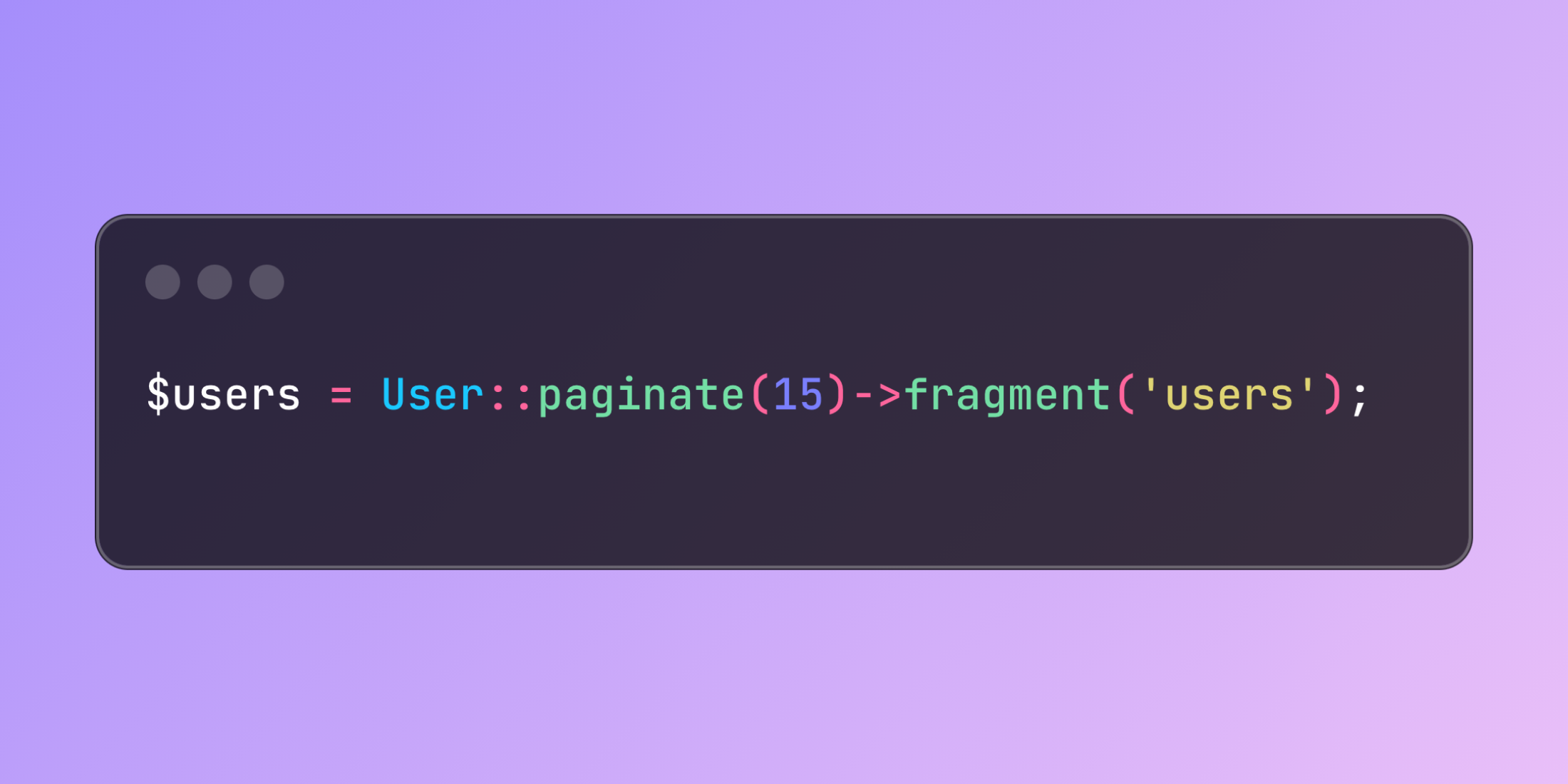
The fragment() method seamlessly integrates with Laravel's pagination system:
$users = User::paginate(15)->fragment('users');When rendered, these pagination links will automatically include '#users' in their URLs, directing users to the appropriate section of your page.
The fragment() method becomes particularly valuable when handling multiple content sections or complex navigation structures:
class ContentController extends Controller{ public function index(Request $request) { $activeSection = $request->section ?? 'recent'; return View::make('content.index', [ 'posts' => Post::latest() ->paginate(10) ->fragment("section-{$activeSection}"), 'activeSection' => $activeSection ]); }}// views/content/index.blade.php<div id="section-{{ $activeSection }}"> @foreach ($posts as $post) <!-- Post content --> @endforeach {{ $posts->links() }}</div>Laravel automatically handles the fragment inclusion in your pagination links, generating URLs like /posts?page=2#section-recent. This approach maintains context and scroll position as users navigate through paginated content.