Laravel's query scope functionality transforms repetitive database query logic into elegant, reusable components. These powerful abstractions enable developers to encapsulate common filtering patterns while maintaining code clarity and promoting consistent query behavior across applications.
Local scopes define reusable query constraints through specially marked methods within Eloquent models:
use Illuminate\Database\Eloquent\Attributes\Scope;use Illuminate\Database\Eloquent\Builder; class Order extends Model{ #[Scope] protected function completed(Builder $query): void { $query->where('status', 'completed'); } #[Scope] protected function recent(Builder $query): void { $query->where('created_at', '>=', now()->subDays(30)); }}Dynamic scope parameters enable flexible filtering based on runtime values:
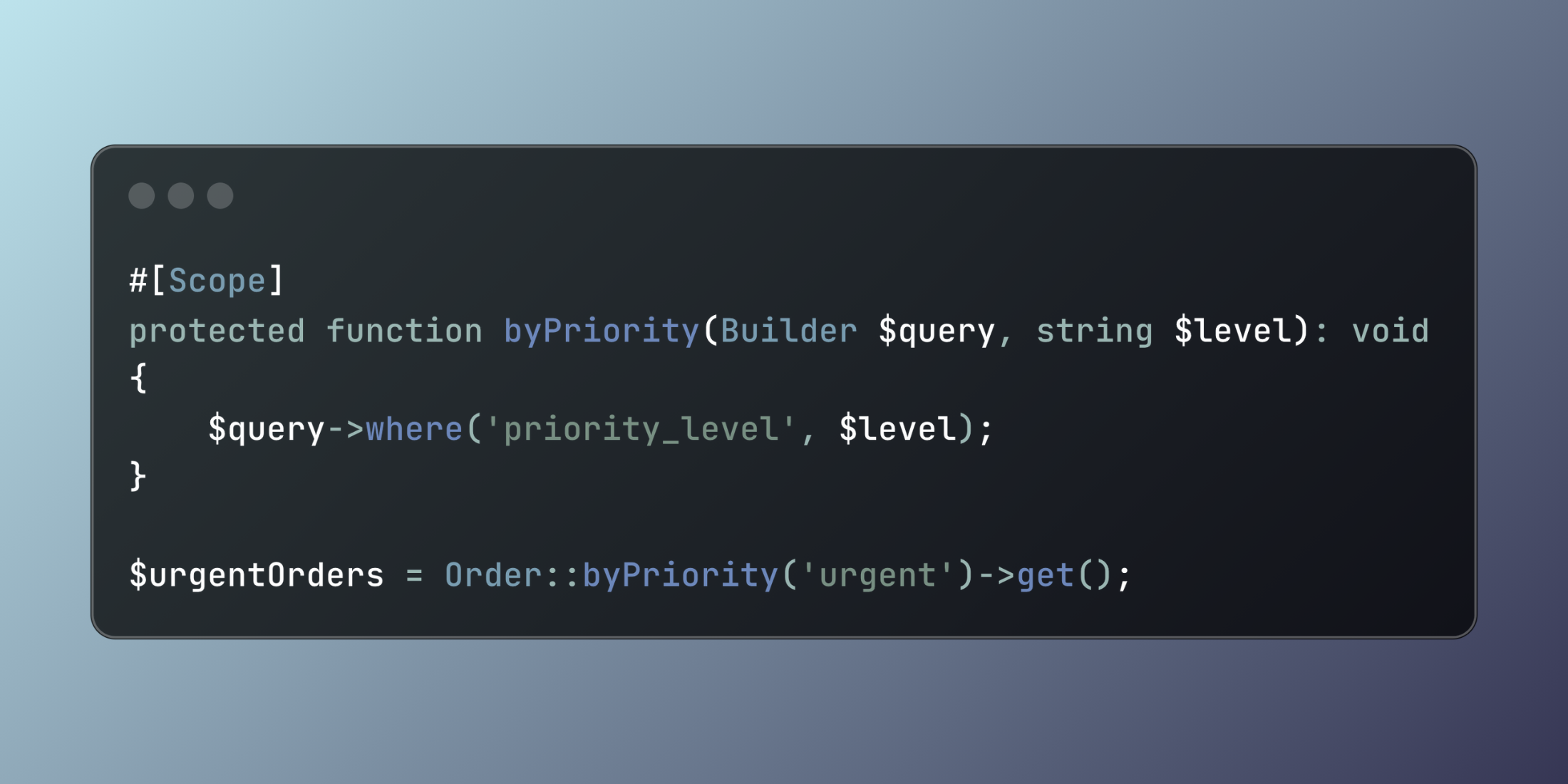
#[Scope]protected function byPriority(Builder $query, string $level): void{ $query->where('priority_level', $level);} $urgentOrders = Order::byPriority('urgent')->get();Building a comprehensive inventory management system demonstrates scope composition and chaining capabilities across different operational contexts:
class Inventory extends Model{ #[Scope] protected function available(Builder $query): void { $query->where('quantity', '>', 0) ->where('is_active', true); } #[Scope] protected function lowStock(Builder $query): void { $query->whereColumn('quantity', '<=', 'minimum_threshold'); } #[Scope] protected function inWarehouse(Builder $query, string $location): void { $query->where('warehouse_location', $location); }} $criticalItems = Inventory::available() ->lowStock() ->inWarehouse('main') ->orderBy('quantity', 'asc') ->get();Global scopes automatically apply constraints to all model queries, ensuring consistent data filtering without manual intervention. Anonymous global scopes provide convenient query modification for simple filtering requirements while maintaining clean model definitions.
The scope architecture facilitates complex query building through method chaining, enabling developers to construct sophisticated database interactions using readable, self-documenting code patterns that promote maintainability and reduce query duplication across applications.