In the latest release of Laravel Mix (4.0.16), support for dynamic imports was added out of the box. Dynamic imports is a method of code-splitting that allow us to easily split our JavaScript components, packages, and other modules into separate files. If a project is using several packages or has a lot of Vue.js or React components, it’s easy to end up with a 1MB+ JavaScript bundle. If users are on a slow connection, that could take a while to download.
Code-splitting allows us to ship much smaller initial bundles (kilobytes instead of megabytes) and improve load-times significantly for those users. Webpack will then automatically download any additional files needed when the user visits a different page.
Configuring Dynamic Imports
To get started using dynamic imports with Laravel Mix, first ensure you’re using at least version 4.0.16. Then, if you don’t already have one, add a .babelrc file to the root of your project. Inside, add the @babel/plugin-syntax-dynamic-import plugin to a “plugins” array. This will enable the dynamic import syntax via a plugin already included with Laravel Mix.
{ "plugins": [ "@babel/plugin-syntax-dynamic-import" ]}Alternatively, if you’d rather configure the plugin in your webpack.mix.js file, you can add it there.
mix.babelConfig({ plugins: ['@babel/plugin-syntax-dynamic-import'],});Using Dynamic Imports
To tell Webpack you want to import a file dynamically, you need to use a slightly different syntax. Below, I demonstrate what a standard import looks like compared to a dynamic import.
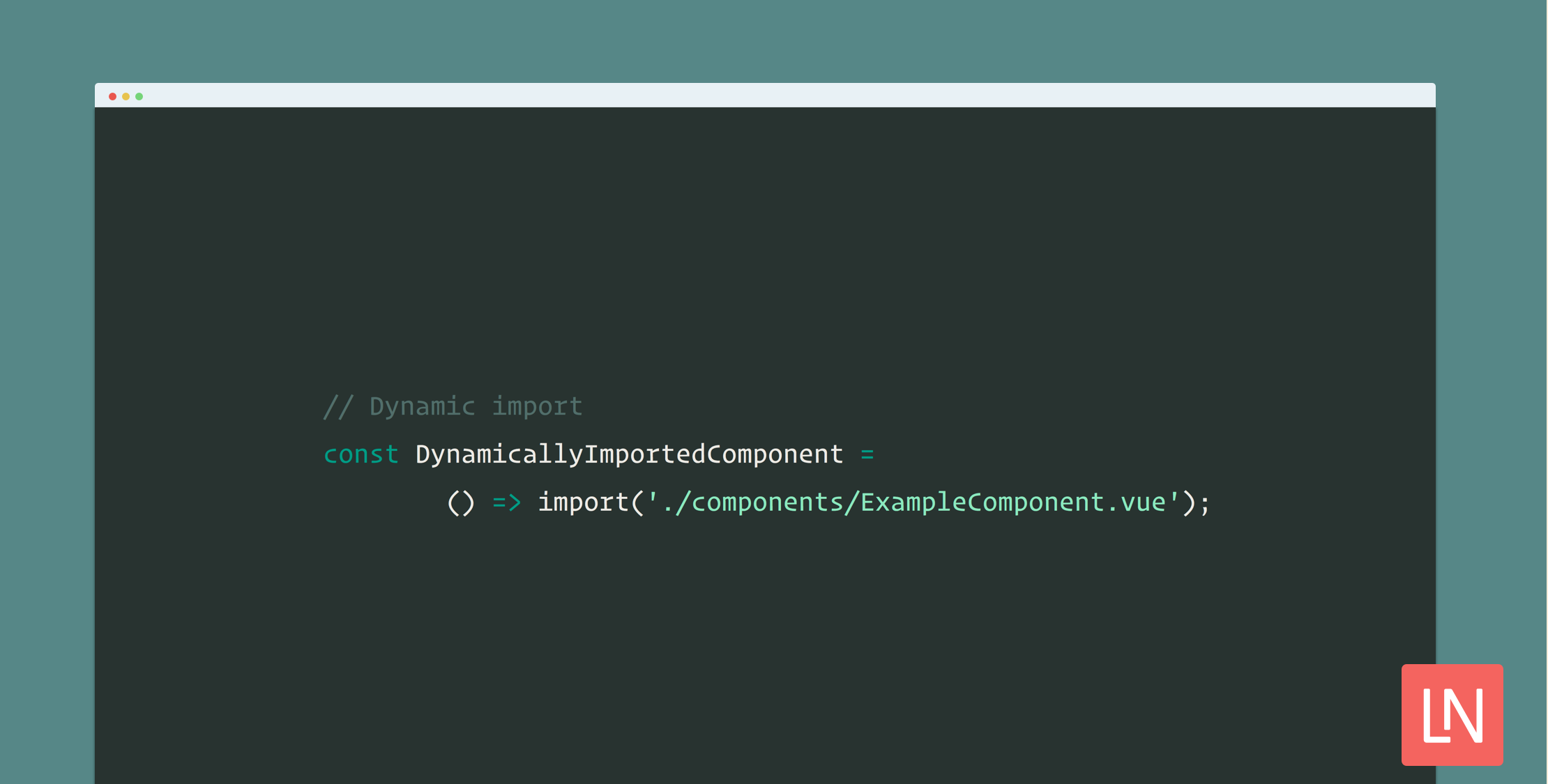
// Standard importimport StandardComponent from './components/ExampleComponent.vue'; // Dynamic importconst DynamicallyImportedComponent = () => import('./components/ExampleComponent.vue');By default, Webpack will split the dynamically imported files into chunks and name them 0.js, 1.js, etc. Laravel Mix is configured to name the files using the chunk name, then a hash of the contents, followed by the .js extension. If you want to configure the chunk name for a file, you need to add a “magic” comment to the import statement to tell Webpack the name you want to use. Below, I tell Webpack I want to use dynamically-imported-component as the name which will generate a dynamically-imported-component.[hash].js file.
const DynamicallyImportedComponent = () => import(/* webpackChunkName: "dynamically-imported-component" */ './components/ExampleComponent.vue');Using Dynamic Imports with Vue Router
If you are using Vue Router in your project, it’s straightforward to split each page into separate files using dynamic imports. When configuring your routes, you can use the dynamic import syntax instead of require() or the standard import syntax, and Webpack will take care of the rest.
const routes = [ { name: 'dashboard', path: '/dashboard', component: () => import(/* webpackChunkName: "dashboard" */ './pages/Dashboard.vue'), },];Conclusion
Overall, dynamic imports are a handy tool to have. They’re easy to use and can provide some real benefits to your users, especially in larger applications. I recommend trying them out in a project you are already working on or in your next project!