Laravel's object manipulation helpers provide developers with elegant solutions for creating and modifying objects through expressive, chainable operations. These utilities eliminate repetitive code patterns while promoting cleaner, more readable implementations across various application contexts.
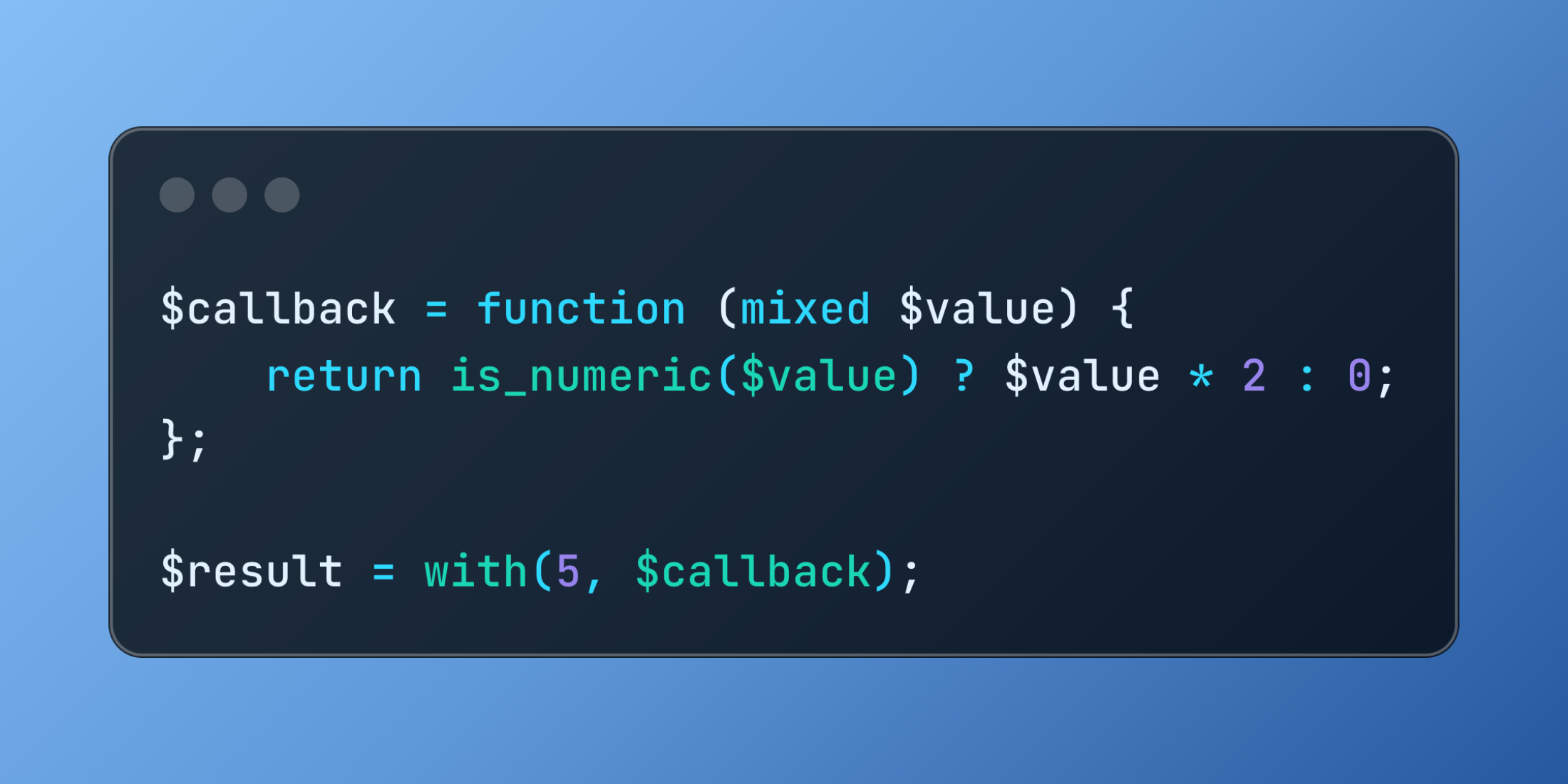
The core helper function accepts any value and applies transformations through closures:
$callback = function (mixed $value) {
    return is_numeric($value) ? $value * 2 : 0;
};

$result = with(5, $callback);
// 10

$result = with(null, $callback);
// 0
Advanced object configuration scenarios benefit from closure-based initialization patterns:
$apiClient = with(new HttpClient, function ($client) use ($settings) {
    $client->setApiKey($settings['key'])
           ->setTimeout($settings['timeout'])
           ->setRetryCount($settings['retries'])
           ->enableLogging($settings['debug']);

    if ($settings['cache_enabled']) {
        $client->setCache(app('cache')->store('redis'));
    }

    return $client;
});
Building comprehensive test data structures demonstrates practical applications for complex setup requirements:
class UserTestCase extends TestCase
{
    public function createCompleteUserData(): array
    {
        return with([], function ($userData) {
            $userData['profile'] = [
                'name' => 'Integration User',
                'email' => 'integration@test.com',
                'role' => 'administrator'
            ];

            $userData['preferences'] = [
                'notifications' => true,
                'theme' => 'dark',
                'timezone' => 'UTC'
            ];

            $userData['permissions'] = [
                'users.create',
                'users.update',
                'users.delete'
            ];

            return $userData;
        });
    }

    public function testUserCreationWithCompleteData()
    {
        $userData = $this->createCompleteUserData();

        $response = $this->post('/users', $userData);

        $response->assertStatus(201);
        $this->assertDatabaseHas('users', [
            'email' => $userData['profile']['email']
        ]);
    }
}
Factory pattern implementations leverage helper utilities for state modification without breaking method chains. This approach enables conditional attribute application while maintaining clean, expressive factory definitions that adapt to different testing scenarios.
The helper ecosystem promotes consistent object manipulation patterns throughout Laravel applications, reducing boilerplate code while enhancing maintainability and developer experience across complex initialization workflows.