You spend your time writing clean migrations, validating every request, and keeping your dependencies current. But the moment your application goes live, it stops being your code and becomes an internet-facing target — and attackers don't read your codebase. They scan your domain from the outside, looking for the one open port, the expired certificate, or the leaked framework version you forgot about.
That outside view is exactly what you never get to see. Sensagraph gives it to you.
Sensagraph is an agentless security platform that scans your live web infrastructure the way an attacker would: from the public internet, with nothing to install. Point it at a domain, verify ownership once, and it maps your real attack surface — the open ports, the weak TLS, the vulnerable endpoints — and shows you exactly what's exposed.
Your tests are green. Your server might still be exposed.
A pull request that passes CI tells you your code works. It tells you nothing about the server it lands on: the TLS configuration your load balancer negotiates, the admin panel that quietly became reachable, the exposed .env file, or the X-Powered-By header advertising a version with a known CVE. That's the layer attackers actually probe first — and it's invisible from inside your codebase.
Sensagraph closes that gap. Point it at your domain and see the exact surface an attacker sees, whenever you want.
What Sensagraph scans for
Sensagraph covers the surface an attacker probes first, across five focused capabilities:
- Web Application Vulnerability Detection — Actively tests your applications for SQL injection, cross-site scripting (XSS), CSRF, authentication and session weaknesses, insecure cookies, and the rest of the OWASP Top 10.
- Web Server Configuration Analysis — Detects server misconfigurations, dangerous HTTP methods, directory listings, exposed files, and missing security headers like CSP and HSTS.
- Encryption & Certificate Analysis — Inspects your SSL/TLS setup for expired or misconfigured certificates, weak ciphers, and known protocol weaknesses so your traffic stays protected.
- Technology Stack Risk Assessment — Fingerprints your stack to surface outdated software, end-of-life frameworks, known CVEs, and version leakage.
- Network Exposure & Open Port Detection — Discovers open ports, exposed databases and admin panels, and risky services reachable from the public internet.
Explore them all on the capabilities page.
Findings you can actually act on
A scanner that dumps a thousand raw alerts just creates a second problem. Sensagraph does the triage for you:
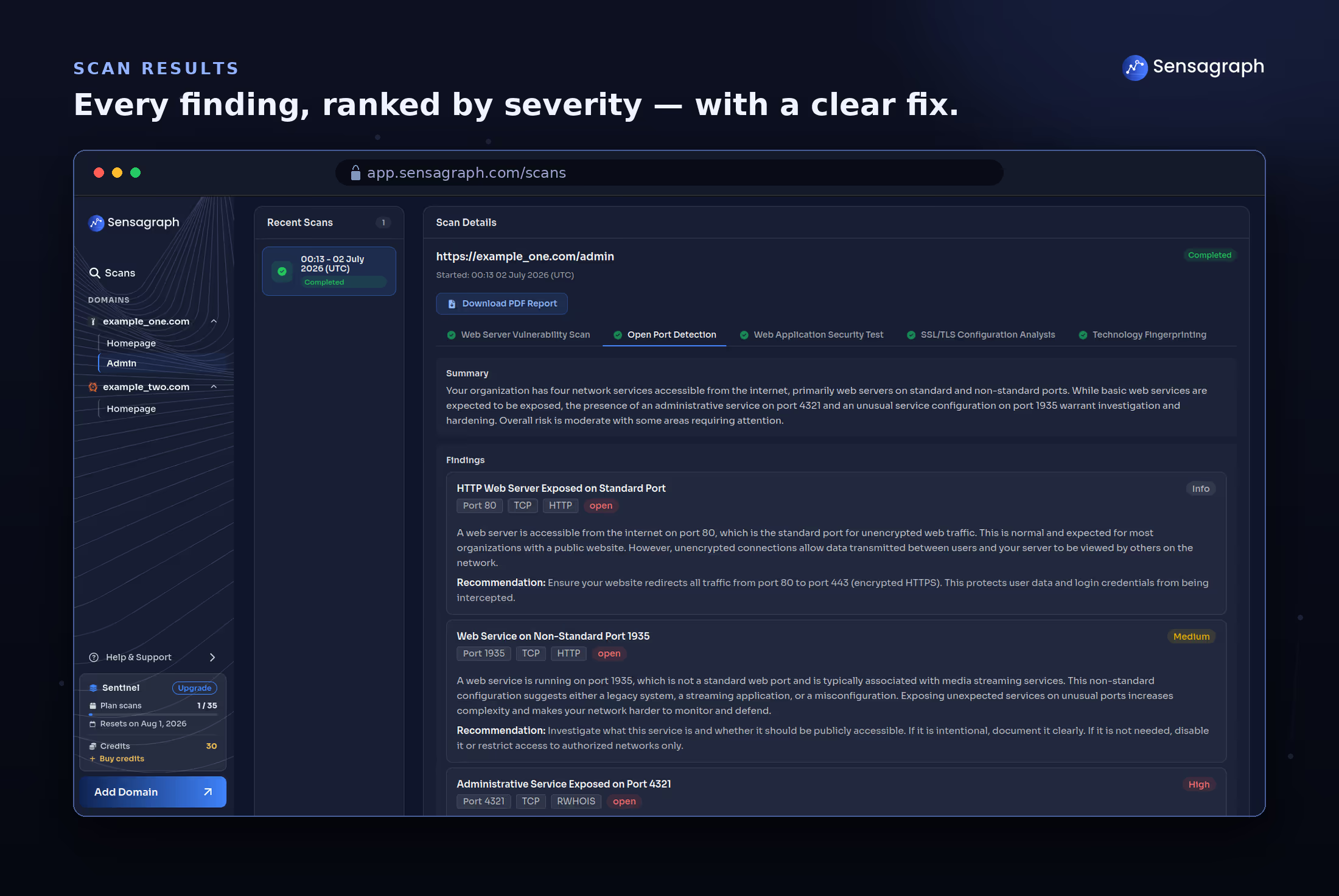
- Risk-ranked results — every finding is prioritized by severity, so you fix what matters first.
- Clear, specific remediation — each issue comes with plain guidance on how to resolve it, not just a scary label.
- No agents, no code changes — nothing to add to your app, your containers, or your pipeline.
A report you can hand to a client, your boss, or an auditor
Beyond the live dashboard, every completed scan generates a polished PDF security report — the kind of deliverable you'd normally pay a consultant to produce:
- Executive-ready cover with the target, scan date, and a unique reference ID.
- Severity summary breaking down Critical / High / Medium / Low findings at a glance.
- Category-by-category breakdown — each area includes a plain-language summary plus every finding with its severity, an accessible explanation, and concrete remediation steps.
For agencies, that's a client-ready security deliverable produced automatically after every scan. For in-house teams, it's the artifact that turns "the site's probably fine" into something you can actually put in front of leadership. And when you need it, results also arrive by email the moment a scan completes.
Built for the way Laravel teams actually work
You don't need a dedicated security team to take this seriously — you need a clear read on your exposure:
- Agencies managing dozens of client sites can keep an eye on all of them from one place.
- SaaS founders shipping fast can catch a risky misconfiguration before customers (or attackers) do.
- Solo developers get an expert-level external audit running quietly in the background.
Up and running in minutes
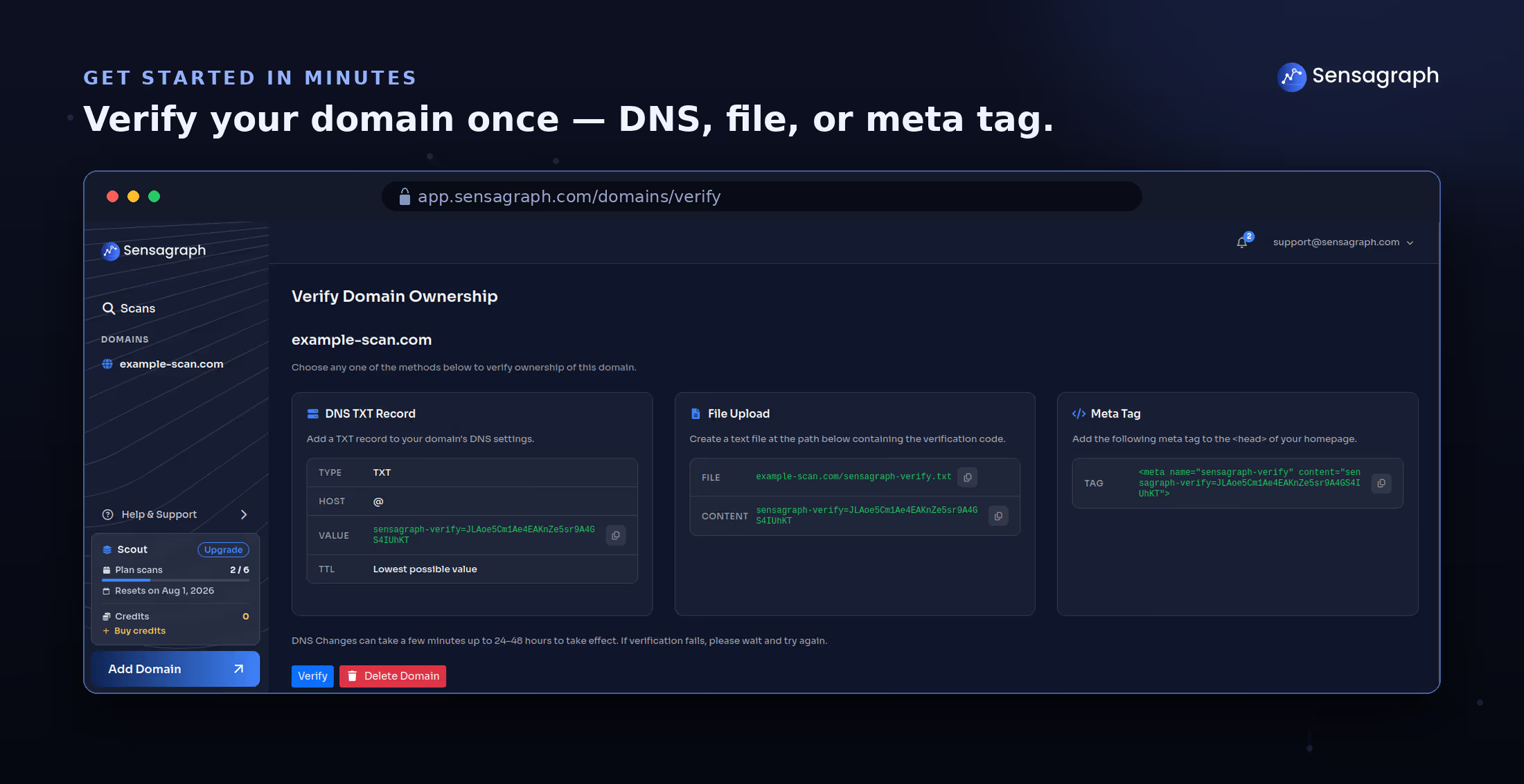
Getting started takes minutes, not a procurement cycle. Add a domain, verify you own it — with a DNS record, a file upload, or a <meta> tag — and run your first scan. No agents, no infrastructure changes, no code.
Try it — 25% off for Laravel News readers
For Laravel News readers, use code LARAVELNEWS at checkout for 25% off any new subscription. The offer is available to new subscriptions started through September 13, so it's a low-risk way to see exactly what the public internet already knows about your infrastructure.
Start scanning your domain at sensagraph.com →
Run your first scan and see exactly what's exposed — before someone else does.