Laravel Cloud just launched Scale-to-Zero Flex compute along with a new four-tier pricing structure. The headline change is that your entire stack now sleeps when there's no traffic and wakes on the first request in under 500ms, so idle apps stop running up a bill.
This came out of a survey Laravel ran earlier this year with thousands of developers, plus 20 individual follow-up interviews. The feedback was consistent: developers wanted to know their costs up front. Apps sitting idle still cost money, and there was no easy way to cap a monthly spend. Scale-to-Zero and the new spending limits are the answer to that.
How Scale-to-Zero Works
This is an update to the existing Flex compute, and existing customers will continue to have access to the legacy Flex compute. New apps get the rebuilt Flex automatically. If you're already on Flex, you select one of the new sizes and redeploy to upgrade.
The Flex compute has been rebuilt so your compute, database, and cache sleep together when traffic stops and wake together when a request comes in. Some of the highlights include:
- The entire stack sleeps and wakes as a unit, 20 times faster than before.
- Wake time is under 500ms, down from around 10 seconds.
- Three sizes: 512MB, 1GB, and 2GB.
- Scheduled tasks still fire and queued jobs still process. The app wakes to handle them, then goes back to sleep when the work is done.
Opting out keeps you on the legacy Flex sizes with the roughly 10-second wake. The new scale-to-zero sizes cost $1 more per month. Pro compute apps stay always-on and can't scale to zero.
A sleeping app doesn't go offline or become unreachable. It sleeps and wakes on the next request, and your users won't notice the difference.
Enabling Scale-to-Zero on Your App
New applications get scale-to-zero Flex compute automatically. To turn it on for an existing app, open the App compute cluster on your environment's infrastructure canvas, toggle Scale to Zero on, pick one of the new Flex sizes, then save and redeploy. That's it, no application code changes required.
For long-running queued jobs, Laravel recommends Managed Queues so a job that's still running when the app goes to sleep isn't interrupted.
The New Pricing Tiers
Alongside scale-to-zero, Laravel Cloud is updating its current tier structure. The same four plans remain, Starter ($5/mo), Growth ($20/mo), Business ($200/mo), and Enterprise (custom), and every paid plan includes $5 in monthly usage credits drawn from a single pool that covers compute, database, cache, storage, bandwidth, queue operations, and custom domains. Credits reset each billing cycle and don't roll over. If you're already on Growth or Business, the $5 is applied automatically with no action needed.
The Starter tier is the new entry point at $5/mo. Because that $5 includes $5 in usage credits, the plan effectively pays for itself in usage for most small apps, and Starter now includes managed queues, spending limits, and scale-to-zero Flex compute. New Starter signups get their first month free.
For a full breakdown of what each plan includes, see the Laravel Cloud pricing page.
Spending Limits
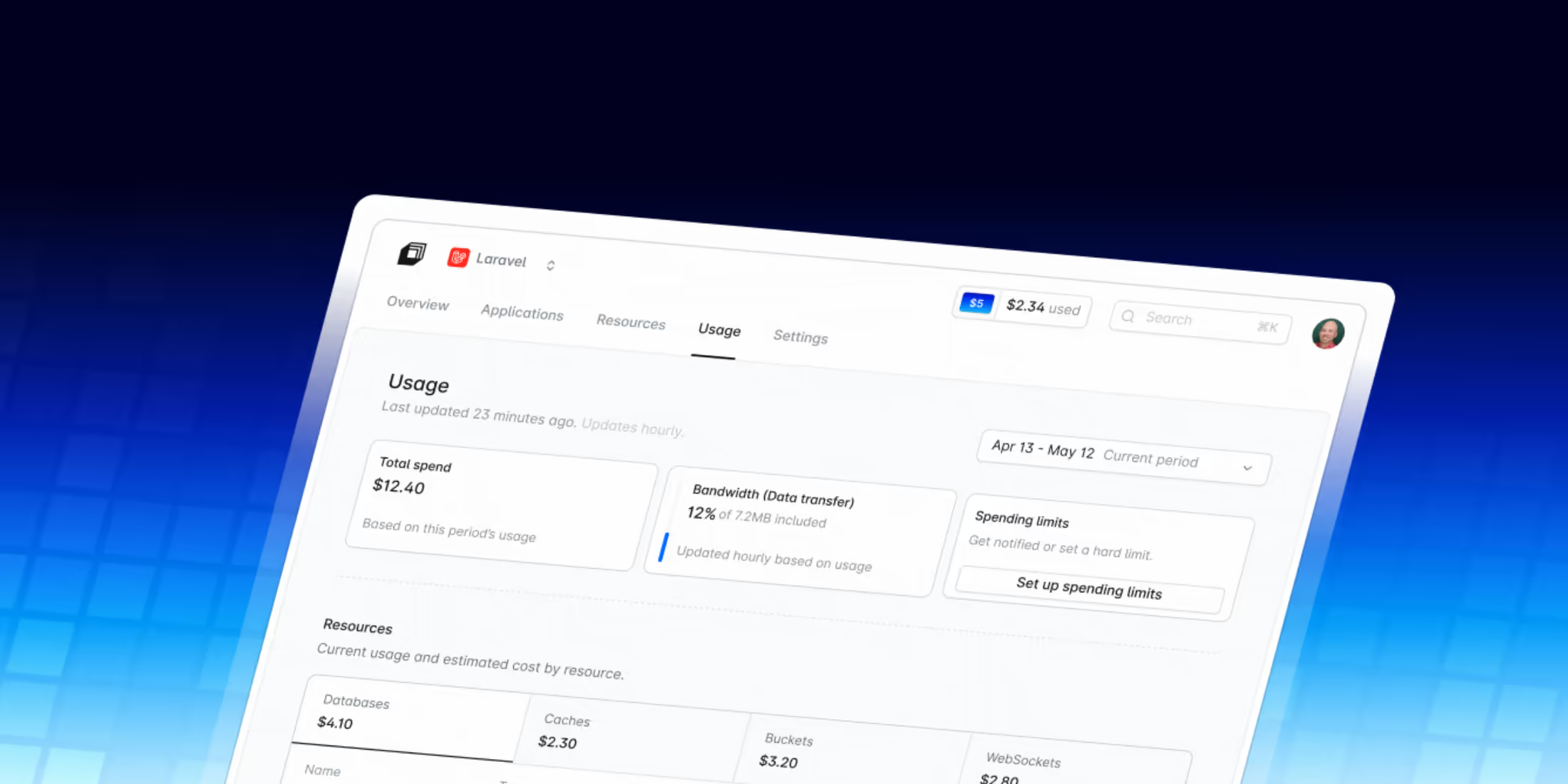
You can now set a hard monthly spend limit per org. When you hit the limit, new resource provisioning stops, but requests already being processed keep running. The limit applies to compute and excludes storage, so you can quickly bring an app back online after raising it. Alerts fire at 50%, 75%, and 90%, so there's plenty of warning before you reach the limit and time to decide what you want to do.
These limits are enforceable, which is what sets them apart from the billing alerts Cloud already had. Billing alerts fire at 50%, 80%, and 100%, but they only inform you, spending keeps accruing past the threshold unless you step in. The two work together: use alerts to stay informed, use limits to guarantee you never go over budget.
Paired with the $5 Starter plan and Scale-to-Zero, you get a clear minimum, a monthly maximum you set yourself, and visibility into everything in between. A dormant Flex app can cost less than a dollar a month in compute.
MySQL Scale-to-Zero Is Coming
In the coming weeks, scale-to-zero will extend to MySQL databases. The database suspends alongside compute and resumes on the next request, again with no application code changes required.
Read more
Scale-to-Zero Flex compute and the new pricing tiers are live now. You can read the details and try out the new Starter plan over at Laravel Cloud.