Laravel's whenHas method provides an elegant way to execute code based on input presence in requests. This feature is particularly useful for handling optional fields and conditional updates, reducing the need for repetitive presence checks.
This approach shines particularly in form submissions where certain fields trigger specific business logic - for example, when a user opts into email notifications, you might need to validate and store additional email-related preferences.
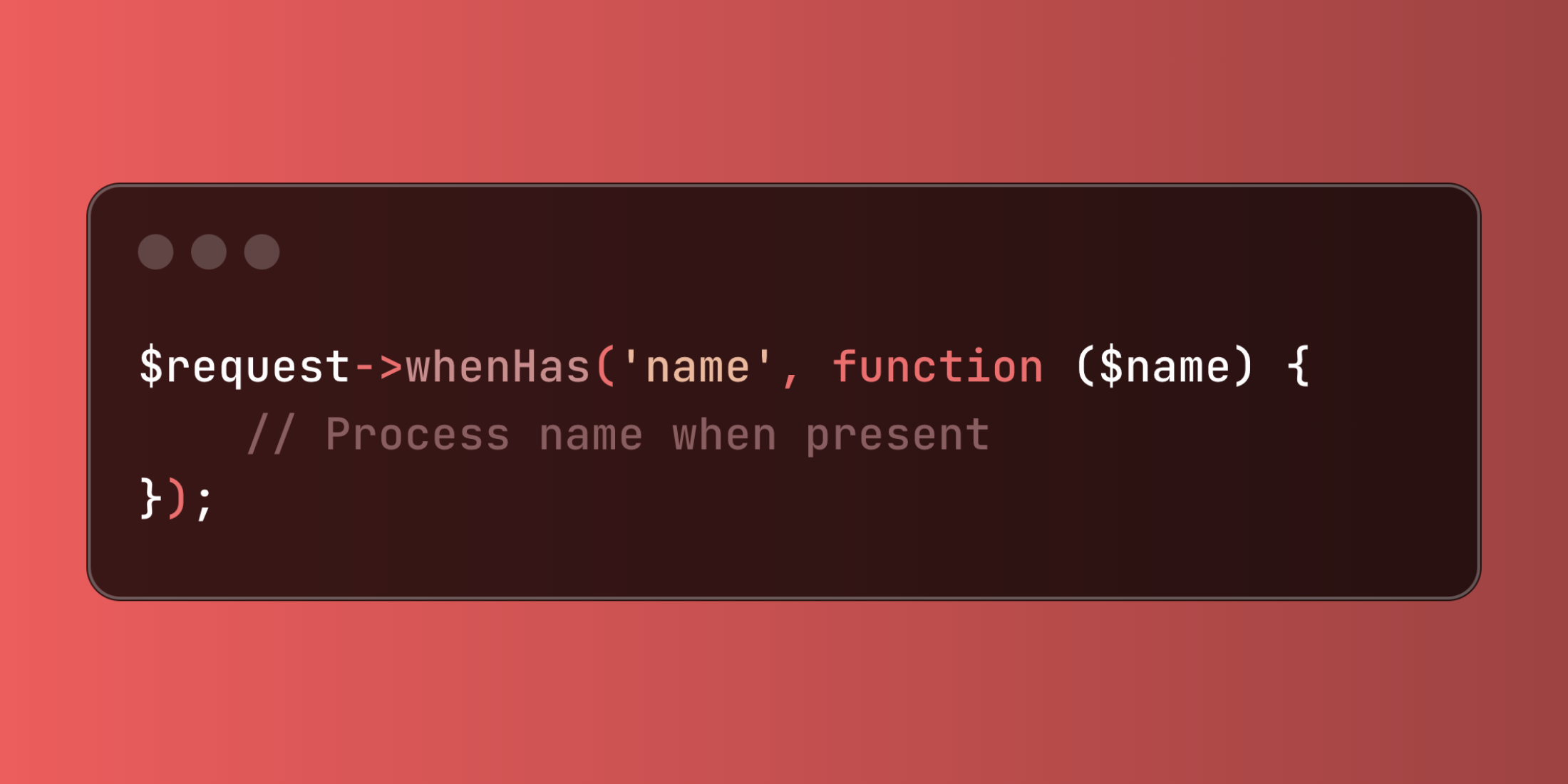
// Simple presence check

$request->whenHas('name', function ($name) {
    // Process name when present
});
Here's an example of a notification preferences manager:
// app/Controllers/PreferencesController.php
<?php

namespace App\Http\Controllers;

use App\Models\UserPreferences;
use Illuminate\Http\Request;

class PreferencesController extends Controller
{

    public function update(Request $request, UserPreferences $preferences)

    {
        $request->whenHas('email_frequency',
            function ($frequency) use ($preferences) {
                $preferences->update([
                    'email_frequency' => $frequency,
                    'last_email_update' => now()
                ]);
            }
        );

        $request->whenHas('push_enabled',
            function ($enabled) use ($preferences) {
                $preferences->update([
                    'push_enabled' => $enabled,
                    'push_updated_at' => now()
                ]);
            },
            function () use ($preferences) {
                $preferences->update([
                    'push_enabled' => false,
                    'push_updated_at' => now()
                ]);
            }
        );

        return response()->json([
            'message' => 'Preferences updated successfully',
            'preferences' => $preferences->fresh()
        ]);
    }
}
Example usage:
// Input with some preferences

{
    "email_frequency": "weekly"
}

// Response

{
    "message": "Preferences updated successfully",
    "preferences": {
        "email_frequency": "weekly",
        "last_email_update": "2024-02-01T10:30:00.000000Z",
        "push_enabled": false,
        "push_updated_at": "2024-02-01T10:30:00.000000Z"
    }
}
The whenHas method simplifies conditional request processing while maintaining clean, readable code structure.