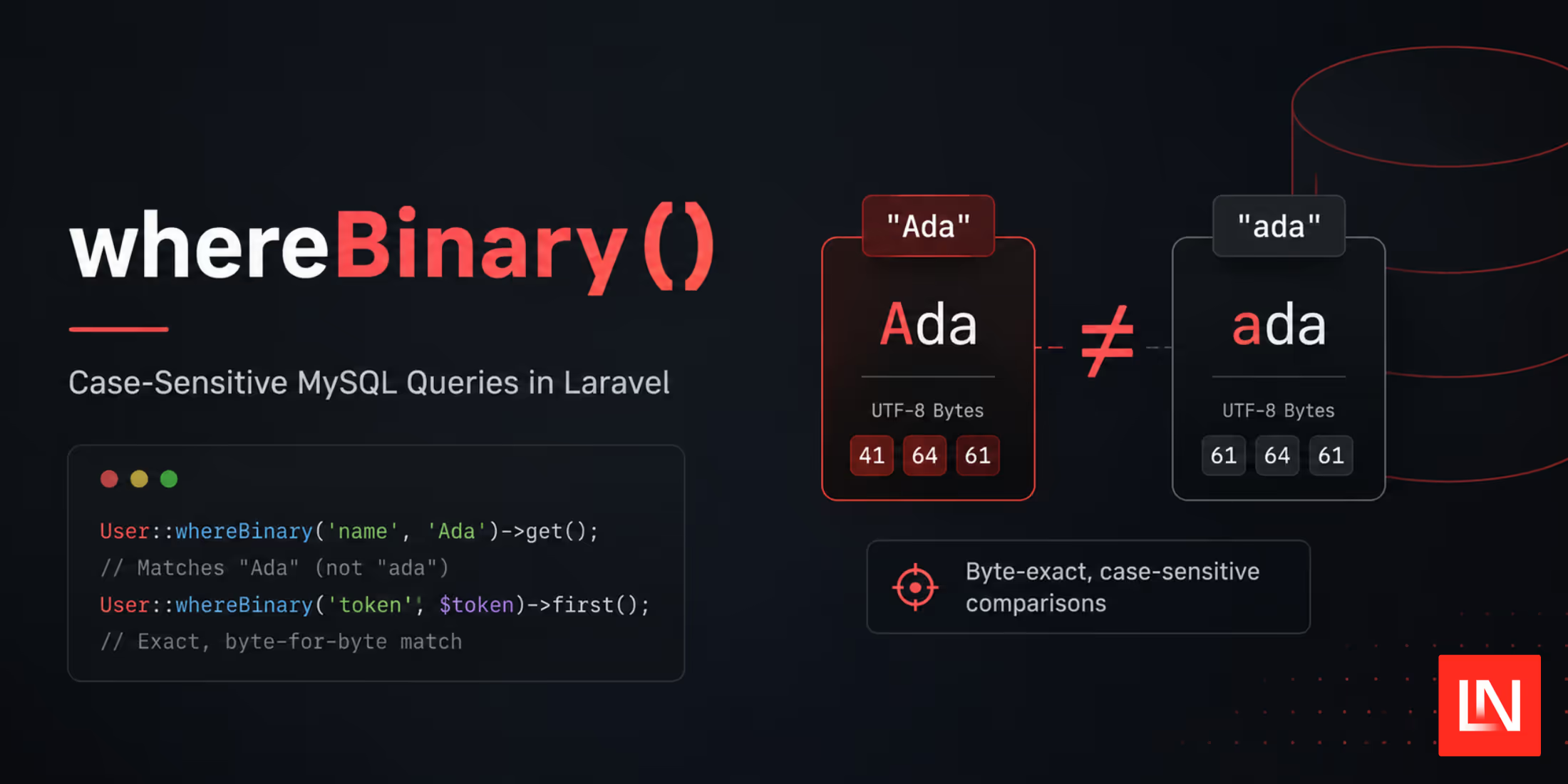
A MySQL string comparison does not compare strings. It compares them through a collation, and the collation decides which differences count. Laravel's default utf8mb4_unicode_ci treats case as noise, treats accents as noise, and ignores trailing spaces. So this query:
DB::table('invites')->where('token', $request->token)->first();matches on A7f3B9, a7f3b9, A7F3B9, and A7f3B9 . For a display name that is exactly what you want. For a token, a slug, or anything else where the bytes are the identity, it is a bug waiting for the right input.
Getting a byte-exact comparison used to mean leaving the query builder:
DB::table('invites')->whereRaw('token = BINARY ?', [$request->token])->first();Laravel 13.27 adds whereBinary(), along with orWhereBinary(), whereNotBinary(), and orWhereNotBinary().
The Methods
DB::table('invites')->whereBinary('token', $request->token)->first();// select * from `invites` where `token` = binary ? DB::table('users')->whereNotBinary('username', $username)->get();// select * from `users` where `username` != binary ? DB::table('users') ->where('id', $id) ->orWhereBinary('username', $username) ->get();// select * from `users` where `id` = ? or `username` = binary ?The value is still bound, so nothing about parameterization changes compared to the whereRaw() version. What changes is that you keep the builder: the clause composes with when(), with query scopes, and with the rest of the conditions on the query, and it reads as a condition rather than as a string of SQL.
They work on Eloquent builders the same way:
$invite = Invite::query() ->whereBinary('token', $request->token) ->where('expires_at', '>', now()) ->firstOrFail();What "Binary" Actually Changes
BINARY in MySQL casts the operand to a binary string, which forces the comparison to be byte-for-byte. Four kinds of difference start mattering:
- Case.
Adano longer equalsada. - Accents.
utf8mb4_unicode_ciis accent insensitive, soresumematchesrésuméunder a plainwhere(). UnderwhereBinary()it does not. - Trailing whitespace.
utf8mb4_unicode_ciis a PAD SPACE collation, so'ada'and'ada 'compare equal. A binary comparison sees different byte lengths and says no. - Unicode normalization.
éwritten as one code point and aseplus a combining accent are different byte sequences. A_cicollation may treat them as equal; a binary comparison never will.
The last two are the ones that surprise people, because they show up as a lookup that succeeds when it should have failed rather than the other way around.
Engine Support
MySQL and MariaDB support it; MariaDB inherits the MySQL grammar, so nothing driver-specific was needed there. Every other engine throws:
RuntimeException: This database engine does not support binary comparison operations.That is deliberate rather than a gap. Postgres and SQLite already compare strings case sensitively by default, so a whereBinary() on those engines would be either a no-op or a claim the driver cannot honor. Throwing is the same choice whereLike() makes for case-sensitive lookups on engines that do not support them.
It does mean a query written against MySQL will throw on a SQLite test database. If your test suite runs on SQLite and your production database is MySQL, that clause needs a MySQL-backed test.
The Index Caveat
An index on token is built in the column's collation. A comparison against a binary operand is evaluated in the binary collation, which is a different one, so MySQL generally cannot use that index to satisfy the condition and falls back to scanning the rows it has.
On a small table that is irrelevant. On a large one, the usual pattern is to let the index do the narrowing and let the binary comparison do the filtering:
DB::table('invites') ->where('token', $request->token) // uses the index, case insensitively ->whereBinary('token', $request->token) // filters the handful of rows it returned ->first();The first condition returns every case variant of the token, which is nearly always one row, and the second discards anything that is not byte-identical. You get the index lookup and the exact comparison.
If a column should always be compared byte-exactly, the better fix is to give it a binary or case-sensitive collation in the migration, so the index and the comparison agree and no query has to remember.
$table->string('token')->collation('utf8mb4_bin')->unique();That also fixes something whereBinary() cannot. A unique index on a _ci column rejects Ada when ada already exists, no matter how you query it. whereBinary() is a read-side tool; uniqueness is decided by the column's collation.
Related: Case-Sensitive LIKE
whereLike() has taken a caseSensitive argument for a while, and on MySQL it compiles to like binary:
DB::table('users')->whereLike('username', 'ada%', caseSensitive: true);// select * from `users` where `username` like binary ?The two cover different needs. whereLike() is for pattern matching with wildcards, whereBinary() is for equality. Reach for the equality version when you are not matching a pattern, since = is the comparison the query planner has more options for.
Contributed by @xiCO2k in #61261.